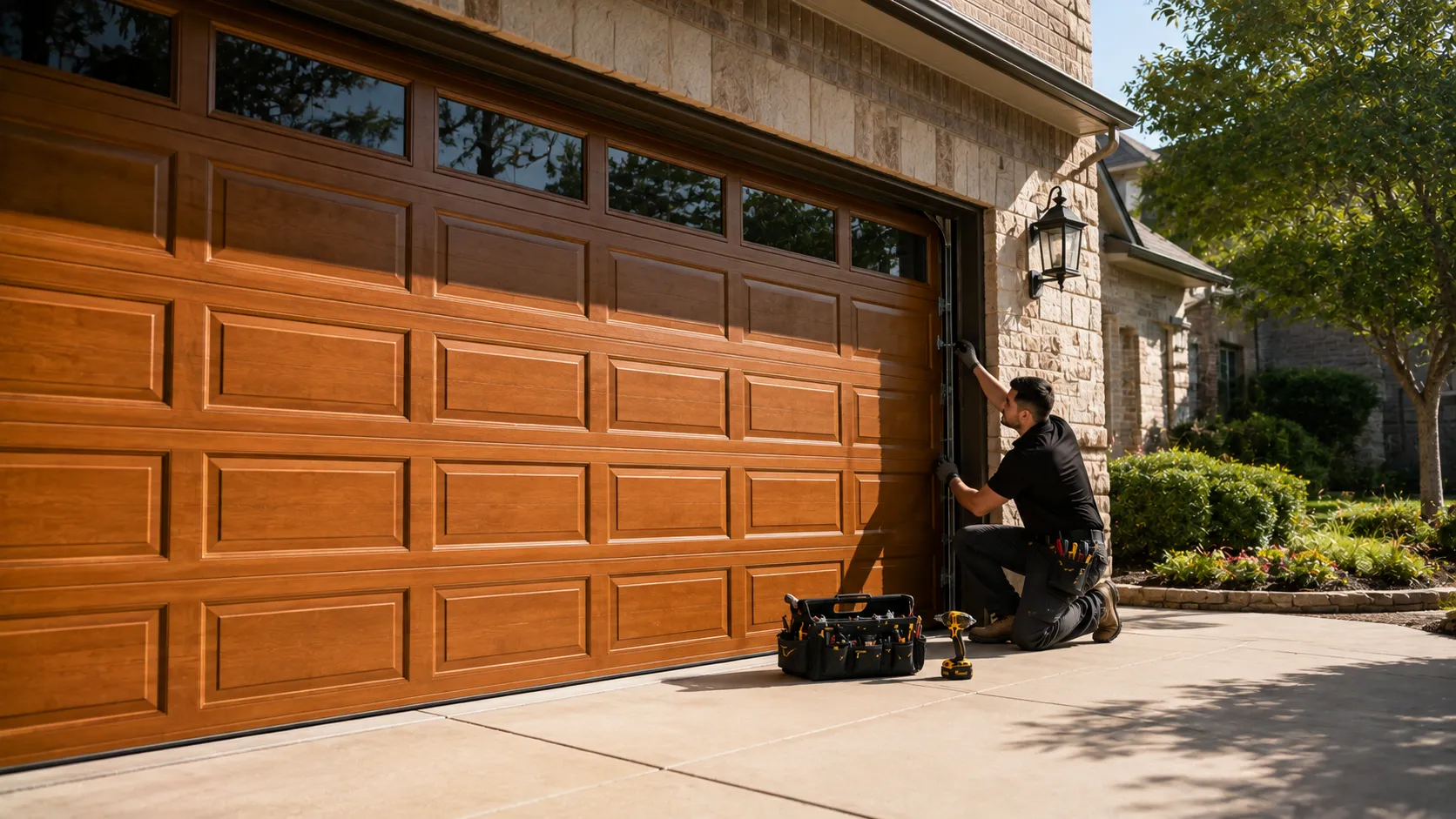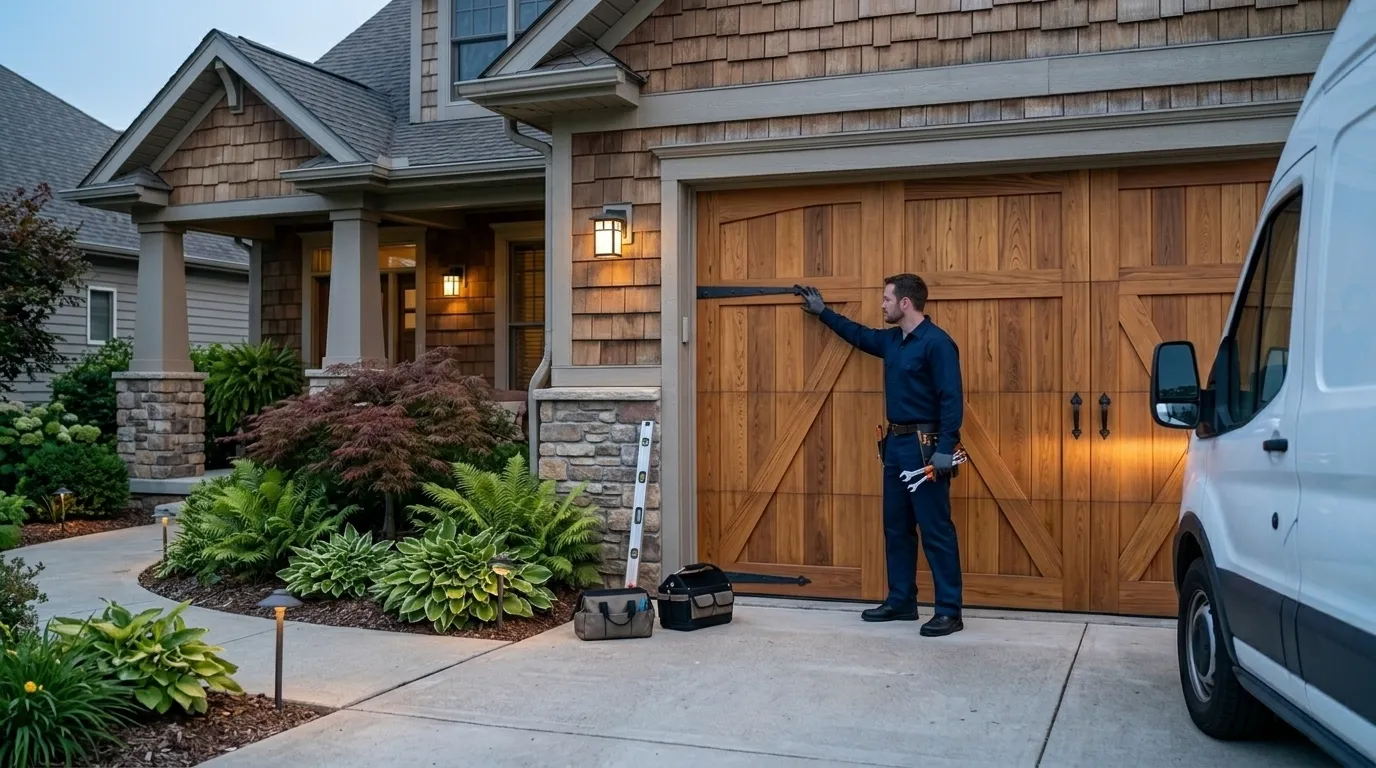
Why This Fails Locally
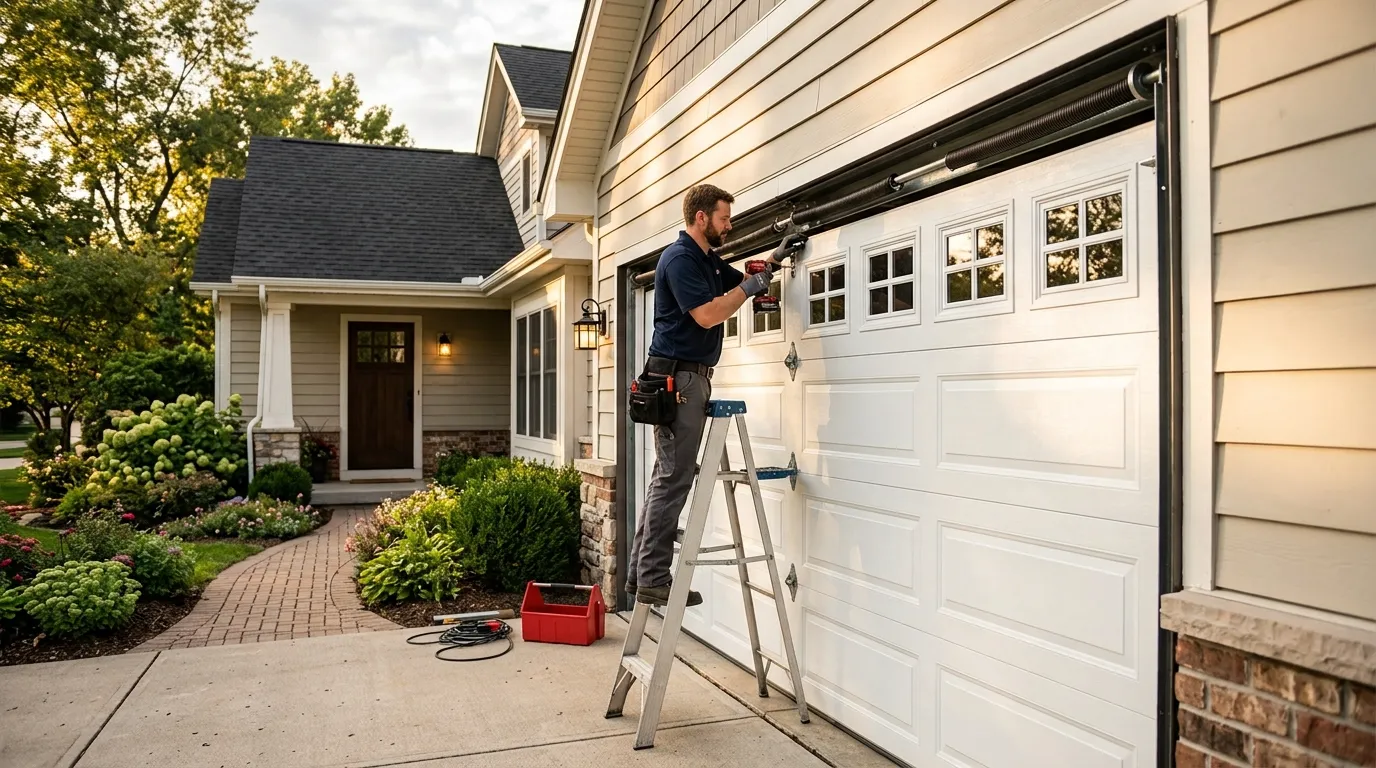
Most homes here were built between 1973 and 2013, with the typical house going up around 2002, which puts a lot of original torsion springs and openers past the point where they were designed to last. Garland's stock skews toward 2000s construction across the surrounding named areas, which means steel rollers and standard-lift springs from that era, not the older wood-track doors you'd find in a neighborhood built before the 1970s. That matters because those parts have a service life measured in cycles, and a door that's opened and closed several times a day for fifteen to twenty years is running out its spring long before the house shows any other sign of age.
The moderate heat band this area sits in means summer expansion and contraction on steel tracks and springs, not the deep-freeze contraction problems you'd get further north. Heat softens the lubricant on rollers and bearings faster than cold does, and a door that was fine in spring starts binding or slamming by August because the grease has thinned out and the metal has expanded just enough to throw off the track alignment. It's a slow failure, not a sudden one, which is why most calls we get aren't emergencies - they're doors that have been getting louder or heavier to lift for a few weeks before someone finally calls.
What You Are Seeing
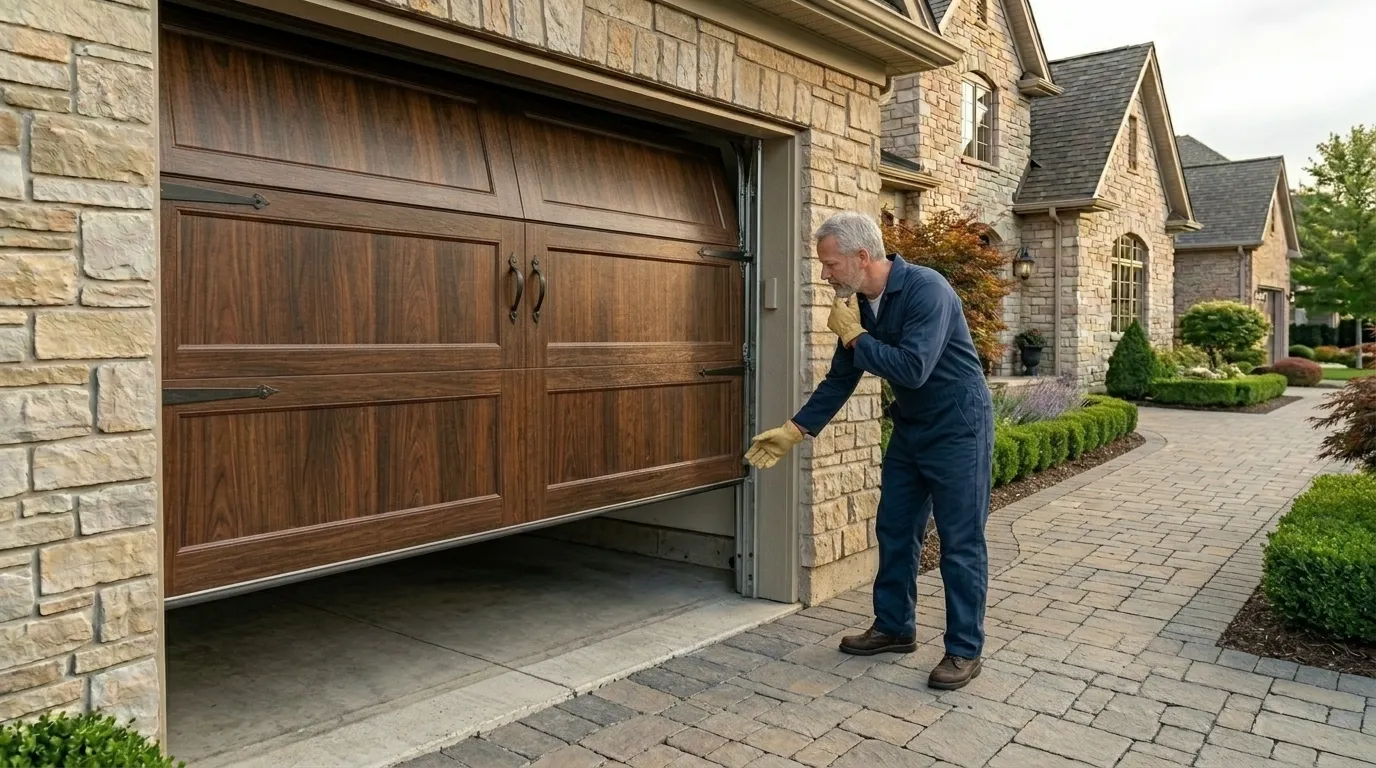
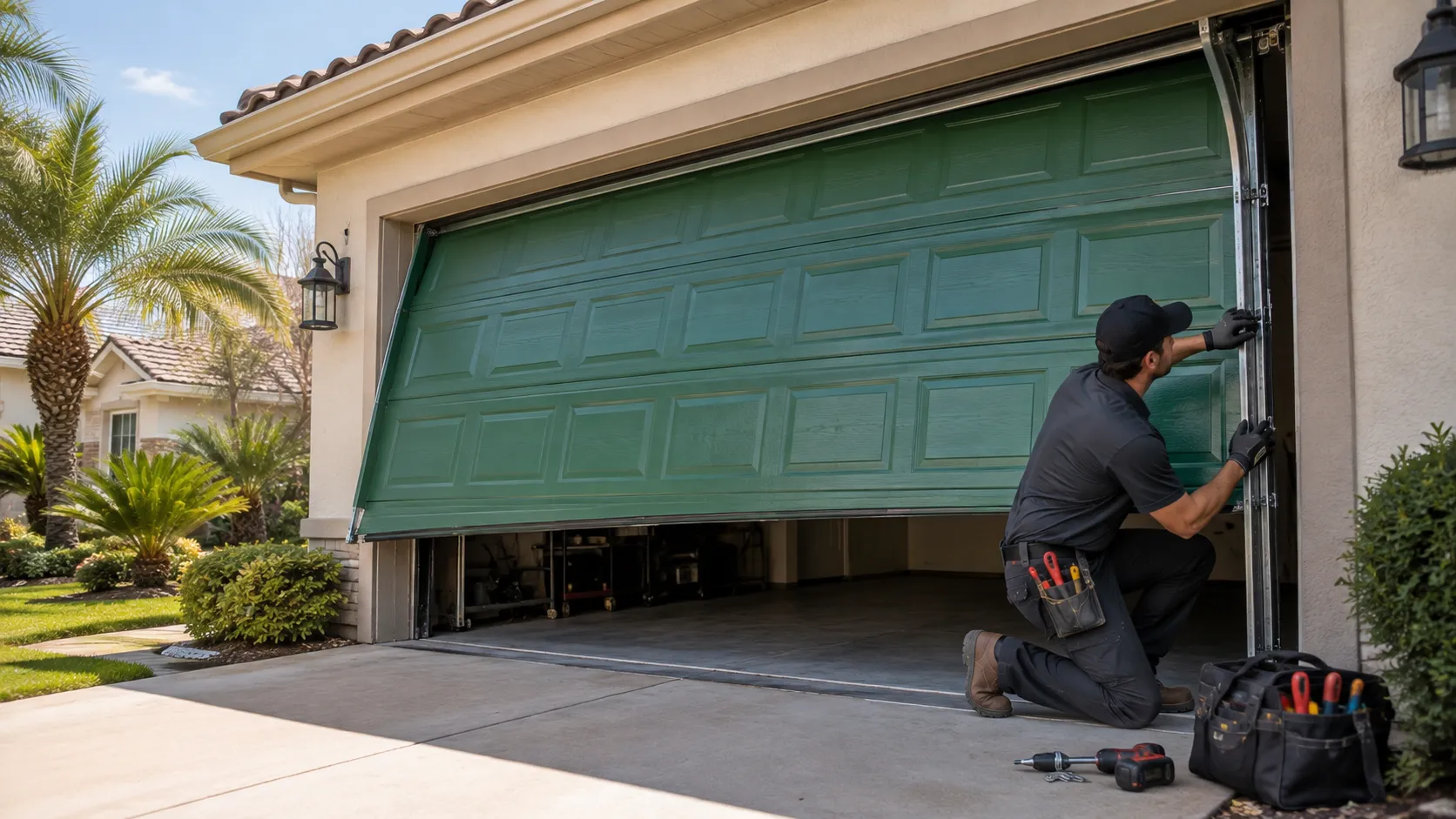
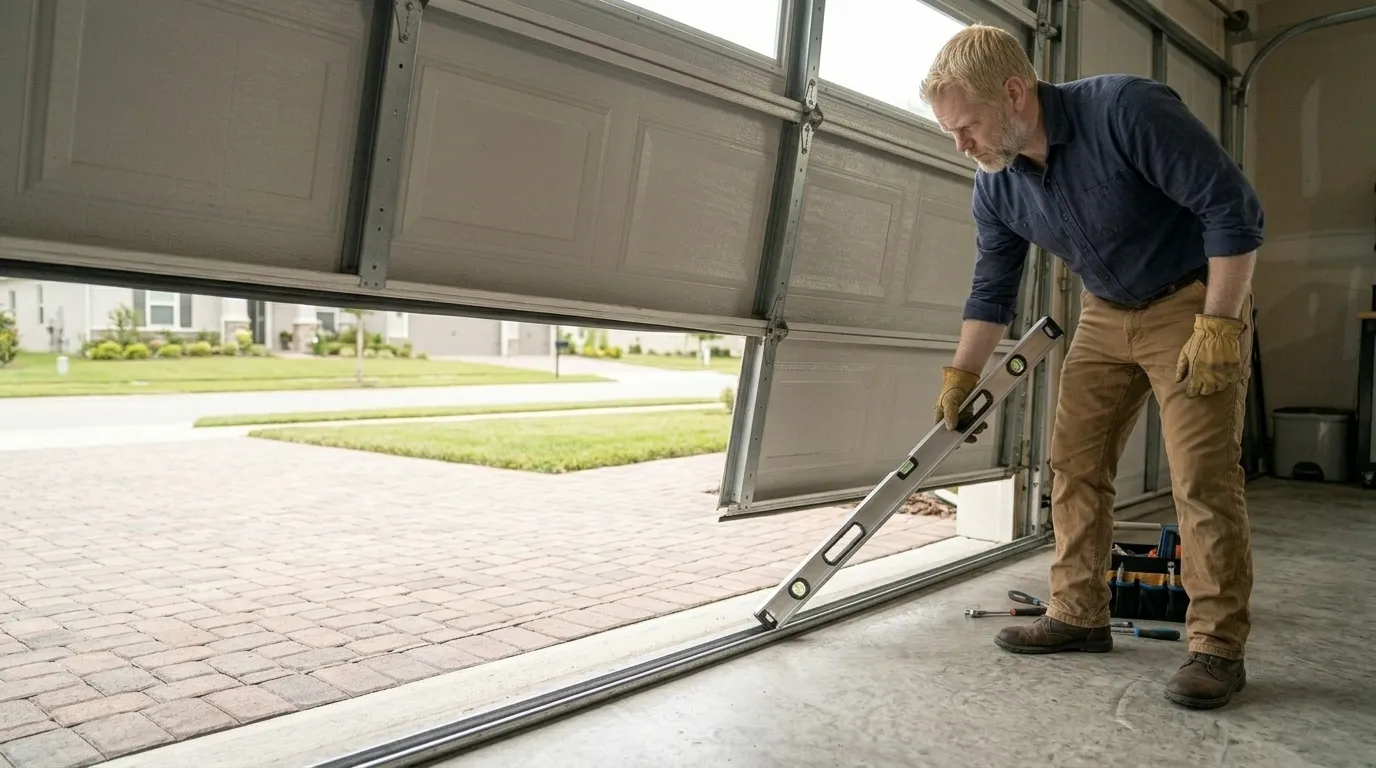
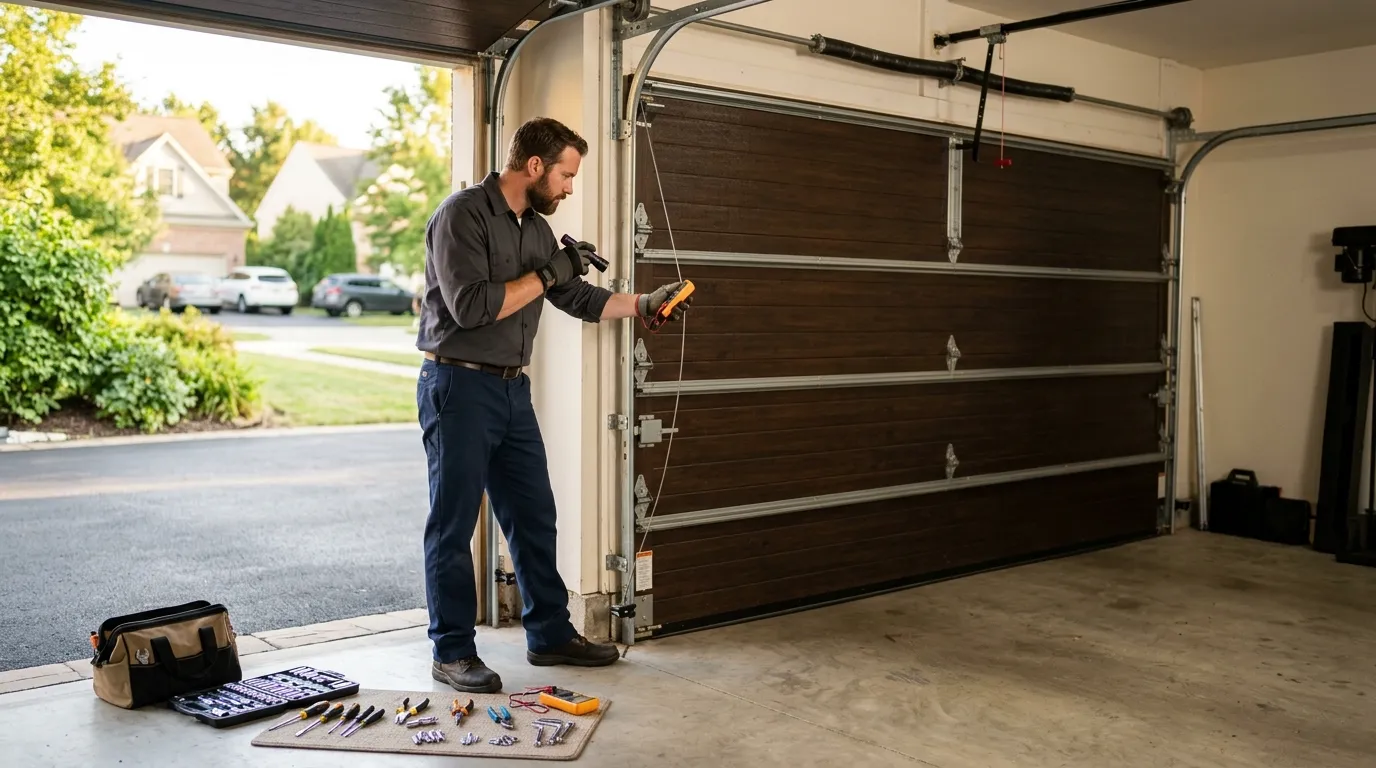
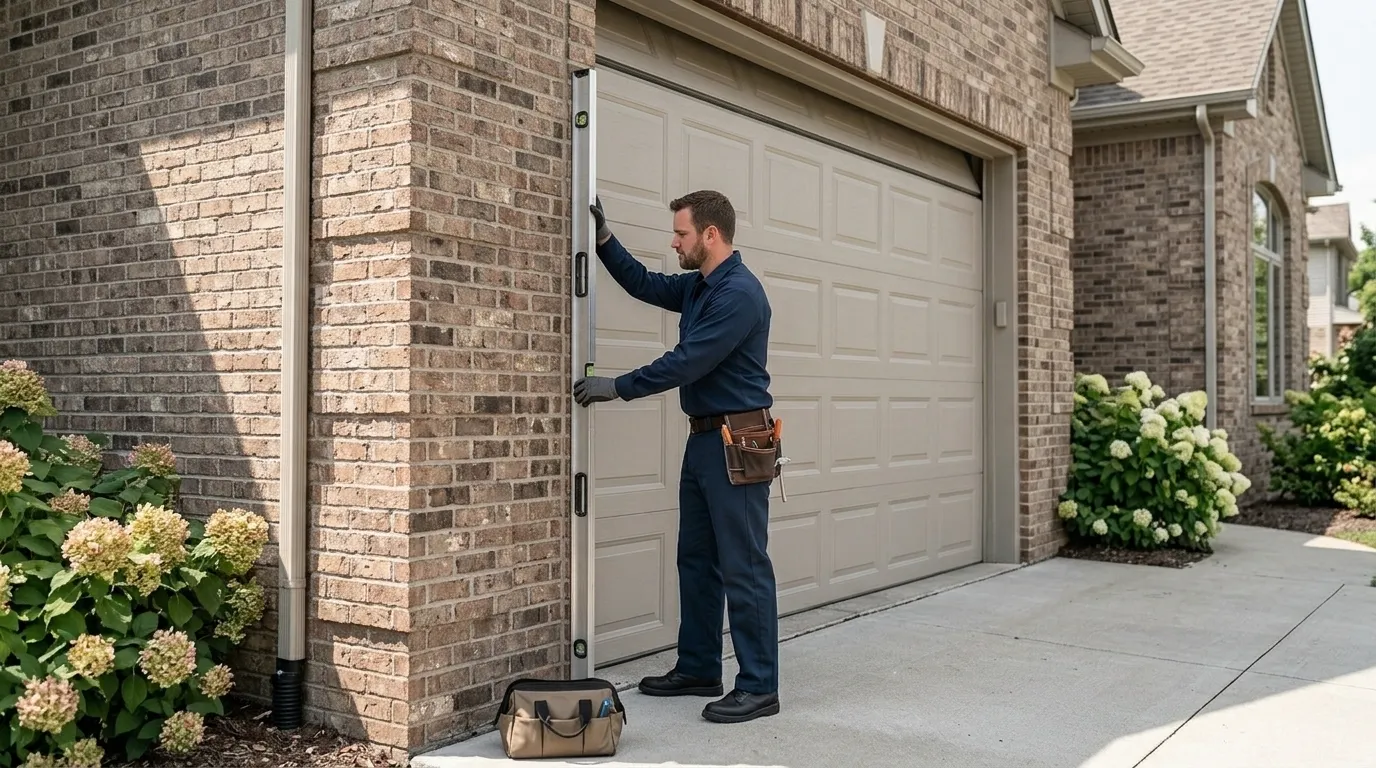
A door that used to open smoothly now hesitates partway up, or the opener strains and reverses before it reaches the top - that's usually a spring that's lost tension, not a motor problem, even though the motor is what's making the noise. If one side of the door looks lower than the other when it's down, or the door looks crooked going up, one spring has likely gone while the other is still holding, which is a balance problem, not just a broken-part problem.
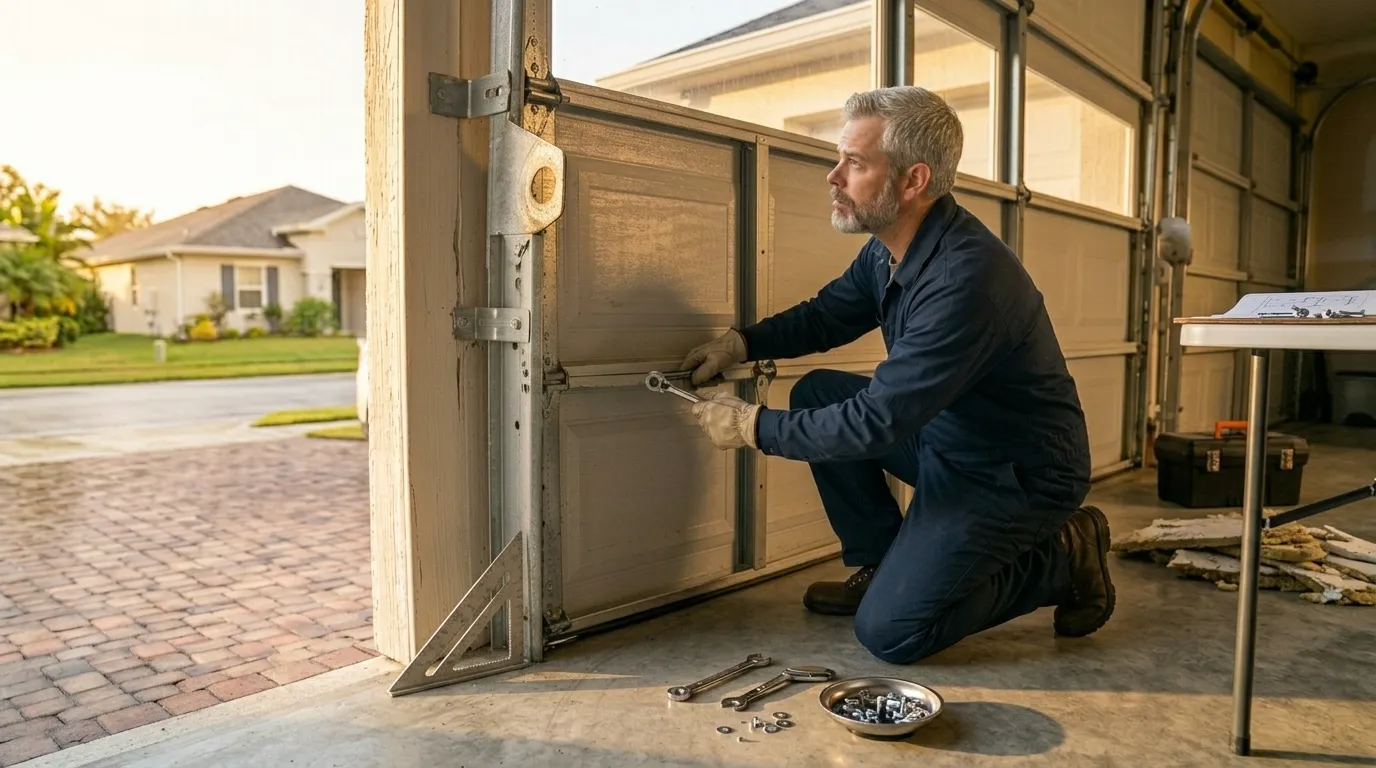
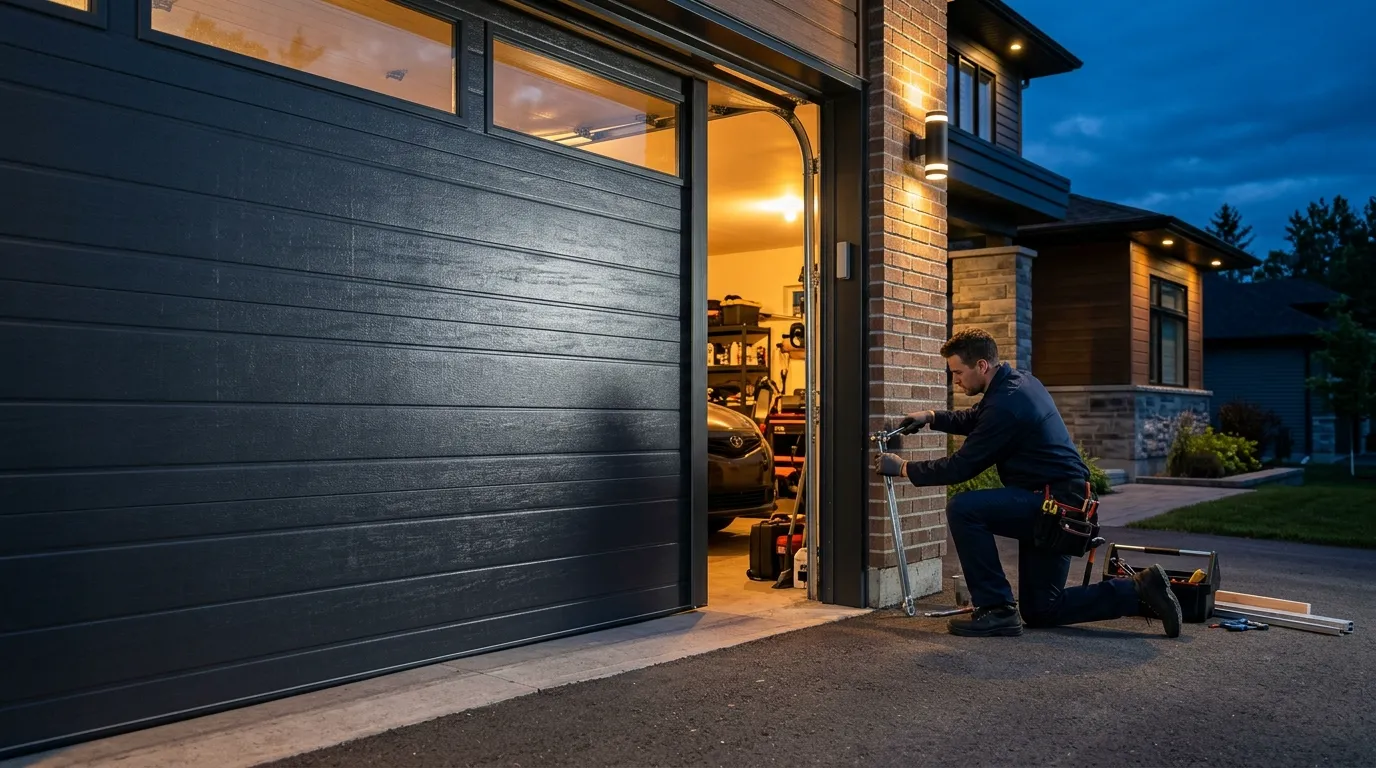
A grinding or popping sound right as the door starts moving, especially on an older-hardware door, often means a roller has worn out of round or a bracket has worked loose from years of vibration. If the opener runs but the door doesn't move, or moves an inch and stops, check the release cord first - it's disconnected more often than people expect - but if that's not it, you're likely looking at a stripped gear inside the opener unit itself, which is a repair or replace decision depending on the opener's age.
A door that won't budge at all, with the opener humming and going nowhere, is almost always a broken spring carrying the full weight of the door. Don't keep hitting the button - that just burns out the motor on top of the spring problem.