Most houses in Garland's service area went up between 1973 and 2013, with the median build year around 2002. That's a wide spread, but it means a lot of doors and openers out there are pushing 20 to 30 years old, right around when torsion springs, rollers, and the original opener drive gear start failing together instead of one at a time. If your door is from that early wave of construction, don't wait for a total failure. Call when the door starts sagging on one side, when the opener strains and reverses on its own, or when you hear a spring make a loud bang, that's a break, not a squeak. If the door still opens smooth and quiet, you likely just need an adjustment, not a truck roll. We won't talk you into a service call for a door that's fine. But once a door from that 1970s-90s stretch starts showing two problems at once, spring plus track, or opener plus cable, it's usually cheaper to fix both in one visit than to keep coming back.
How Local Conditions Play In
Garland sits in a moderate heat climate band, not the extreme swings some parts of Texas see, but summer heat still does real work on a garage door over the years. Steel panels expand, plastic idler bearings on older rollers get brittle, and lubricant on tracks and hinges cooks off faster than in a mild climate. On a door built in the early 2000s, that's two decades of heat cycling on the same hardware. It's usually the small stuff that fails first: nylon rollers cracking, weatherstripping going stiff and cracking at the bottom seal, garage door opener sensors drifting out of alignment as the mounting brackets flex slightly with heat. None of that means the door is done. It means the door needs the parts that take the heat load replaced, while the frame, panels, and springs might still have years left. We size any repair to what the heat has actually worn out, not to the door's age on paper.
What to Check
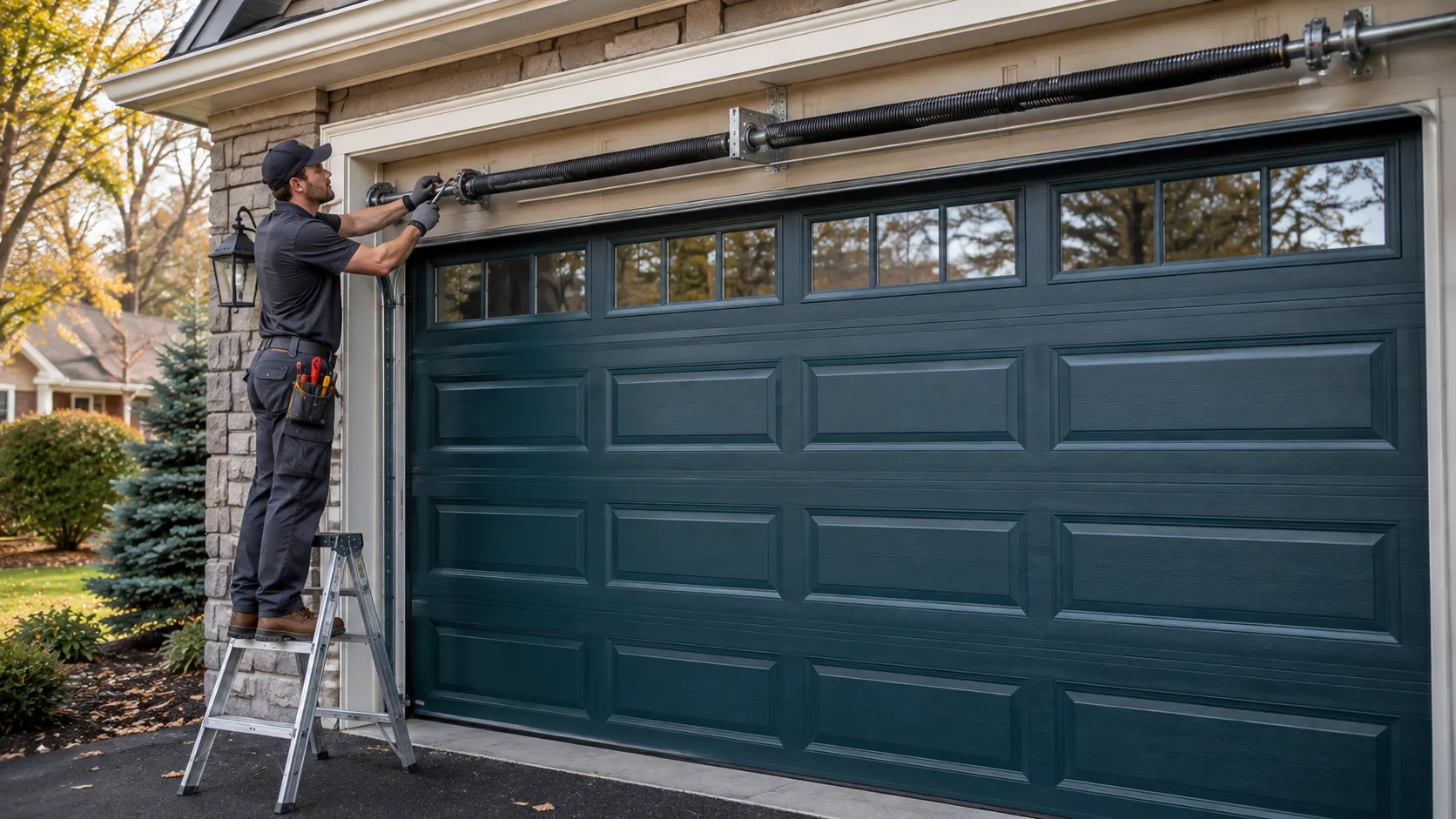
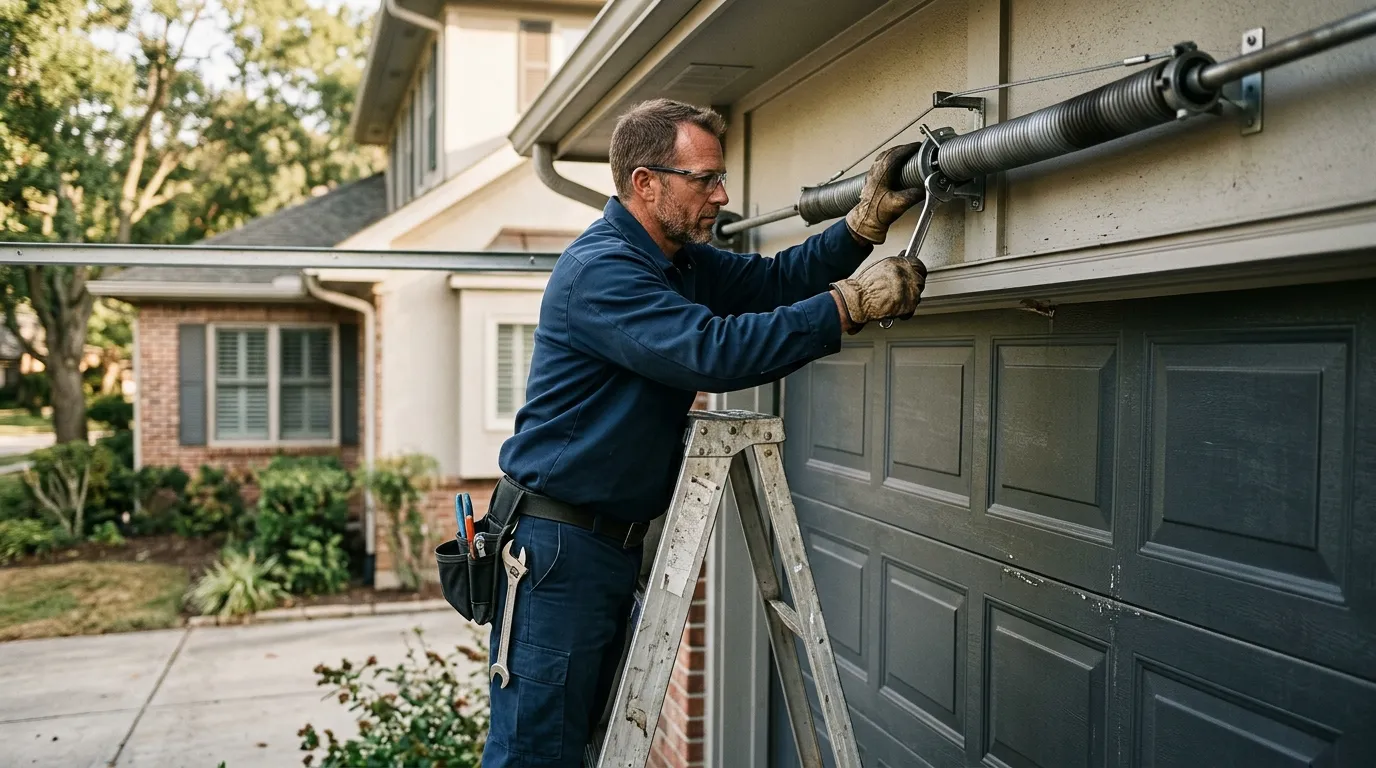
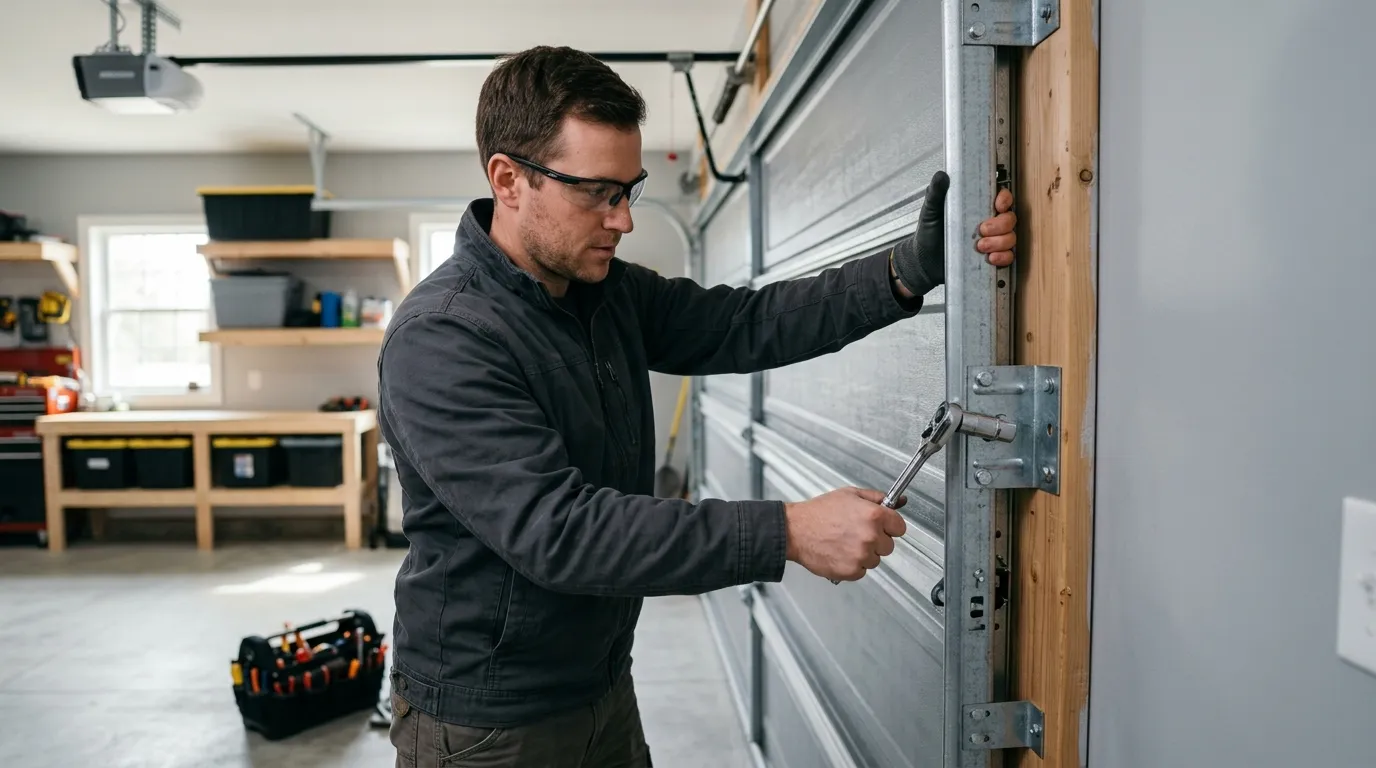
Before you decide a door is worth fixing, look at three things. First, the panels: dents you can push back into shape are fine, but a panel that's rusted through or cracked along a seam on a door from the 1970s-80s era of Garland's housing stock usually means the whole section needs replacing, and matching an old panel gets harder every year those doors sit unmade. Second, the springs: count the coils and check for a visible gap when the door is down, a gapped or rusted spring on an older torsion system is a safety issue, not a cosmetic one. Third, the opener: if it's original to a 2002-era build, the drive belt or chain has likely stretched and the safety reversal sensors may not meet current expectations even if they still technically work. None of these checks require tools you don't already own, a flashlight and a look under the door tells you most of what you need before you call anyone.
What Is Going On
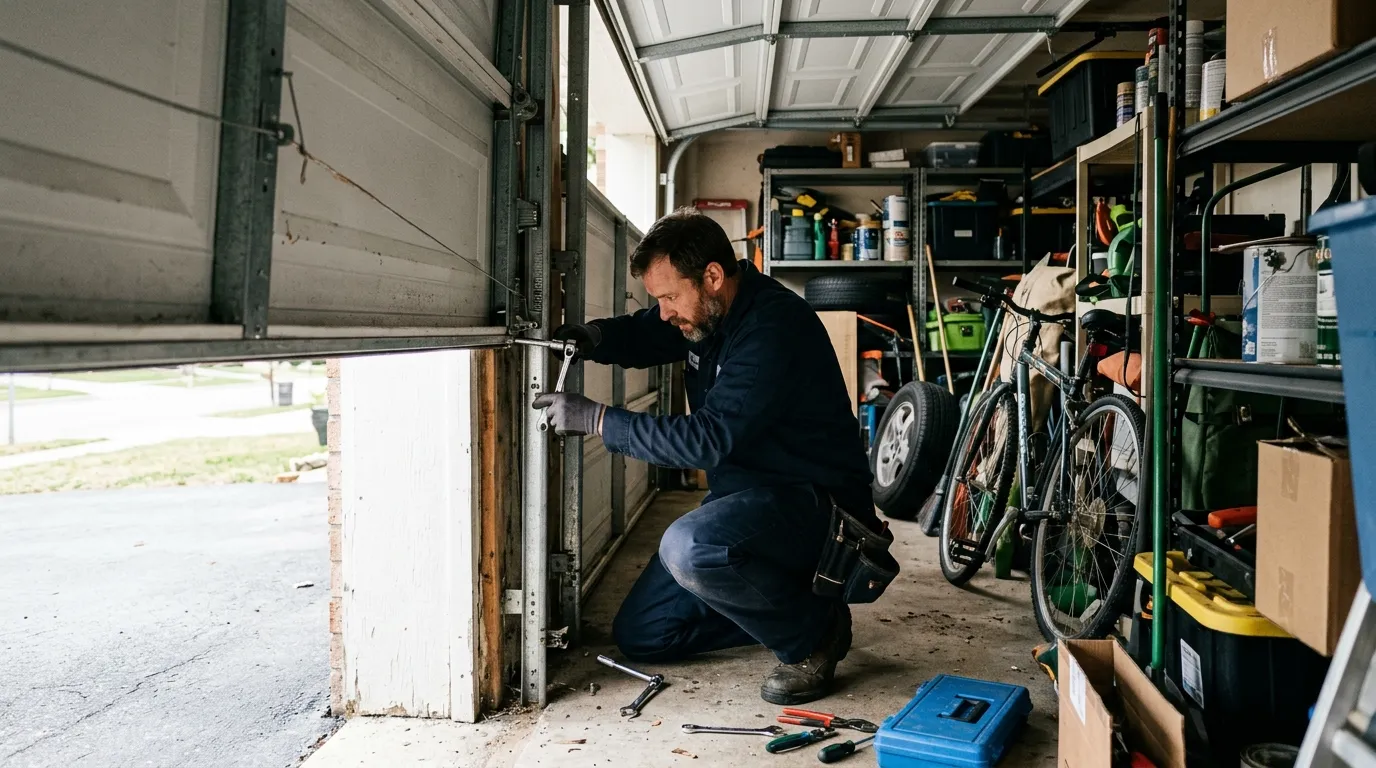
Across Garland's service area, roughly 46,718 of the 72,723 households own their house rather than rent, and most of that owned housing was built in the same long 1973-2013 stretch that defines the area's stock. That matters because it means a huge share of doors we get called on are the same handful of builder-grade models installed across nearby subdivisions in the same few years, not custom or rare units. Parts for those are usually easy to source. What's actually failing is rarely the door itself, steel panels last a long time in this climate, it's the moving hardware: springs rated for a certain number of cycles that have quietly used them up, rollers that were plastic from the factory, and openers with electronics that were never built to last 20-plus years. Here's the honest limit: if a door has been neglected long enough that the track is bent and the frame has racked, replacement is usually cheaper than chasing repairs on it piece by piece. We'll tell you that straight rather than billing you for parts that won't fix the real problem.
How it works
From “it’s stuck” to “it’s fixed”
A quick, honest process - no guesswork and no surprises.
1
Tell us what’s wrong
Describe the symptom - won’t open, loud bang, opener runs but the door won’t move.
2
On-site diagnosis
A technician tests the door under power and by hand and finds what actually failed.
3
Clear, up-front plan
You get the fix that’s needed and what drives the cost - before any work starts.
4
Repaired & tested
The repair is done, the door is set true and tested, and the work area left clean.
Serving Garland, TX - tell us what your door’s doing and we’ll take it from there.
My garage door is from the 1980s, is it too old to fix?
Not necessarily. Steel panels from that era usually hold up fine in Garland's moderate heat; it's the springs, rollers, and opener that wear out first. If the frame and panels are straight, a spring and hardware repair is often cheaper than replacing the whole door.
Why did my opener start reversing for no reason?
On openers from the early 2000s building boom around Garland, heat cycling over the years can shift sensor alignment or stretch the drive belt or chain. Both are common, fixable issues, not signs the whole unit needs replacing.
How do I know if a spring repair will hold?
A torsion spring rated for a set number of cycles doesn't fail gradually, it works fine until it doesn't. If your door is original to a house built in the 1970s-90s wave common in this area, the spring is likely past its rated life even if it looks intact.
Ready to get your garage door sorted?
Tell us what it’s doing and where you are in Garland - we’ll take it from there.