How Local Conditions Play In
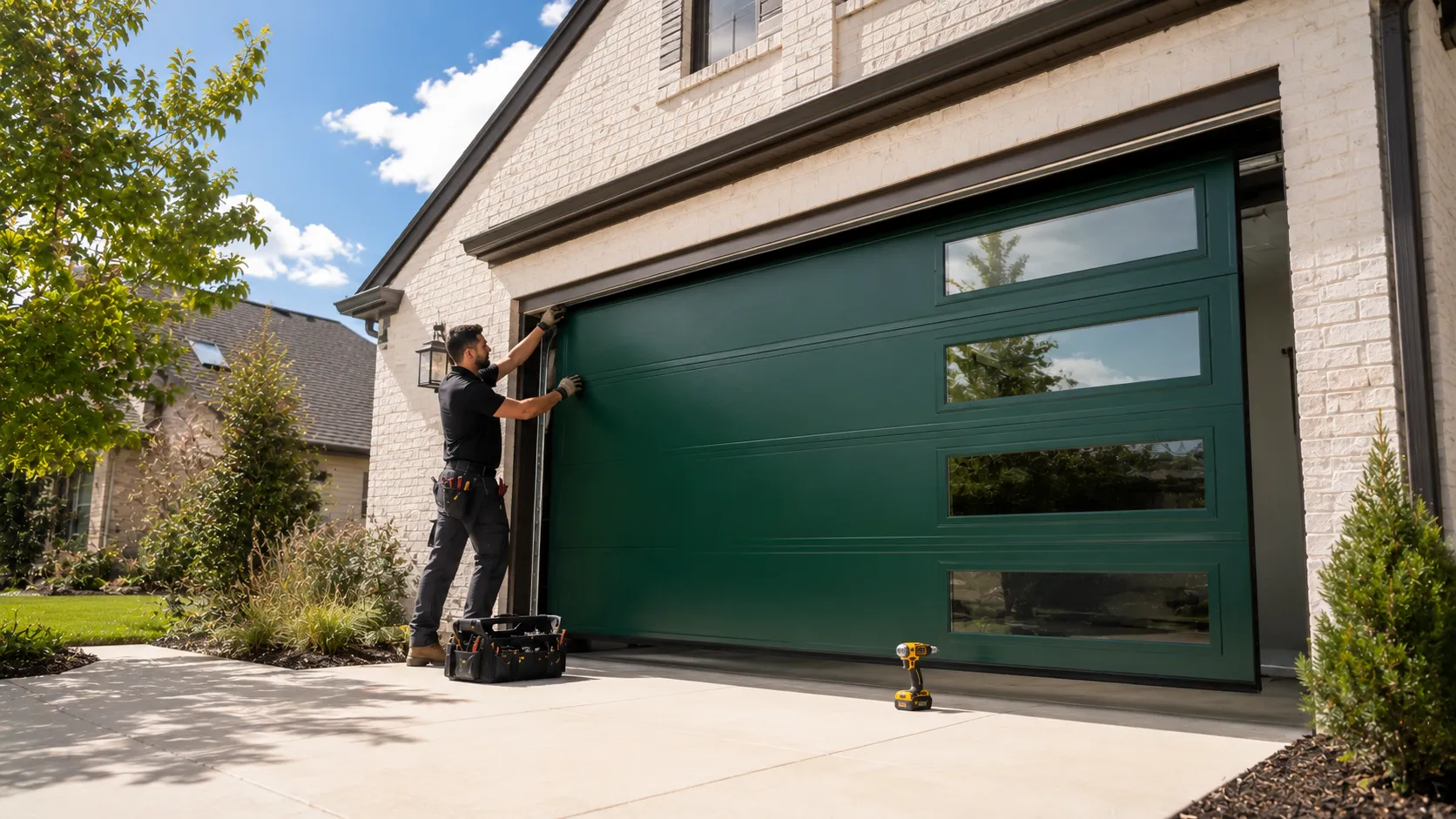
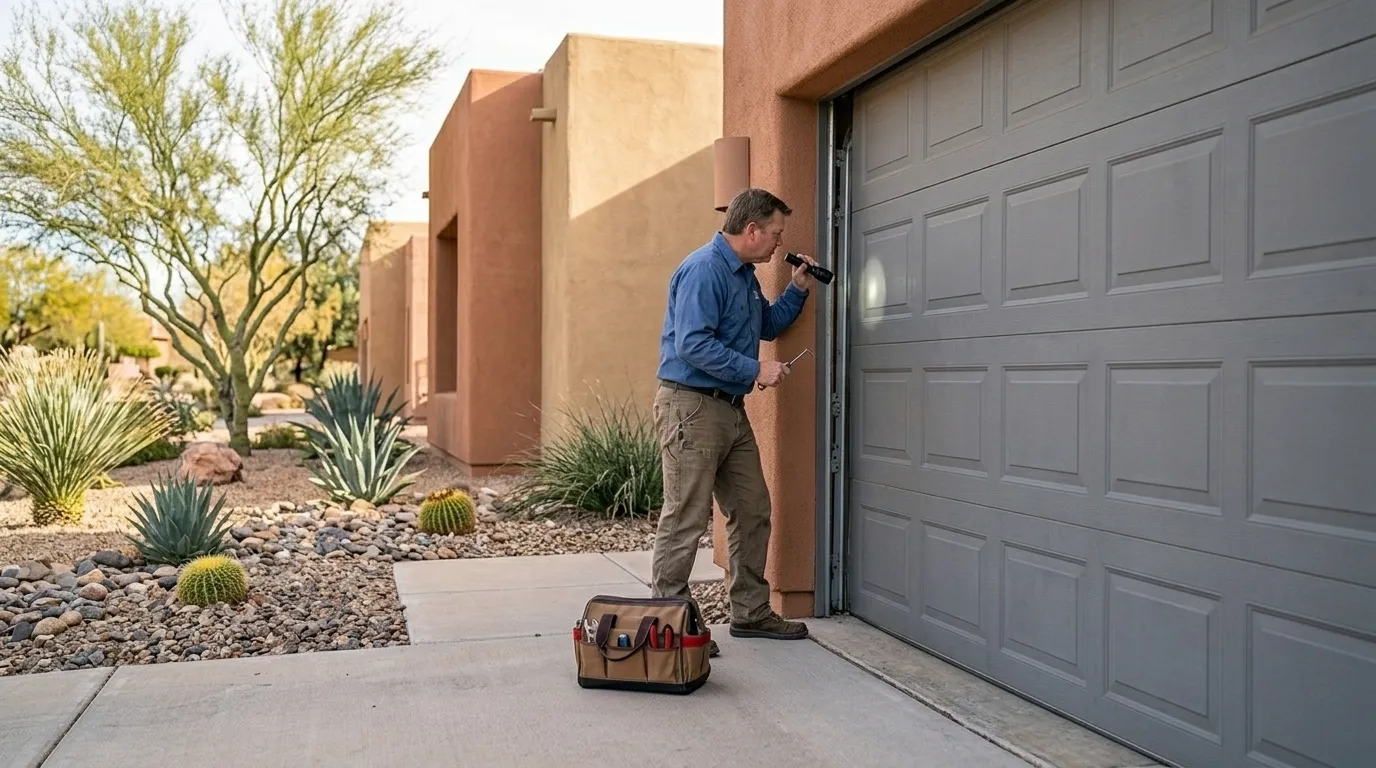
This area sits in a moderate heat climate band, not the extreme end, but the swing between a hot afternoon and a cool morning still puts real stress on steel panels and the hardware bolted to them. Metal expands and contracts through the day, and on doors that have gone 15 to 20 years without adjustment, that constant flex works bolts loose at the hinges and track brackets. It's a slower failure than a hard freeze would cause, but it's steady, and it's exactly the kind of thing an annual check catches before it becomes a stuck door.
Because most of the housing here dates to the 2000s, we're also dealing with a fairly consistent generation of opener electronics. Circuit boards and photo-eye sensors from that build era weren't engineered for 15+ years of Texas heat cycling in an uninsulated garage, and we see more sensor and logic-board failures than track failures in houses of that age. A service call on a house like that usually spends as much time on the opener head as it does on the door itself.
We don't treat heat exposure here as an emergency-level threat the way extreme climate zones do. It's wear, not damage, and that changes how urgently a call needs to be scheduled.
What to Check
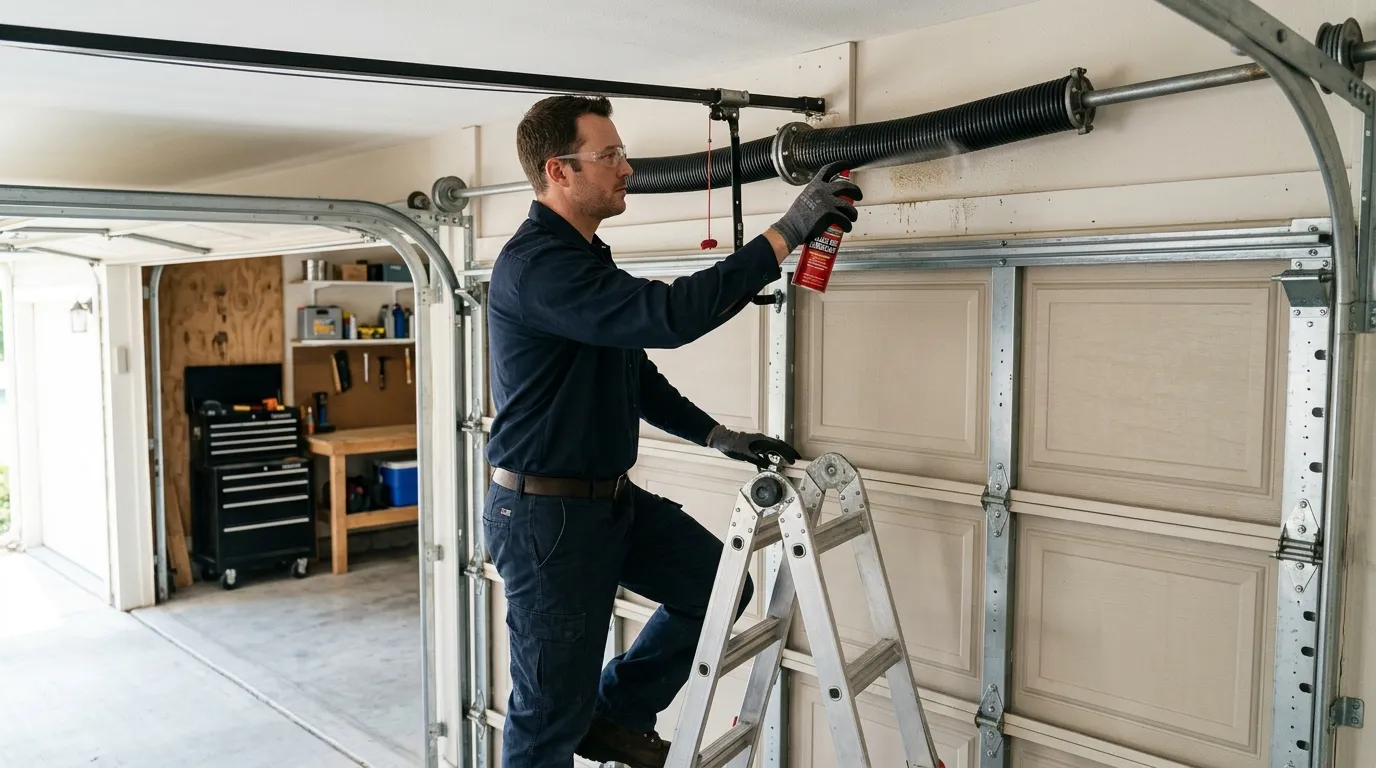
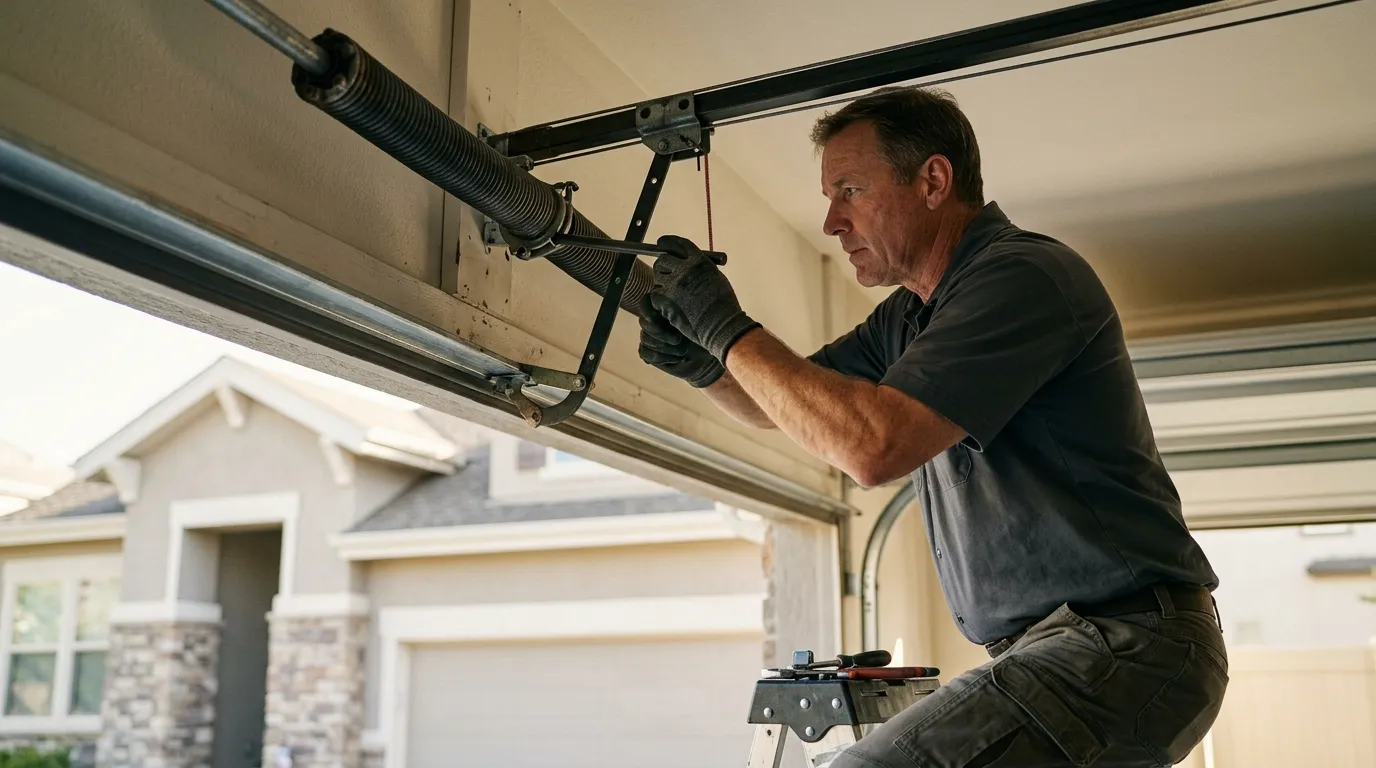
A real service call starts with the springs, because that's the part most likely to hurt someone if it lets go under tension. We check for rust pitting, gap between coils, and whether the spring is still sized right for the door's weight - a lot of builder-installed springs on 2000s-era construction were sized to a bare minimum, not to the insulated retrofit panels some owners have since added.
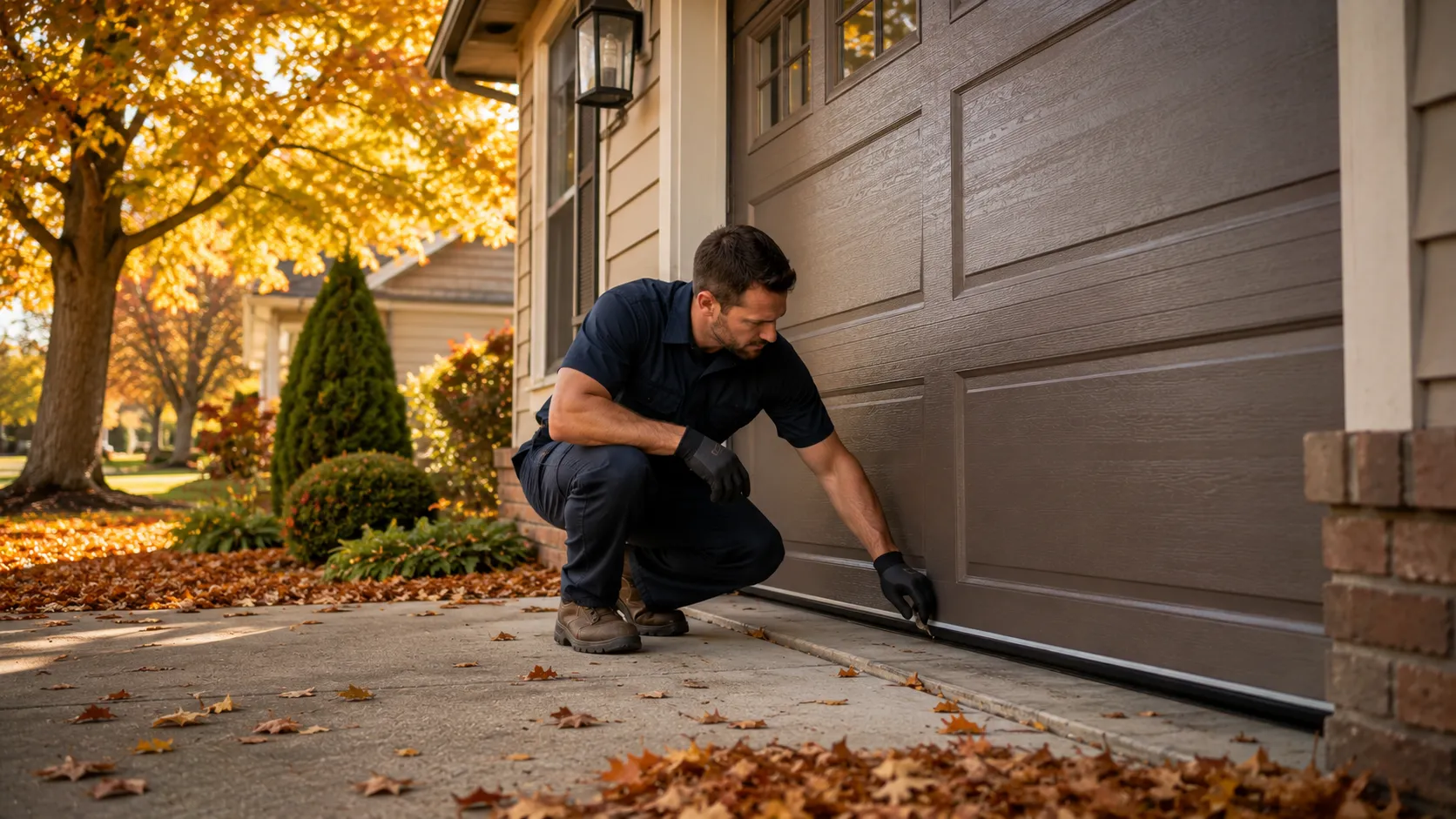
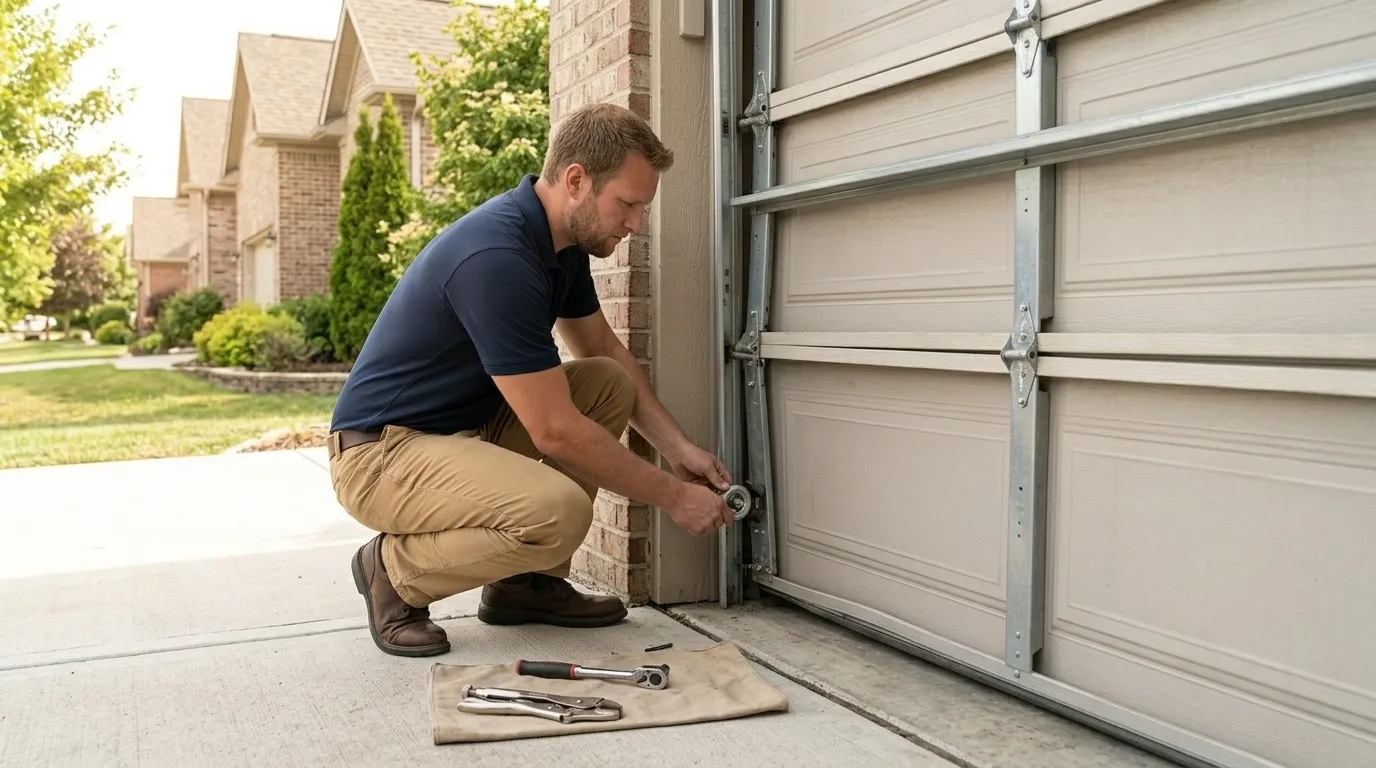
After that we look at the track alignment and the roller condition. On houses built in this 1973-2013 window, steel rollers without bearings are common, and those wear faster and louder than sealed ones. We check the cables for fraying at the drum, the bottom brackets for rust, and the opener's force settings, since a door that reverses on obstruction with the force set too high is a safety issue, not a convenience one.
Last is the opener itself: photo-eye alignment, the logic board's response, and the manual release. None of this takes special equipment. It takes someone who knows what a 20-year-old builder door looks like when it's failing versus when it's just old and loud.