Why Garland's Garage Door Springs Snap When Cold Hits
In Garland, TX, most homes date from 1973 to 2013, and a cold snap after heat cycling snaps fatigued springs fast. Know when to call and what to check.
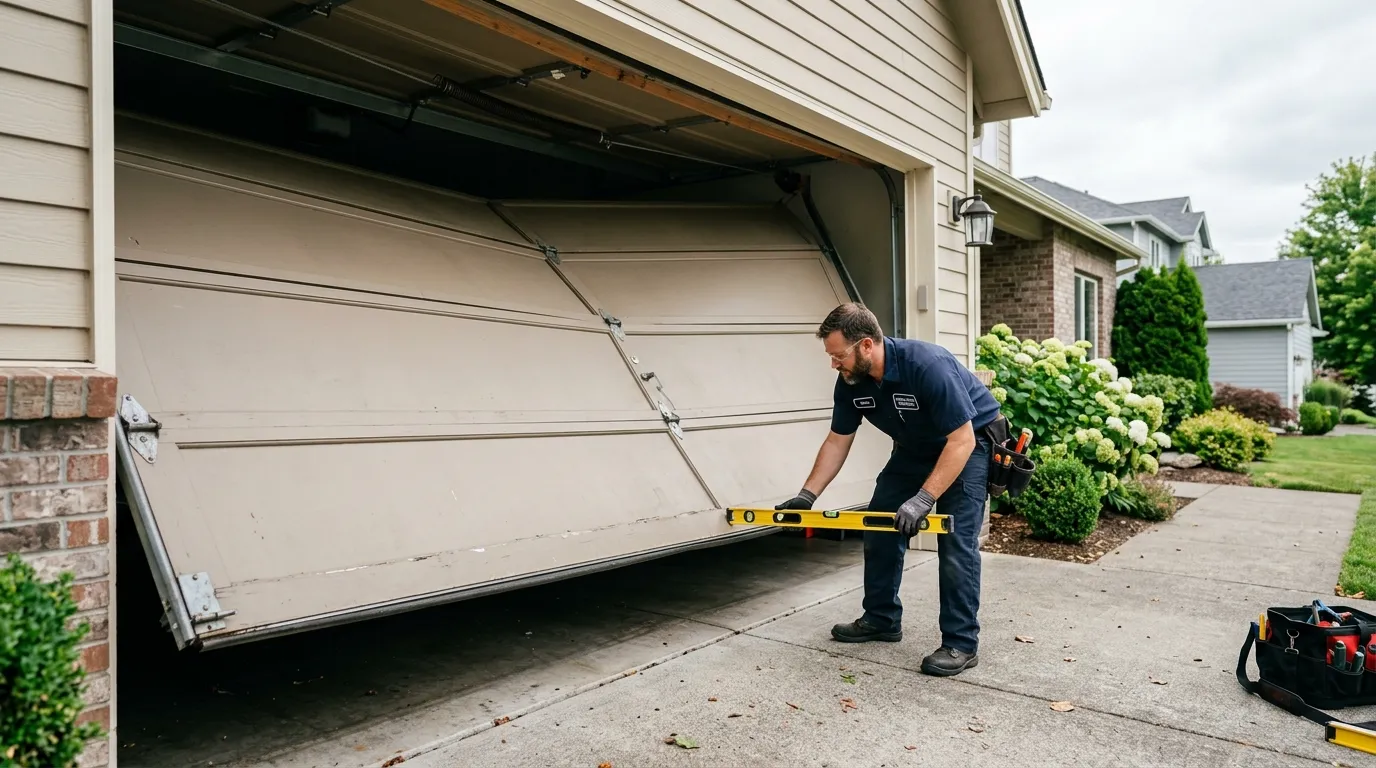
If the door sounds like a gunshot and won't move, or the panel is sitting crooked with a gap in the coil visible above the header, stop using the opener and call. That loud bang is almost always a torsion spring letting go, and running the opener against a dead spring burns out the motor next - a second repair on top of the first.
Garland's owner-occupied stock runs mostly 1973 to 2013, with a heavy concentration in 2000s-built subdivisions, so a lot of original springs are now 15 to 25 years into a part rated for roughly 10,000 cycles. That's the window where a cold morning finishes off what summer heat already weakened. If your door is from that era and you hear a spring pop after an overnight temperature drop, that's not a coincidence - call the same day, because a door held by one working spring on a two-spring system will fail the second spring soon after.
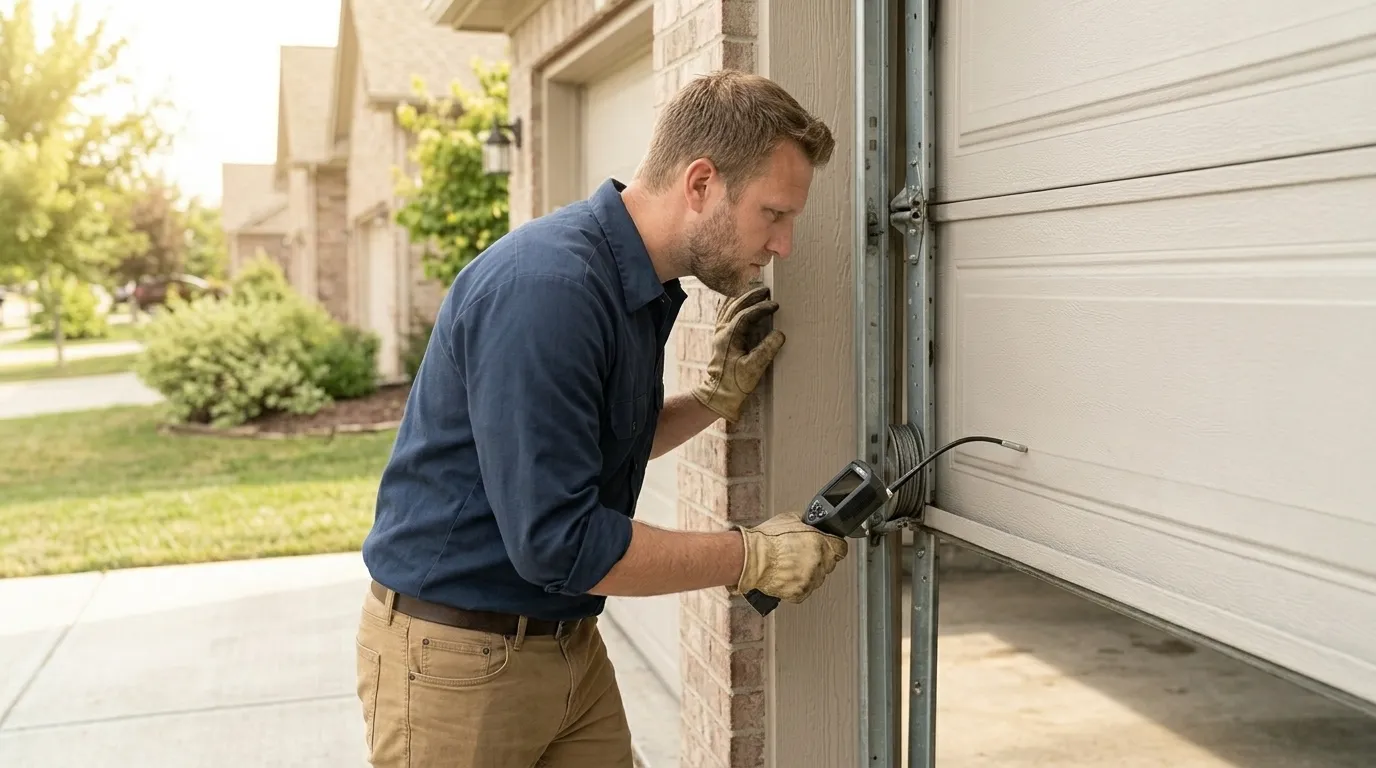
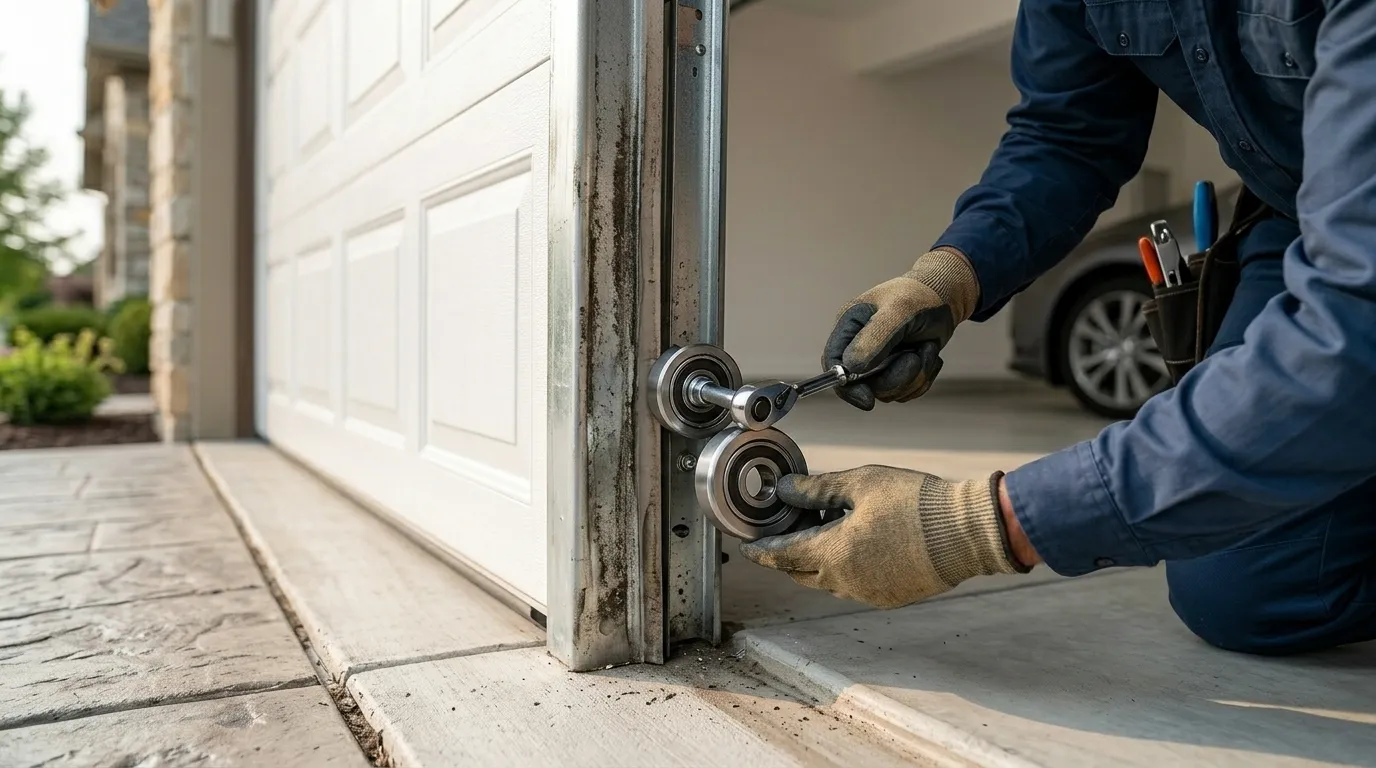
One limitation worth saying plainly: we don't diagnose spring condition over the phone. Cable fray, a bent shaft, or a worn end bearing can look and sound like a spring problem, and guessing wrong means a wasted trip. We need eyes on the door.
How Local Conditions Play In
Garland sits in a moderate-heat climate band, not a deep-freeze one. That matters for springs in a specific way: the metal spends most of the year expanding and contracting through hot Texas afternoons, and then a sharp overnight cold snap hits a spring that's already fatigued from months of heat cycling, not one that's been living in cold all along. The failure often lands on the first cold morning of the season, not gradually.
This is different from a climate that stays cold for weeks - there, springs fail more evenly across winter. Here, the pattern is a heat-soaked spring meeting a sudden temperature drop, and steel contracts faster than the coil geometry likes. Combine that with houses built in the 2002 median-year range, where torsion springs are original equipment nearing or past their rated cycle count, and a cold snap becomes the trigger rather than the cause.
We can't tell you the exact night it'll happen. What we can say is that if your spring is original to a 2000s-era Garland build, a cold snap is the most common moment we get the call - not July, not October, but that first real cold morning.
What to Check
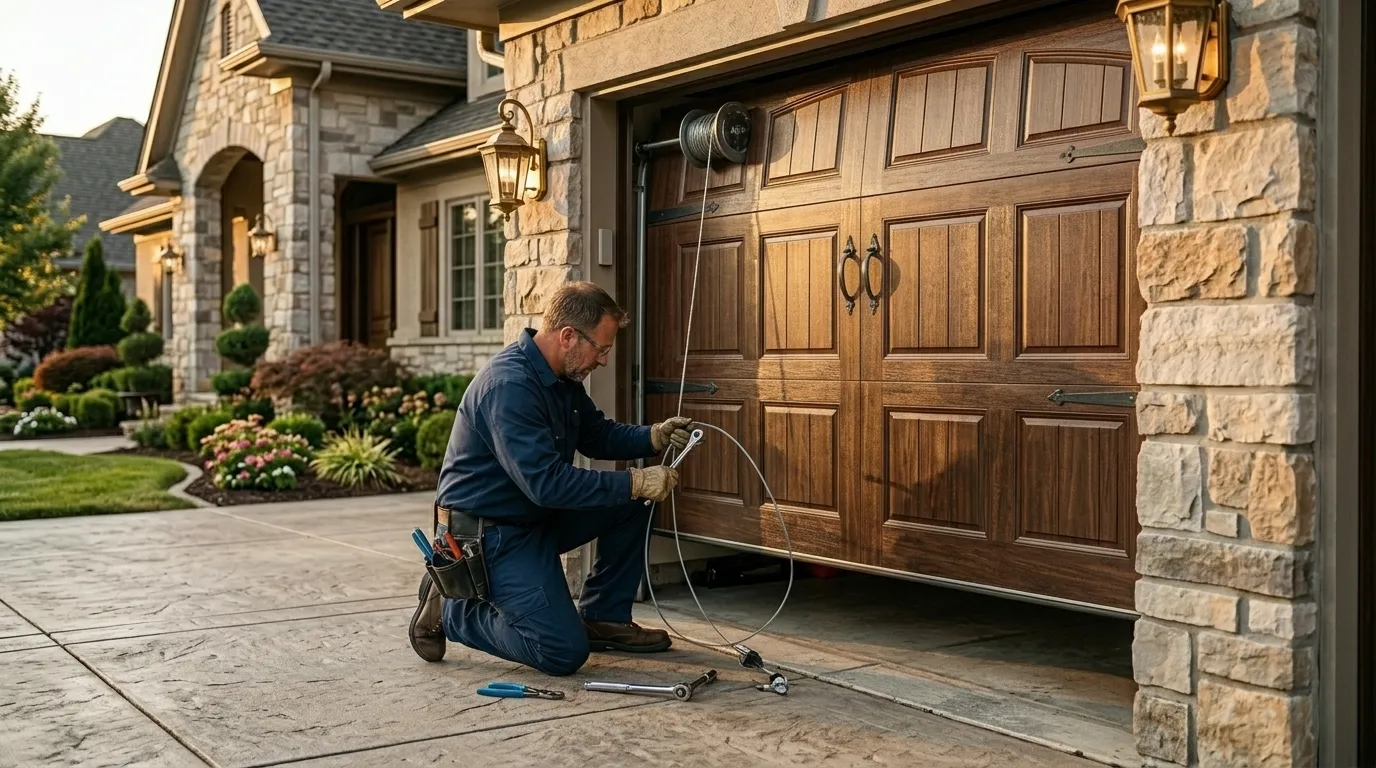
Before you call, look at the spring itself - the coiled bar mounted above the door, either one long spring in the center or two shorter ones over a double door. A separation of an inch or more in the coil means it's broken, even if the door still half-moves. Don't force it.
Check whether the door is a single wide door or two smaller ones; older Garland construction sometimes still runs one long torsion spring on a double-wide opening, which puts more load on that single spring than a two-spring setup carries per spring. If yours is a single spring on a double door, that's worth mentioning when you call.
Listen for a bang that happened overnight - a broken spring event is loud and usually singular, unlike the routine squeak of an aging roller. If the door won't lift by hand with the opener disconnected, treat that as a spring problem, not an opener problem.
What we won't tell you to do: don't try to adjust or wind the spring yourself. Torsion springs are under enough tension to cause serious injury, and that's true regardless of what triggered the failure.
What Is Going On
A garage door spring is rated for a set number of open-close cycles, and it degrades with every one, faster with temperature swings than with steady conditions. Across the service area's roughly 46,718 owner-occupied houses, most sitting on housing built between 1973 and 2013, a large share of springs are original - meaning they've been cycling since a builder installed them, with no maintenance track record most owners can point to.
When a cold snap follows a long stretch of Garland heat, the spring's steel is already work-hardened from thermal cycling, and the sudden contraction is often the last straw rather than the sole cause. That's why so many spring calls cluster around the season's first cold mornings rather than being spread evenly across winter.
At a median household income of $133,750 across the area, most owners we talk to choose full spring replacement over a patch job once one spring in a pair has gone, since the second is usually close behind on the same age and cycle count. We serve the households in and around Garland, including areas like Coomer Creek to the north and toward Murphy and Sunnyvale to the east - if your door is original to a 2000s build, age and this season's temperature swing are the two things working against that spring together.
How it works
From “it’s stuck” to “it’s fixed”
A quick, honest process - no guesswork and no surprises.
1
Tell us what’s wrong
Describe the symptom - won’t open, loud bang, opener runs but the door won’t move.
2
On-site diagnosis
A technician tests the door under power and by hand and finds what actually failed.
3
Clear, up-front plan
You get the fix that’s needed and what drives the cost - before any work starts.
4
Repaired & tested
The repair is done, the door is set true and tested, and the work area left clean.
Serving Garland, TX - tell us what your door’s doing and we’ll take it from there.
Why did my garage door spring break on the first cold morning of the year?
Garland's climate runs warm most of the year, so springs spend months expanding and contracting with heat before a sudden cold snap hits. That drop stresses a spring that's already fatigued from summer cycling, which is why breaks cluster around the first cold mornings rather than spreading evenly through winter.
Is my spring original to the house?
If your Garland home was built between 1973 and 2013 - and a lot of the area's stock dates to the early 2000s - there's a good chance the torsion spring is original equipment. Without service records, age plus a recent cold-weather break is a strong sign it's due.
Can I just replace one spring if I have two?
You can, but the second spring is usually close in age and cycle count to the one that failed, especially on original 2000s-era installs. Most owners we talk to choose to replace both at once rather than risk a second call soon after.
Do you diagnose over the phone?
No. A broken spring, a frayed cable, and a worn bearing can sound similar over the phone, and guessing wrong wastes a trip. We need to look at the door in person before we quote the job.
Ready to get your garage door sorted?
Tell us what it’s doing and where you are in Garland - we’ll take it from there.