Why This Fails Locally
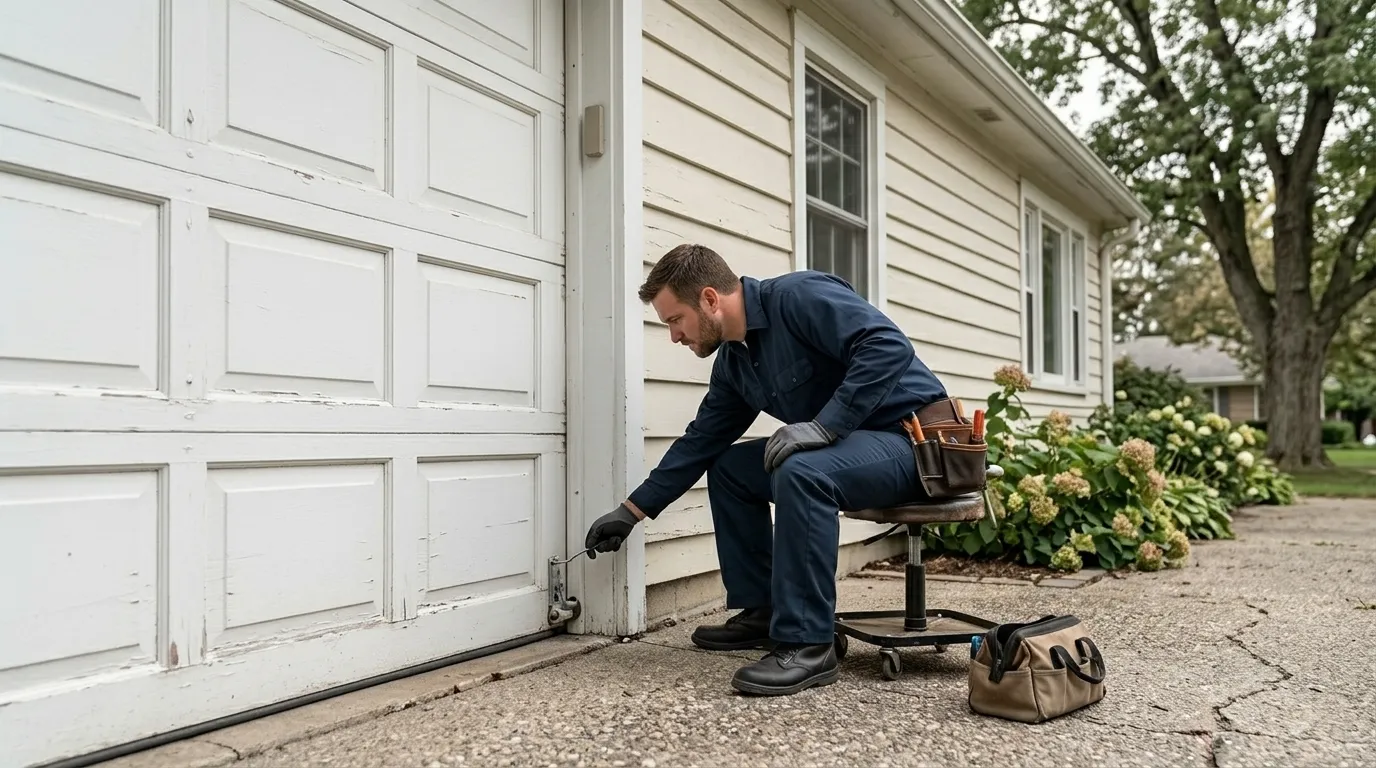
A door and opener installed when a house went up in 1987 has had close to forty years to wear out its bearings, its cable drums, and its wiring, and in a lot of these homes nobody has swapped anything since. The failure pattern here isn't the same as a house built in 2005: newer stock in the wider service area still runs on hardware within its expected life. Here, the original torsion spring, if it's still on the door, is well past any spring's rated cycle count, and the low-voltage wiring to the wall button is often the original run with decades of connection corrosion.
University Park's climate exposure sits in the moderate-heat band for this region, so we're not dealing with the swing failures you'd see somewhere with sharper temperature extremes - the wear here is age and cycle count, not thermal stress. That's actually a point in favor of a straightforward replacement rather than a patch job: the opening itself has usually held up fine, and the case for a new door is the hardware's age, not damage to the structure around it.
What Can Go Wrong
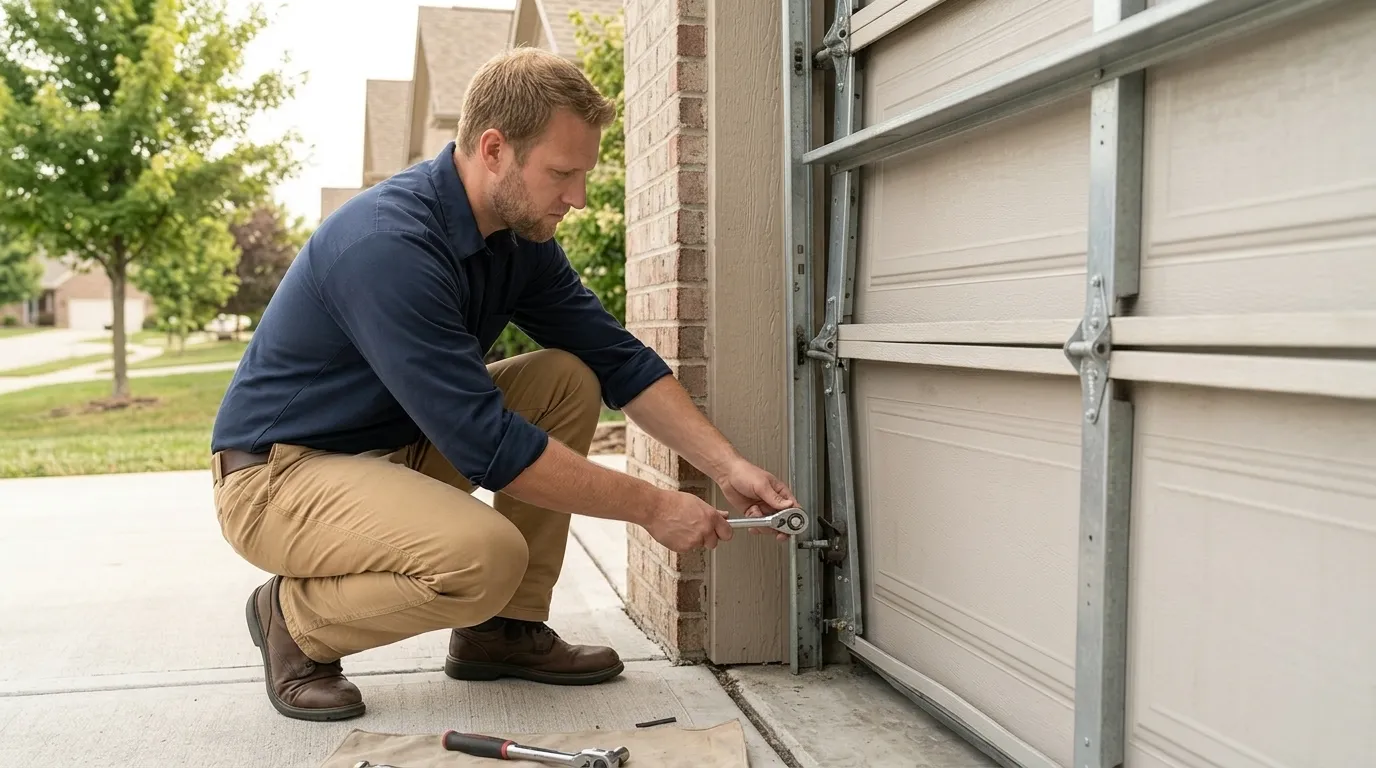
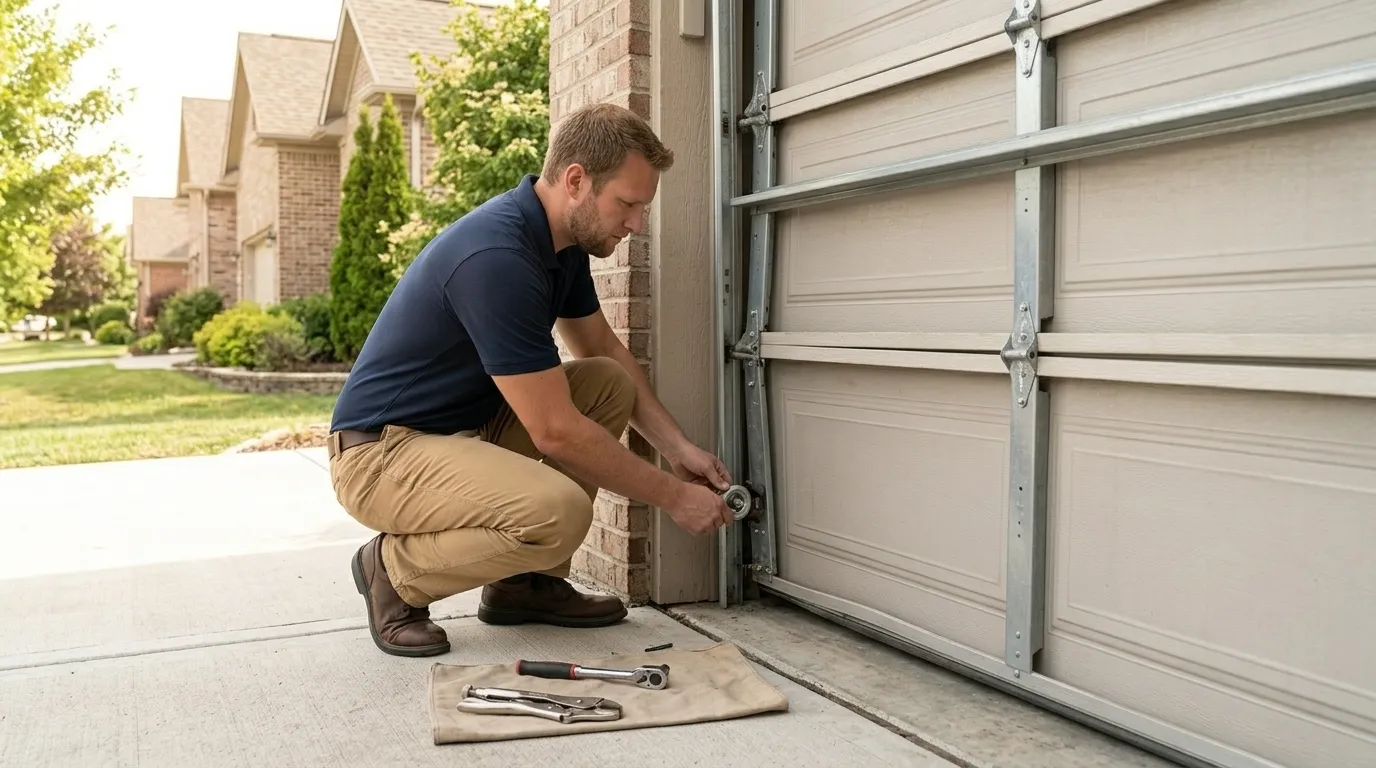
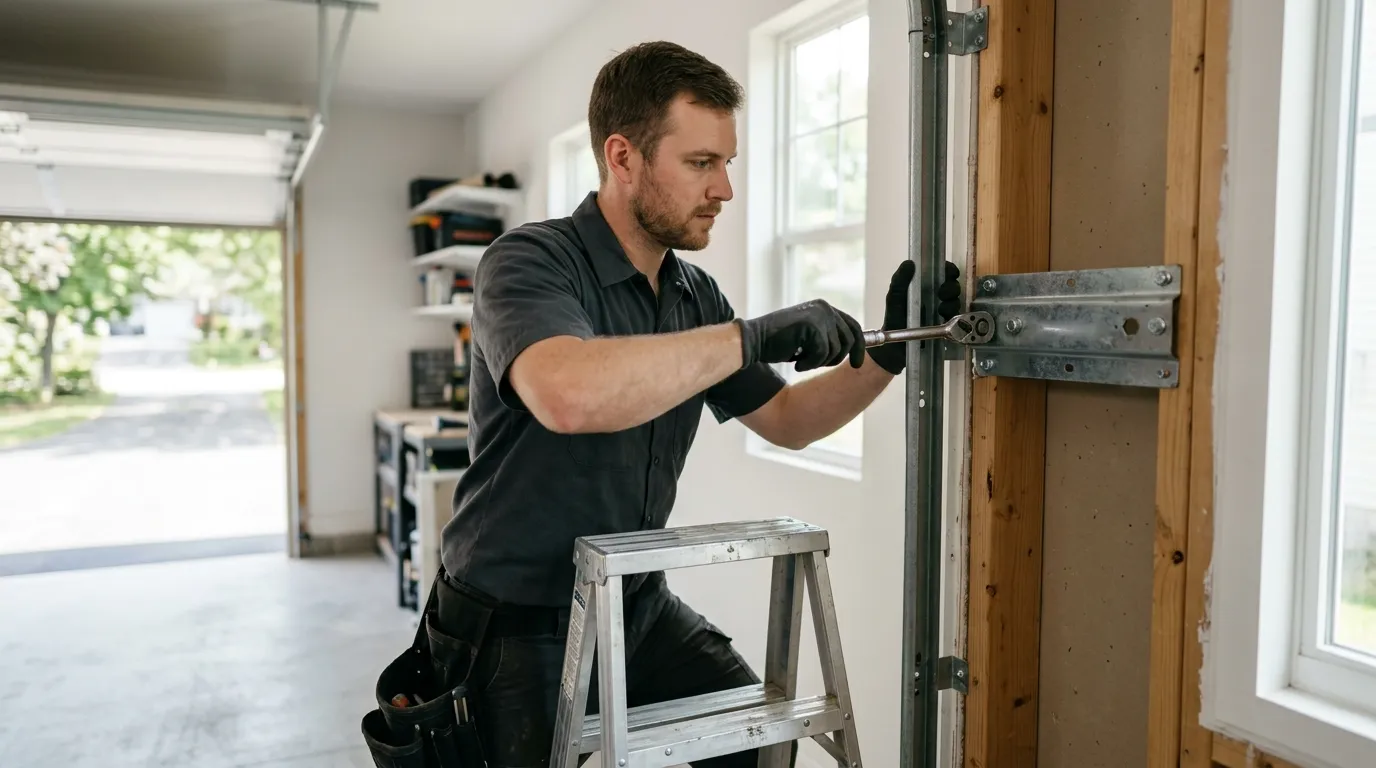
On an opening this age, the two things we check before quoting a price are the track alignment and the header. Original track brackets from a 1987 install were set to a door and opener spec that's since changed twice over, so a new door sometimes needs new brackets even when the old ones look fine to the eye. We won't reuse hardware that doesn't match spec just to save a step.
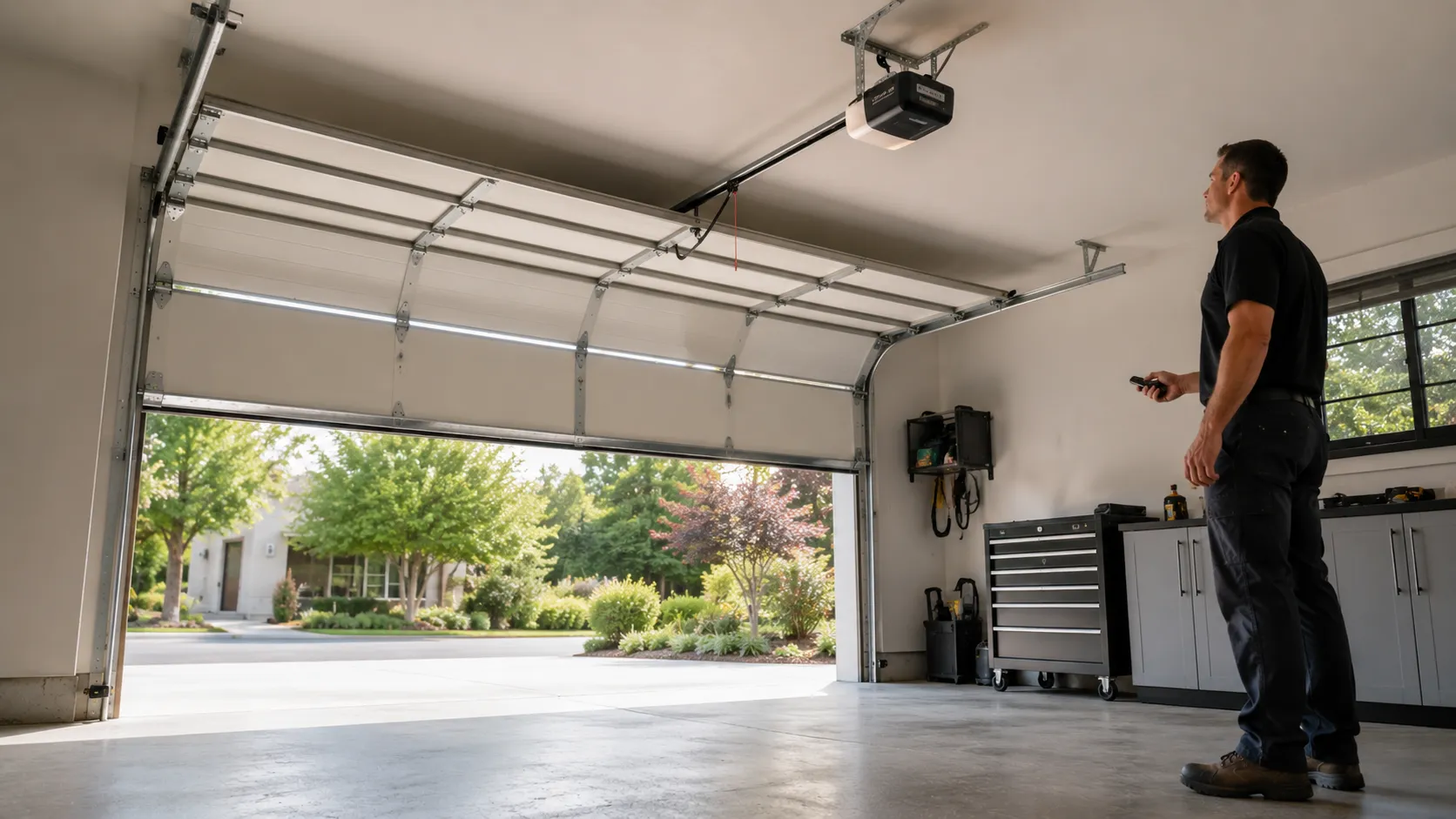
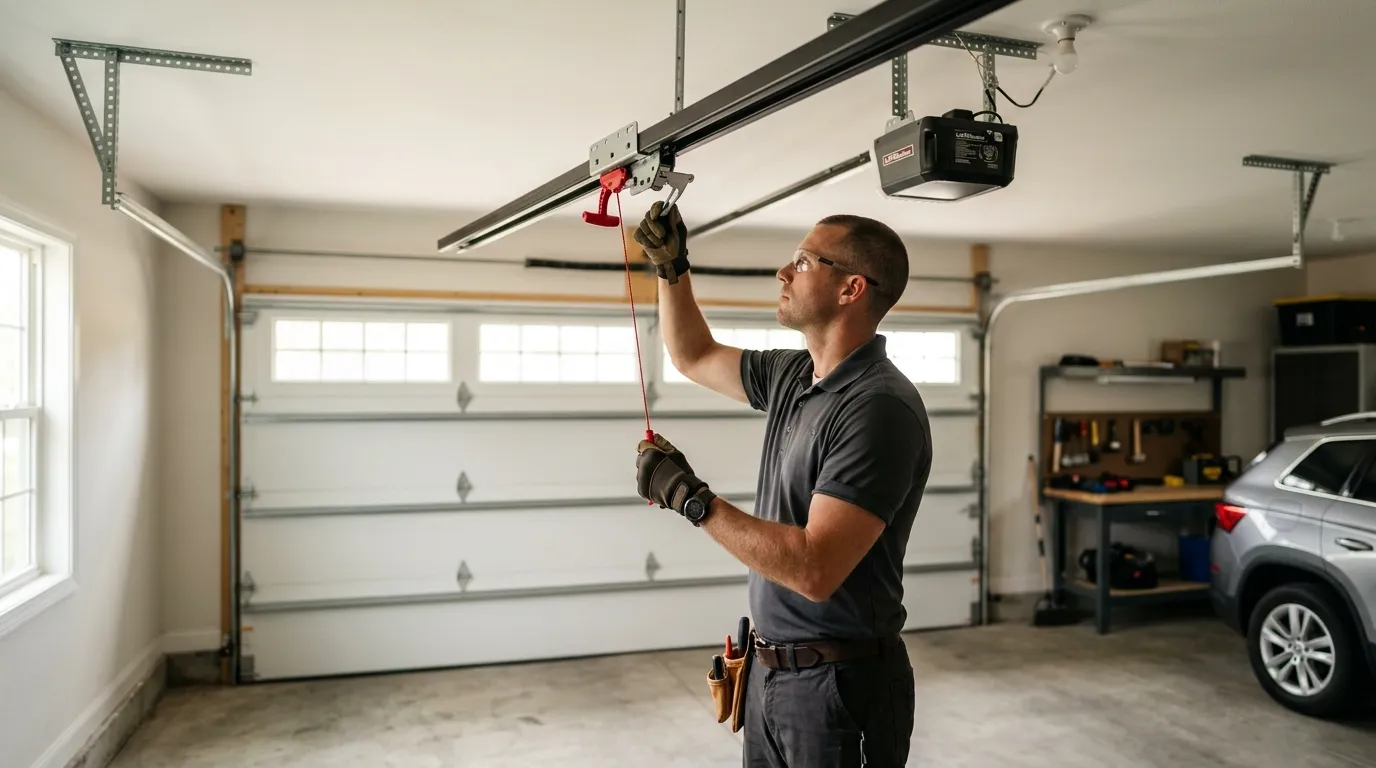
The other issue is wiring. If the opener wiring is original, the insulation can be brittle enough that pulling a new opener's wiring harness through the same conduit cracks it. We test this before we commit to reusing any of the existing electrical rather than running new.
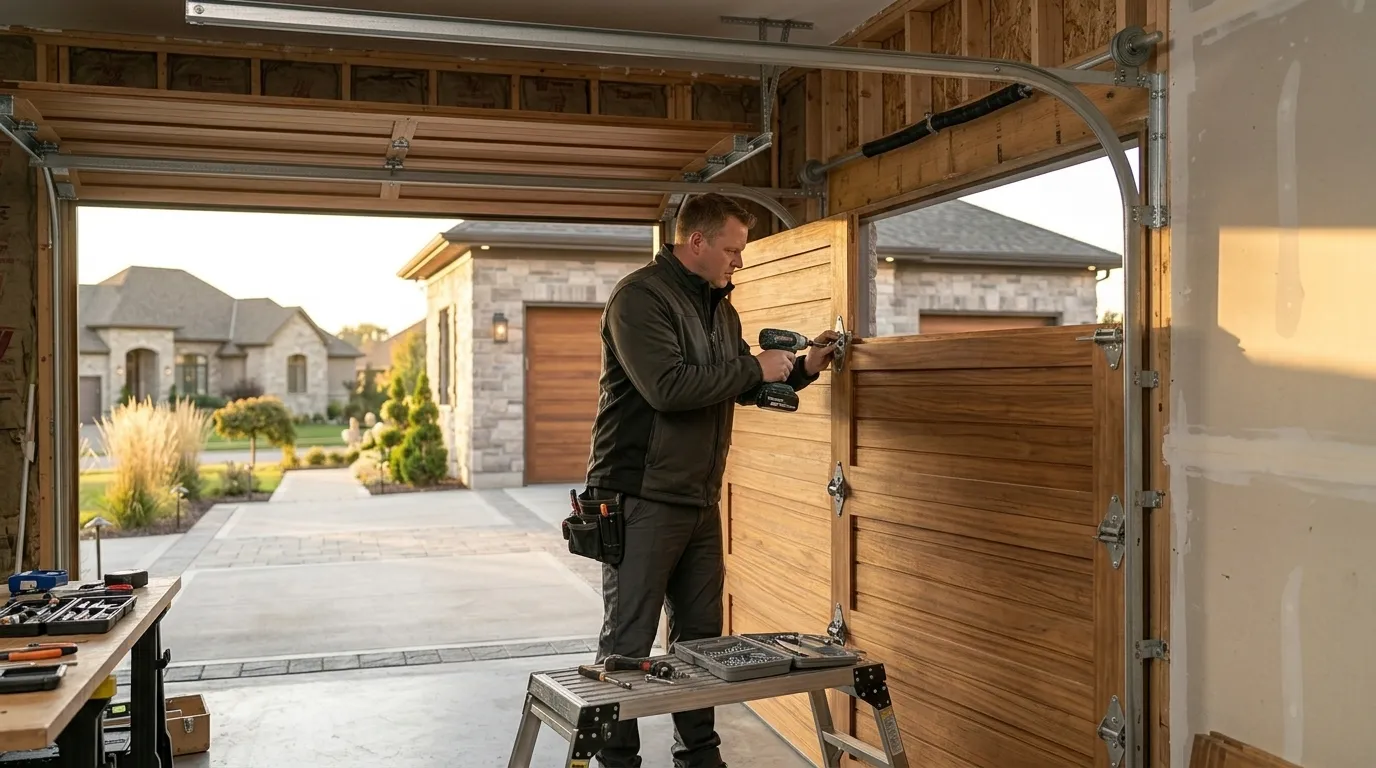
One limitation worth stating plainly: we don't do structural framing repair. If the header is rotted past the point of holding new hardware, that's carpentry work outside what we do, and we'll tell you before the job starts rather than after we've opened up the wall.