Garage Door Off Track: What's Really Going On in Garland
Garland homes built mostly in the 2000s share the same off-track failure points. Here's what causes it, what it costs, and when to call instead of fixing it yourself.
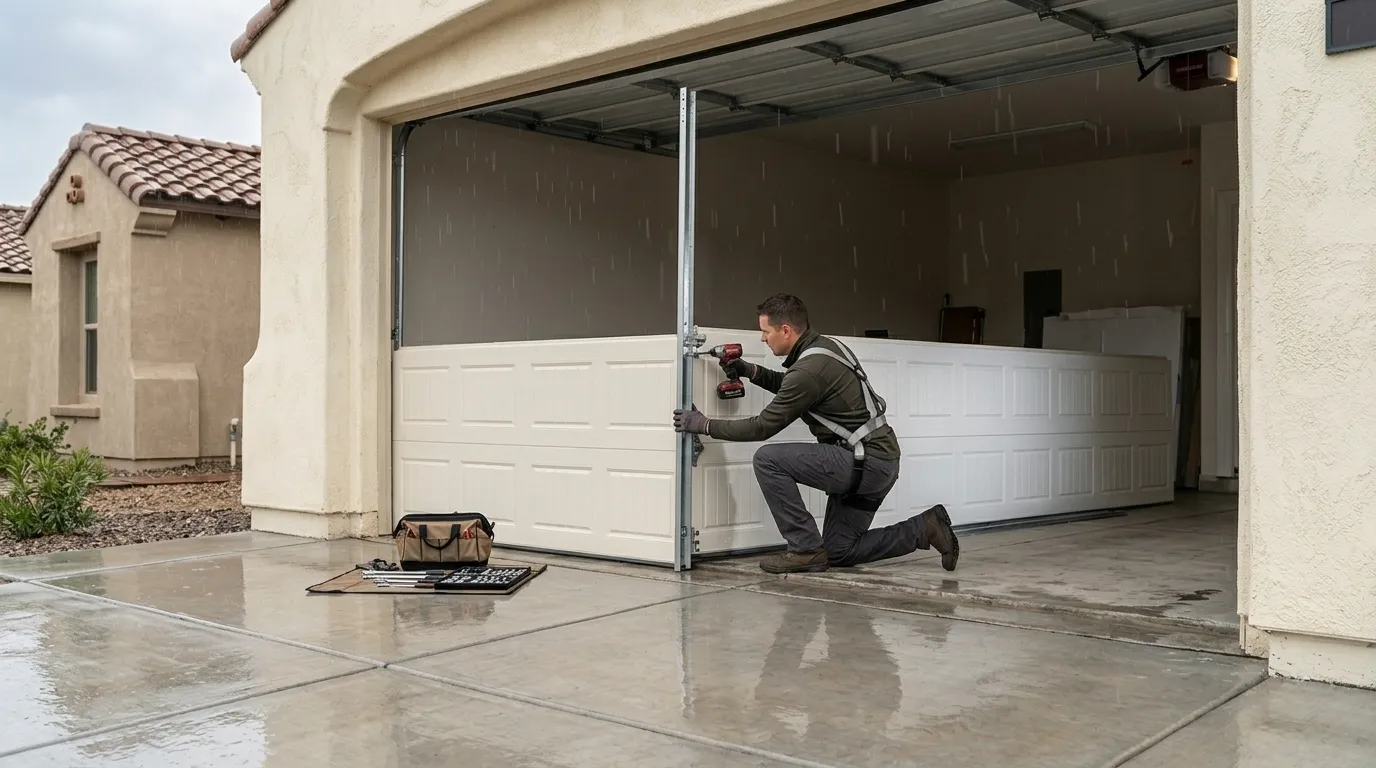
We're not going to put a number here we can't back up, because an off-track door is one of those calls where the price swings hard depending on what we find once the panel's off the wall. A door that popped off the track because a roller snapped is a different job from one where the track itself bent, and both are different again from a door that came off because a cable let go mid-cycle. Sometimes it's a fifteen-minute realignment. Sometimes the bottom panel is bent from being forced back into the track by hand, and now you're replacing a section, not just re-hanging it.
What we can tell you: the biggest cost driver across the Garland service area isn't the door brand or the size of the opening, it's how long the door ran off-track before anyone called. A door that's been grinding sideways for two days chews up the rollers, the track, and sometimes the opener's drive gear. A door that gets a call the same day it slips usually stays a track and roller job. We give you a real number after we look at the door, not before, and we tell you flat out if the fix costs more than replacement makes sense.
We don't do phone quotes on this one. Too many variables to be honest about a price without eyes on the hardware.
Why This Fails Locally
Garland's housing stock mostly went up between 1973 and 2013, with the median build year landing around 2002, and a lot of that came in one big wave in the 2000s across the neighborhoods that make up the service area. That matters here specifically: doors installed during that stretch used steel rollers and stamped track brackets that were standard at the time, and those parts are now twenty-plus years into a service life that tops out well before that on a door that runs every day.
The other piece is the climate. Garland sits in a moderate-heat band, which means the failure pattern here isn't the freeze-thaw cracking you'd see further north - it's heat cycling. Track brackets mounted to wood jambs expand and contract through hot summers and mild winters, year after year, and the screws holding them walk loose. A bracket that's a quarter-inch off square doesn't look wrong from the driveway. It just means the door rides slightly crooked every single cycle until a roller finally jumps the rail.
Put those two things together - a housing stock that's mostly in its twenties, and a heat cycle that loosens hardware instead of cracking it - and off-track calls in this area cluster hard around homes from that same building wave, not older or newer stock.
What You Are Seeing
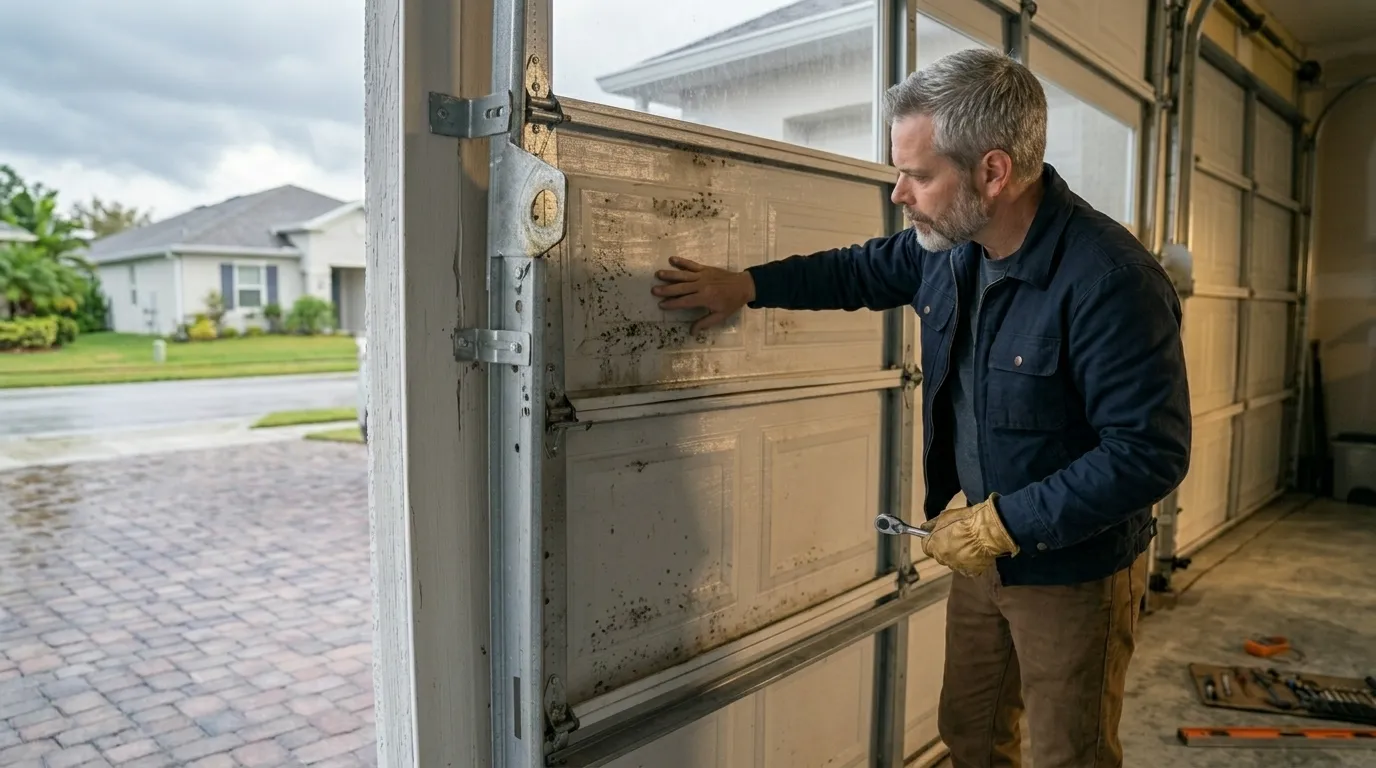
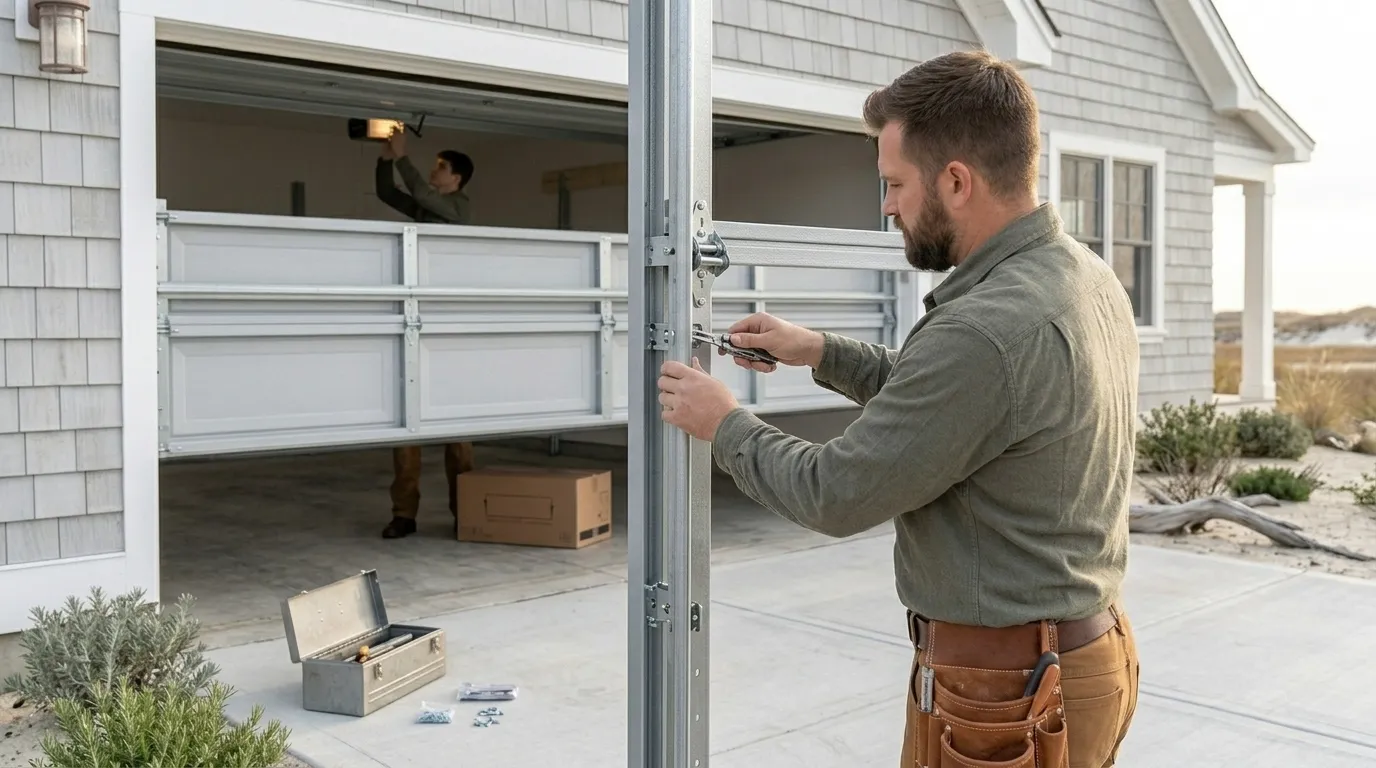
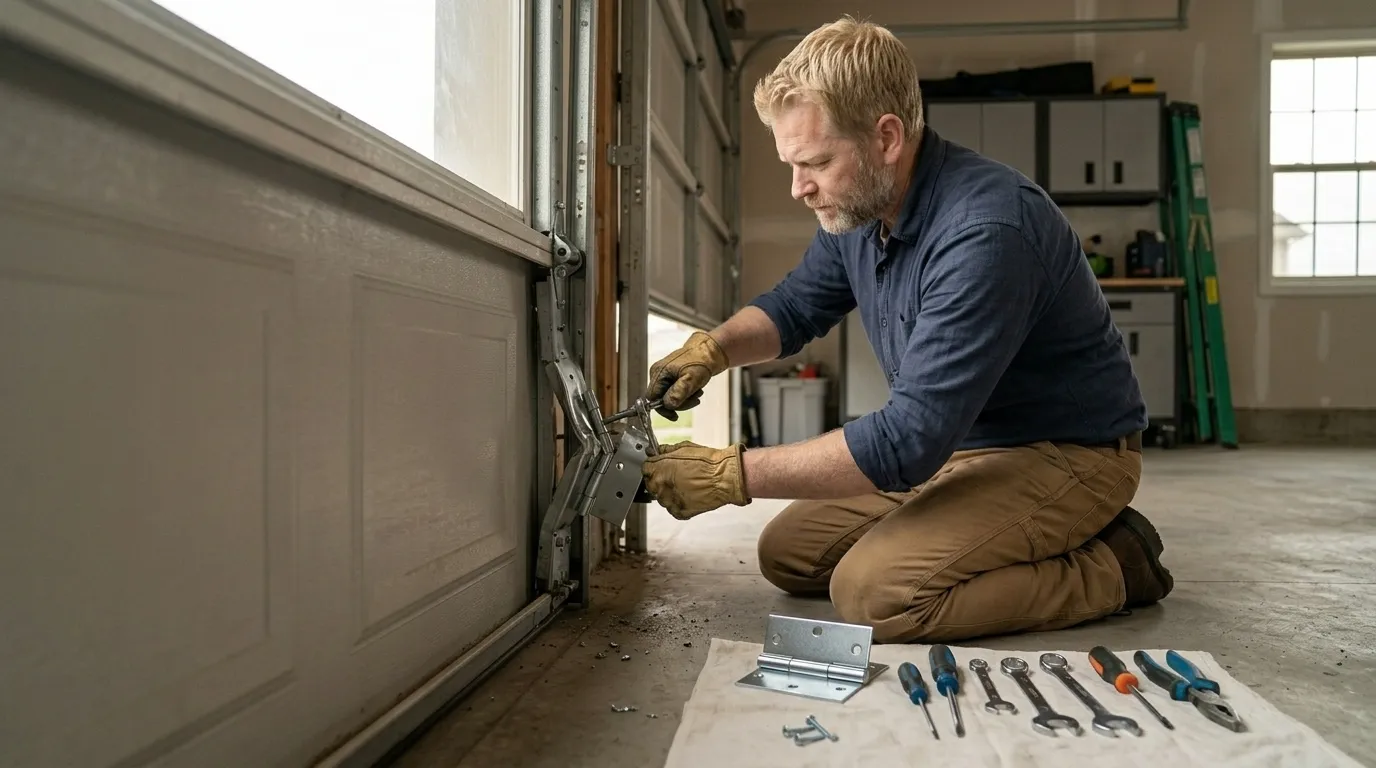
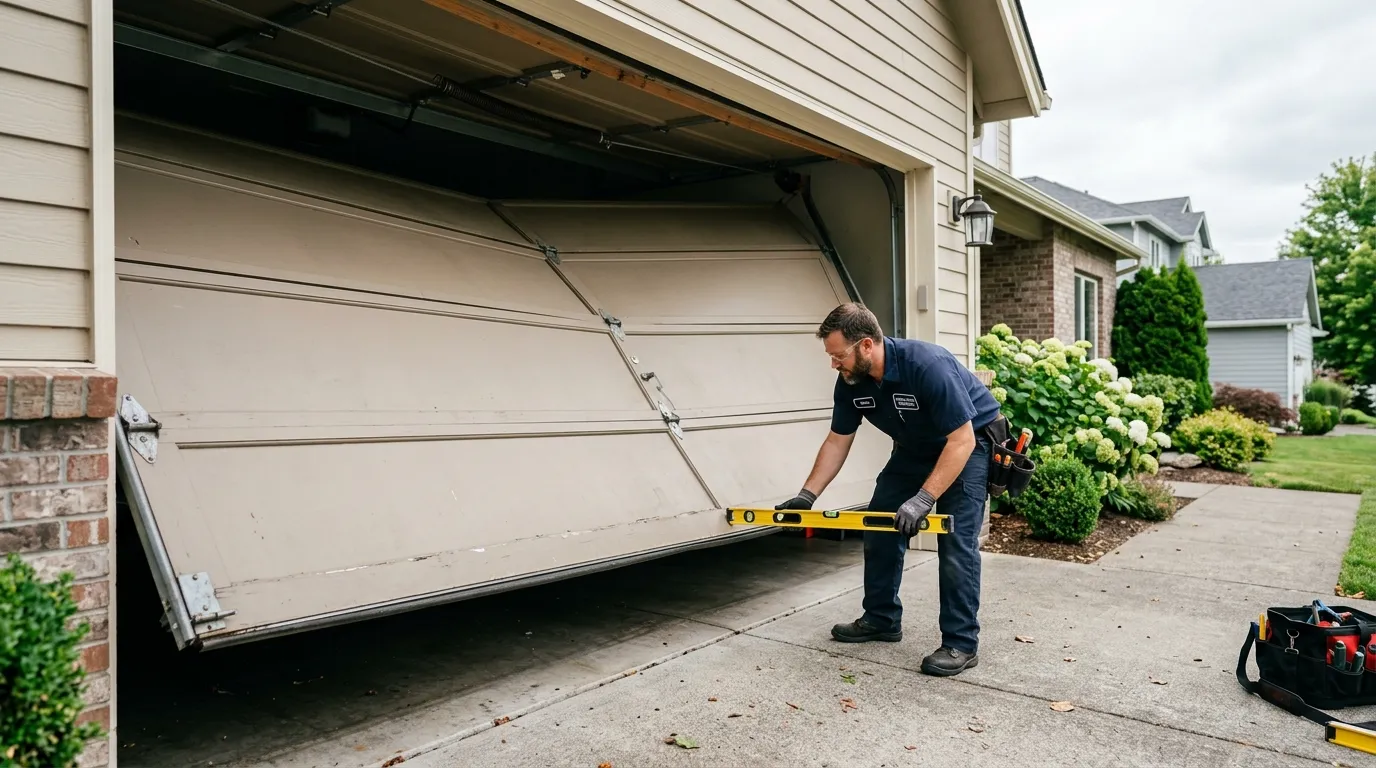
Usually it starts small. The door runs a little crooked on the way down, one side dropping faster than the other, and you hear a scrape instead of a smooth roll. That's a roller riding loose in the track before it fully jumps out. If you keep running the opener through that, the roller eventually pops clean off the rail and the bottom corner of the door drops or tilts.
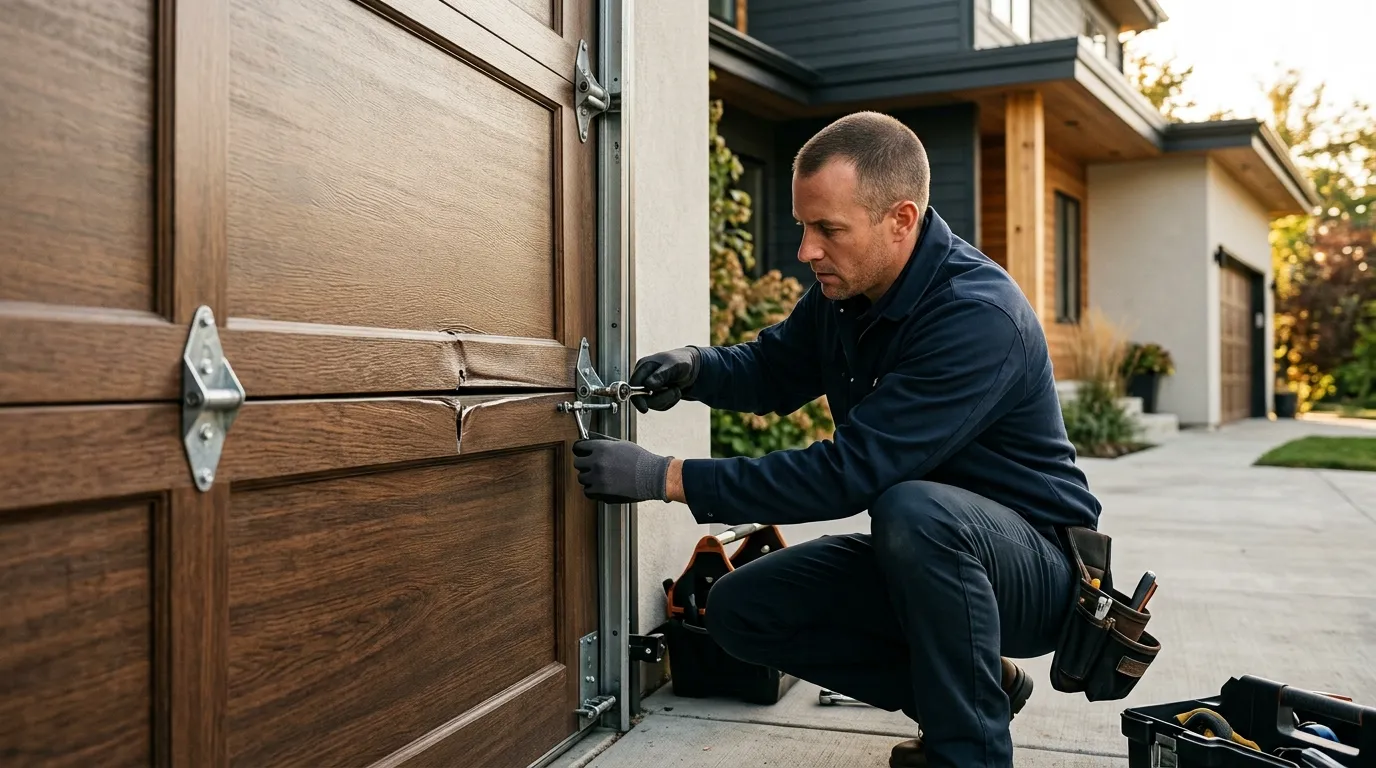
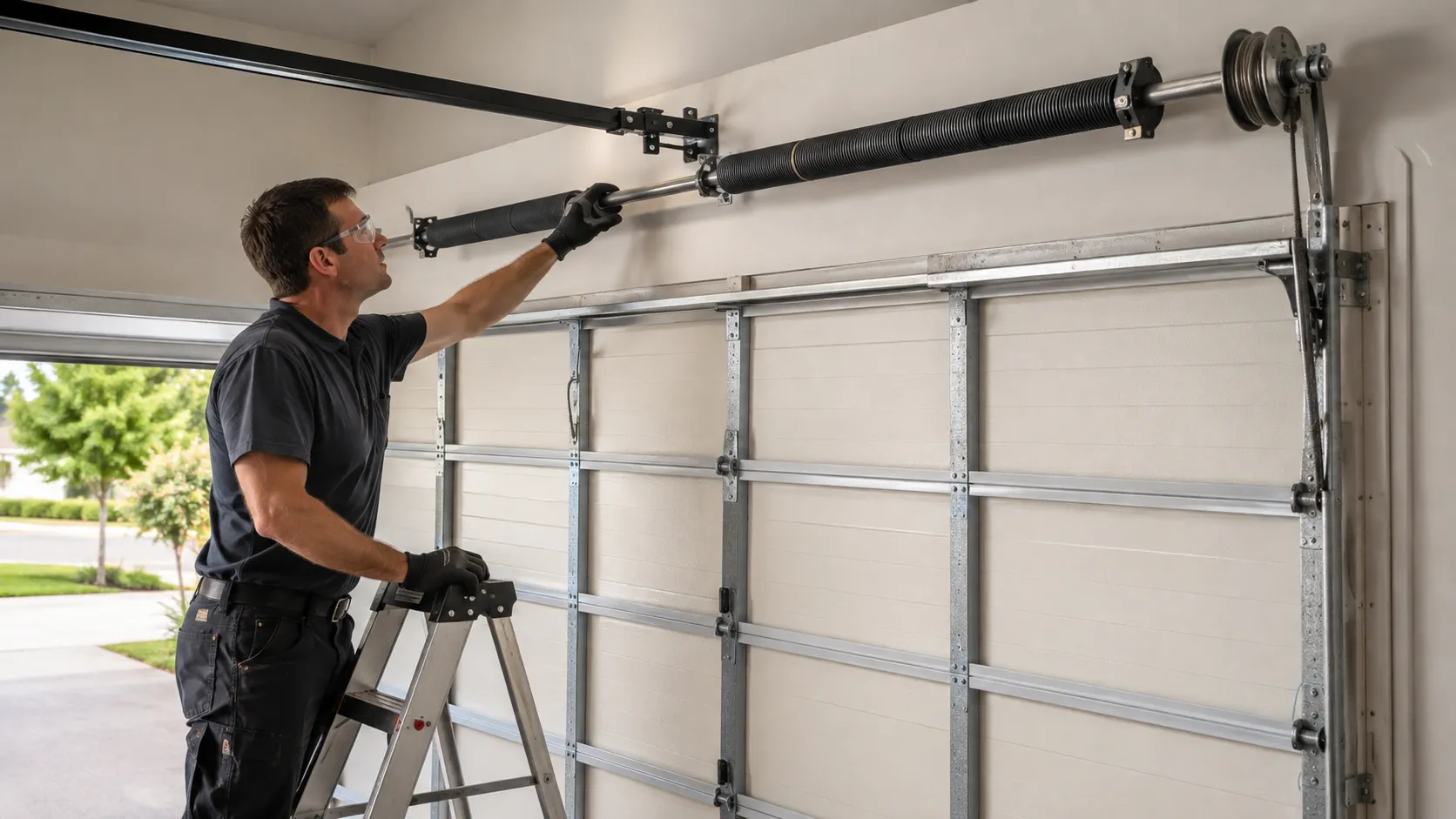
Sometimes it's more sudden - the door is up, then it isn't, and one side of the panel is hanging lower than the other, resting against the track instead of inside it. That's usually a cable that slipped off its drum or a bracket that let go, not just a worn roller. Don't run the opener again once you see the panel sitting crooked against the frame. Running a motor against a jammed track is how a roller stripped track turns into a bent track, and a bent track is a heavier repair.
If the door came off track on one side only, and the other side still looks square, that's actually the easier version of this call. If both sides are off and the door is racked in the opening, that's the version where we're checking for a bent panel underneath, not just hardware.
Can You Do This Yourself
Some of it, yes - carefully. If the door is only slightly off, not fully derailed, and nothing is bent, you can sometimes walk the roller back onto the track by hand with the door in the down position and the opener disconnected. Note that last part: disconnect the opener first. Never run a motor against a door that isn't seated in its track.
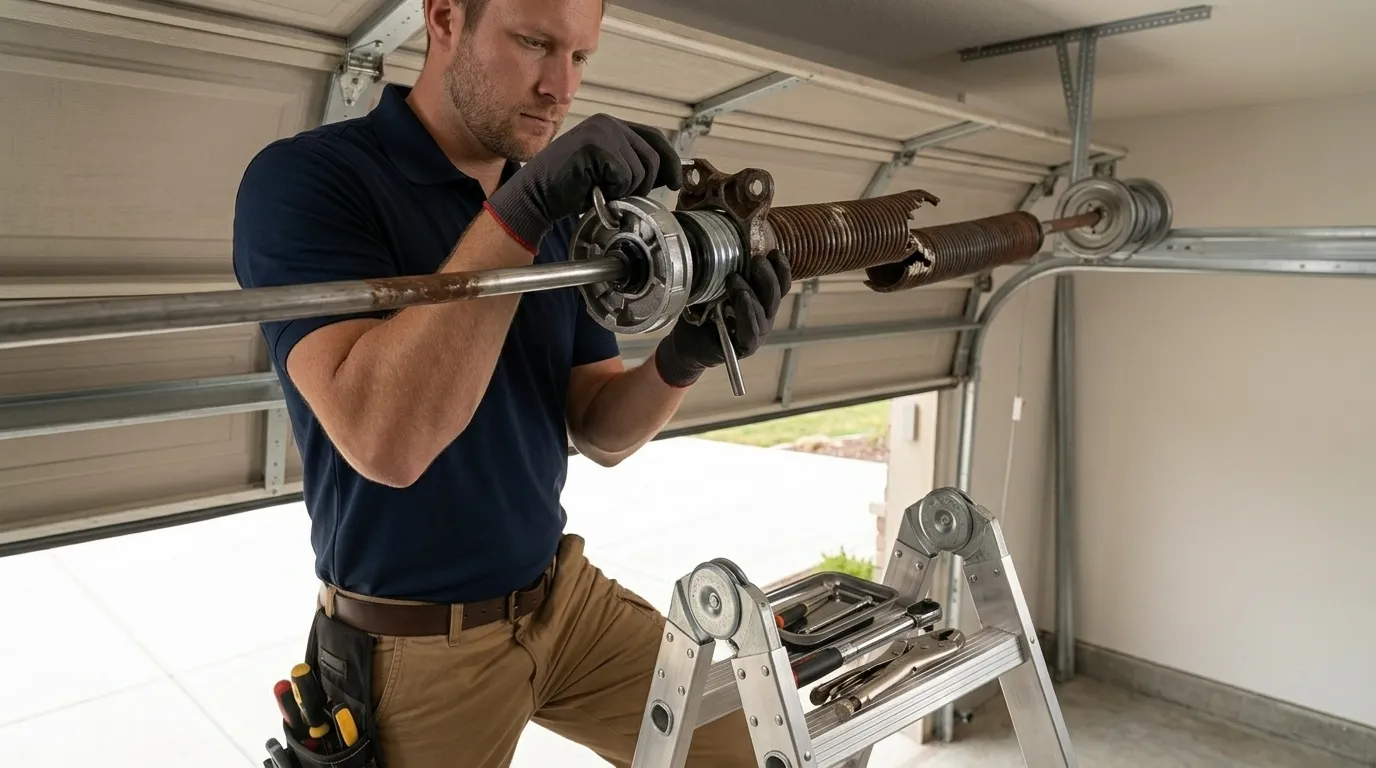
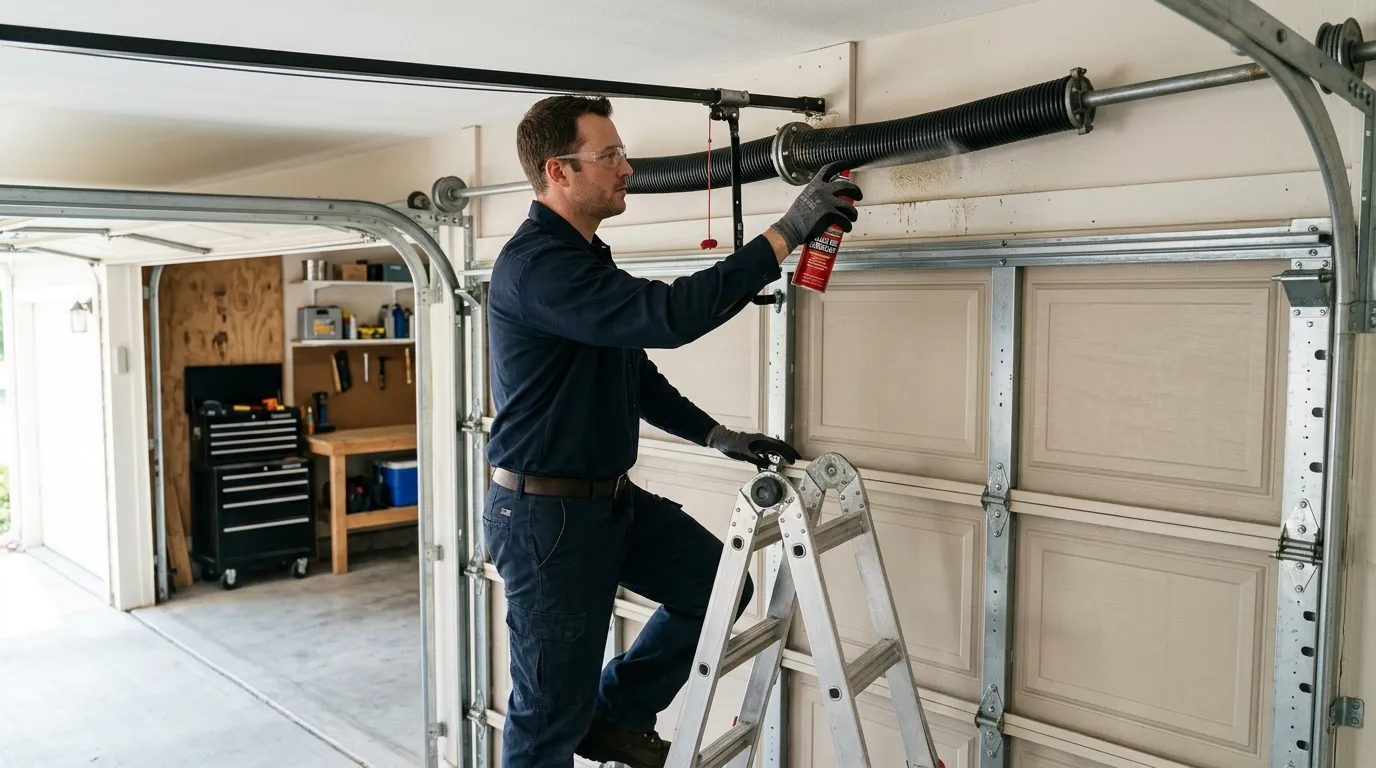
What we don't recommend doing yourself is forcing a fully derailed door back into a bent track, or working anywhere near a door held up by cables under torsion spring tension. That's not a caution we say to drum up business - a torsion spring under load has enough stored force to break a wrist or worse, and a door that's off track is often a door where that tension is no longer distributed the way it's supposed to be. If you're not sure whether the spring side is involved, treat it like it is.
Across a service area with a median household income around $133,750, we get plenty of calls from homeowners who are handy and comfortable doing their own work - and most of them still call for this one specific failure, because the margin for a mistake near loaded cables is thin. That's not us talking anyone out of DIY generally. It's just where the line sits on this particular repair.
How it works
From “it’s stuck” to “it’s fixed”
A quick, honest process - no guesswork and no surprises.
1
Tell us what’s wrong
Describe the symptom - won’t open, loud bang, opener runs but the door won’t move.
2
On-site diagnosis
A technician tests the door under power and by hand and finds what actually failed.
3
Clear, up-front plan
You get the fix that’s needed and what drives the cost - before any work starts.
4
Repaired & tested
The repair is done, the door is set true and tested, and the work area left clean.
Serving Garland, TX - tell us what your door’s doing and we’ll take it from there.
Why did my garage door come off track with no warning?
It rarely happens with no warning - usually there's been a roller riding loose or a bracket working itself free for weeks, and you just didn't notice until the door dropped or scraped hard enough to hear. In Garland's older-2000s housing stock, that slow loosening from heat cycling is the most common lead-up we see before a sudden derail.
Is it safe to push the door back onto the track myself?
Only if the door is down, the opener is disconnected, and nothing is bent. If cables, springs, or a bent track are involved, don't force it. Torsion springs hold enough stored tension to cause serious injury, and a door that's already off track may mean that tension isn't behaving the way it should.
Will this happen again after it's fixed?
If we replace the worn rollers and re-square the bracket, no - that section of hardware is back to spec. If the underlying cause is a bent track or a jamb that's shifted, we tell you that up front, because re-hanging the door without addressing it just means the same call again in a few months.
Ready to get your garage door sorted?
Tell us what it’s doing and where you are in Garland - we’ll take it from there.