Why This Fails Locally
Across the wider Garland service area, houses run from 1973 through 2013 with a median build year of 2002. University Park skews meaningfully older than that average - its housing stock centers on 1987. That fifteen-year gap matters more than it sounds like it should, because garage door hardware moved through a few real design shifts in that window.
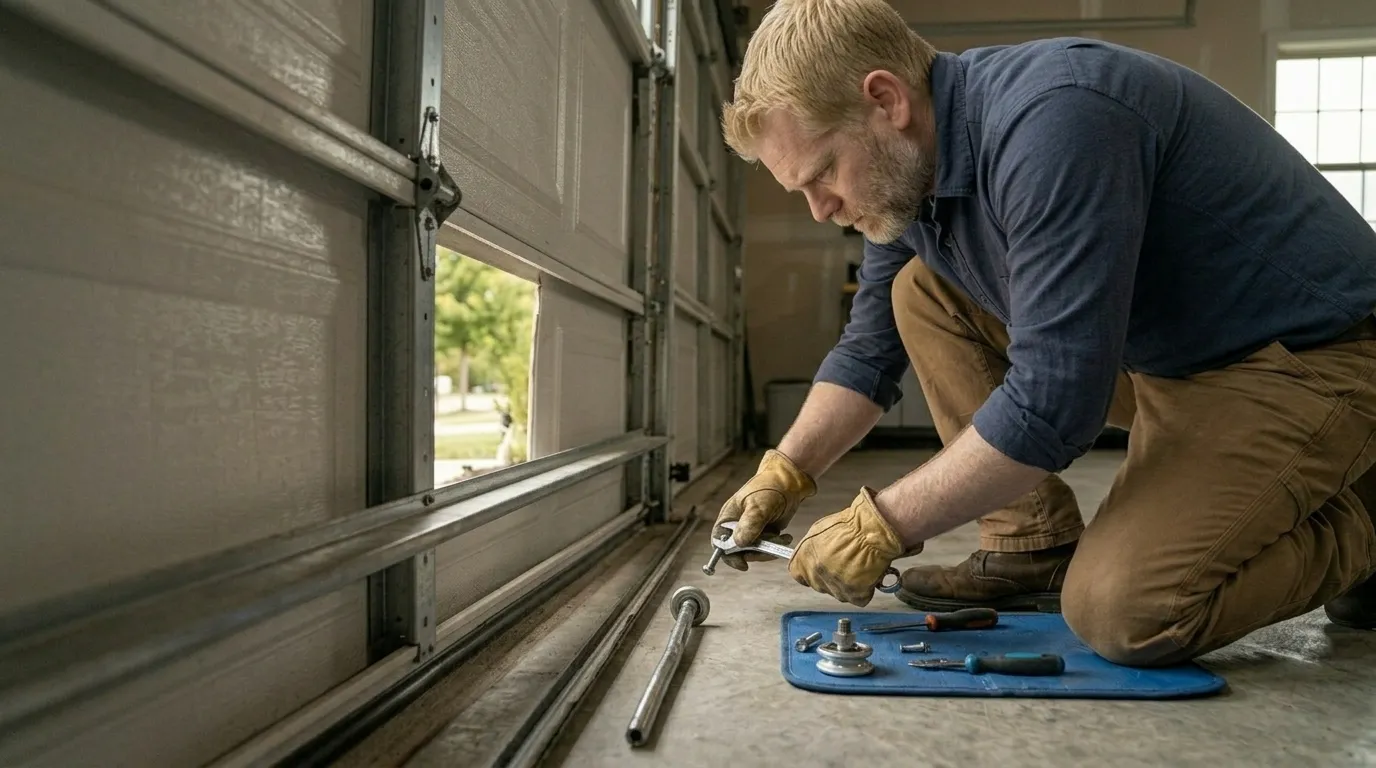
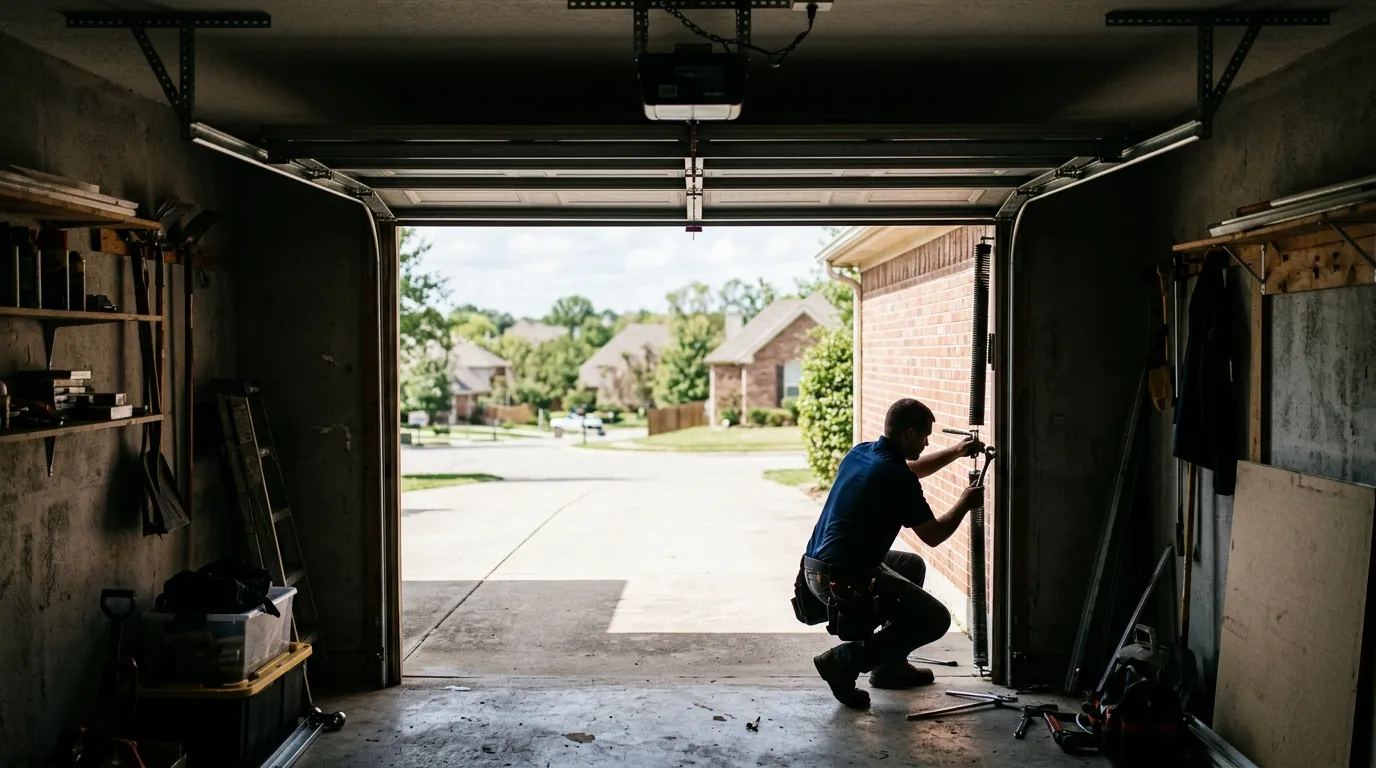
A door installed around 1987 is more likely to be running on an older torsion spring drum setup, sometimes paired with a chain-drive opener from an era before rolling-code remotes were standard. Those parts weren't wrong when installed - they were just built to a different spec than what's on the shelf at most supply houses now. When a spring on one of these goes, the replacement often isn't a drop-in; it's a matched-size swap because the original drum diameter isn't something every supplier still stocks.
This isn't a University Park quirk so much as a University Park average - plenty of houses here have been updated since, and we won't assume your door is original just because your street mostly went up in the late 80s. But when we quote a repair sight-unseen, this is the baseline we're working from until we see the actual hardware.
What Can Go Wrong
On a door built to a late-1980s spec, the most common failure we see is the torsion spring itself - not because the design was bad, but because a 35-plus-year-old spring has simply cycled past its rated life. When it goes, it usually takes a cable or a bottom bracket with it if the door was left mid-cycle.
Rollers on original hardware from this era tend to be steel rather than nylon, which means more noise and more wear on the track over time - you'll hear it before you see it. Openers from the same period, if they haven't been swapped, often run older logic boards that don't take a modern replacement remote without an adapter, and parts for the board itself can be slow to source since the manufacturer moved on to newer product lines years ago.
Our region's moderate heat band doesn't put the same strain on hardware that extreme freeze-thaw cycles do elsewhere, so we're not chasing weather-cracked panels here the way we might in a harsher climate. The failures we see in University Park are age failures, not weather failures - springs, cables, and openers reaching the end of a long, ordinary service life rather than getting knocked out by a storm.