Why This Fails Locally
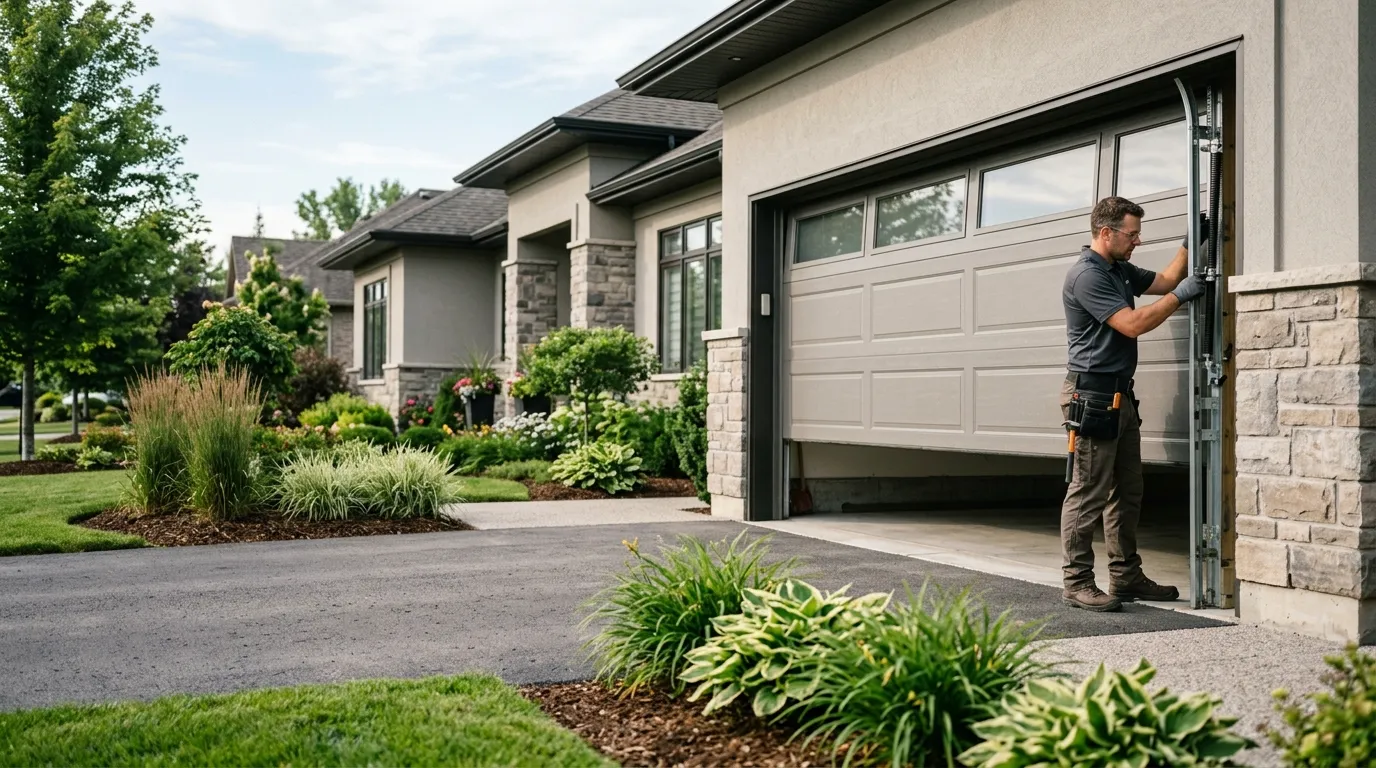
Garland's housing stock mostly went up between 1973 and 2013, with the median build year landing around 2002, and across the service area the pattern holds: nineteen named neighborhoods are dominated by 2000s-era construction. That matters for openers specifically, because that's the era when chain-drive and belt-drive units with circuit boards became standard equipment installed at the builder stage. Those units are now twenty-plus years into their working life, and logic boards, capacitors, and drive gears from that generation are exactly the parts that fail first.
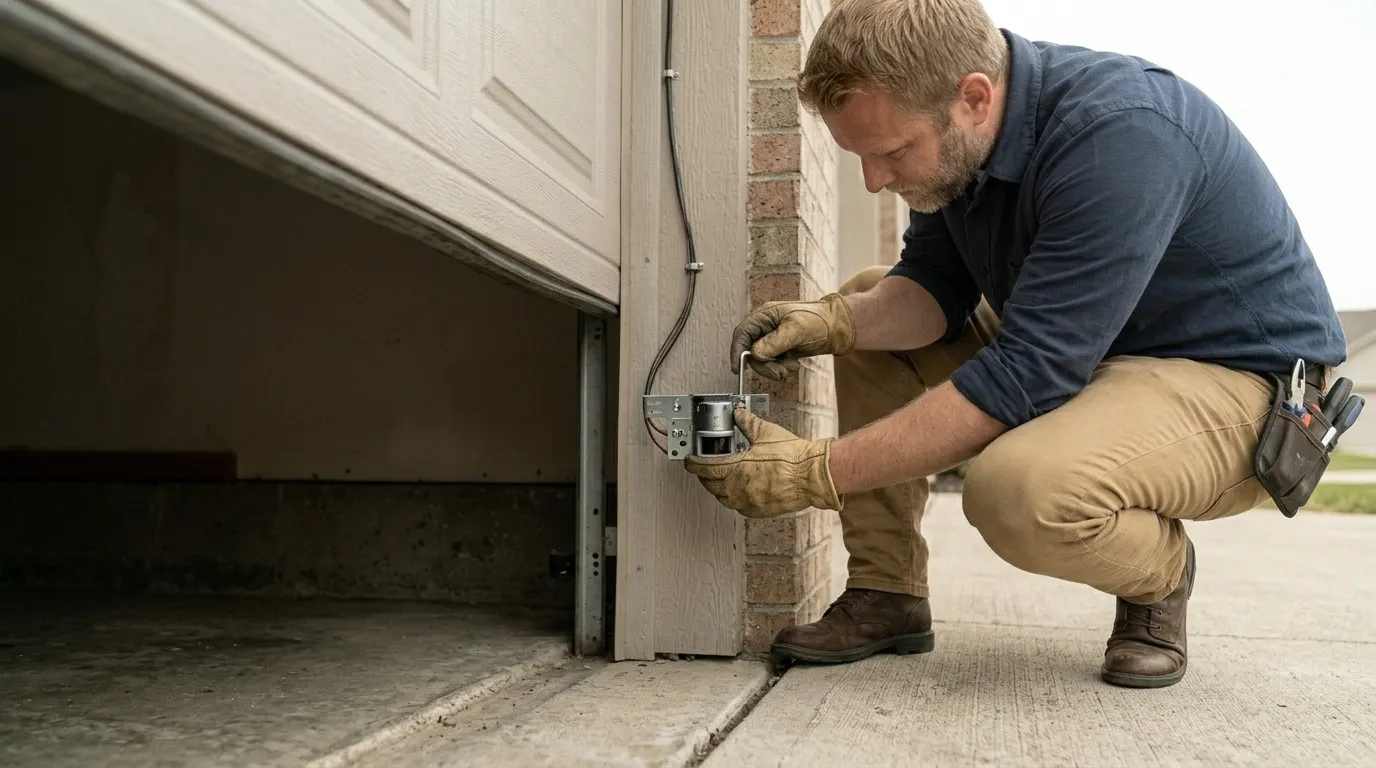
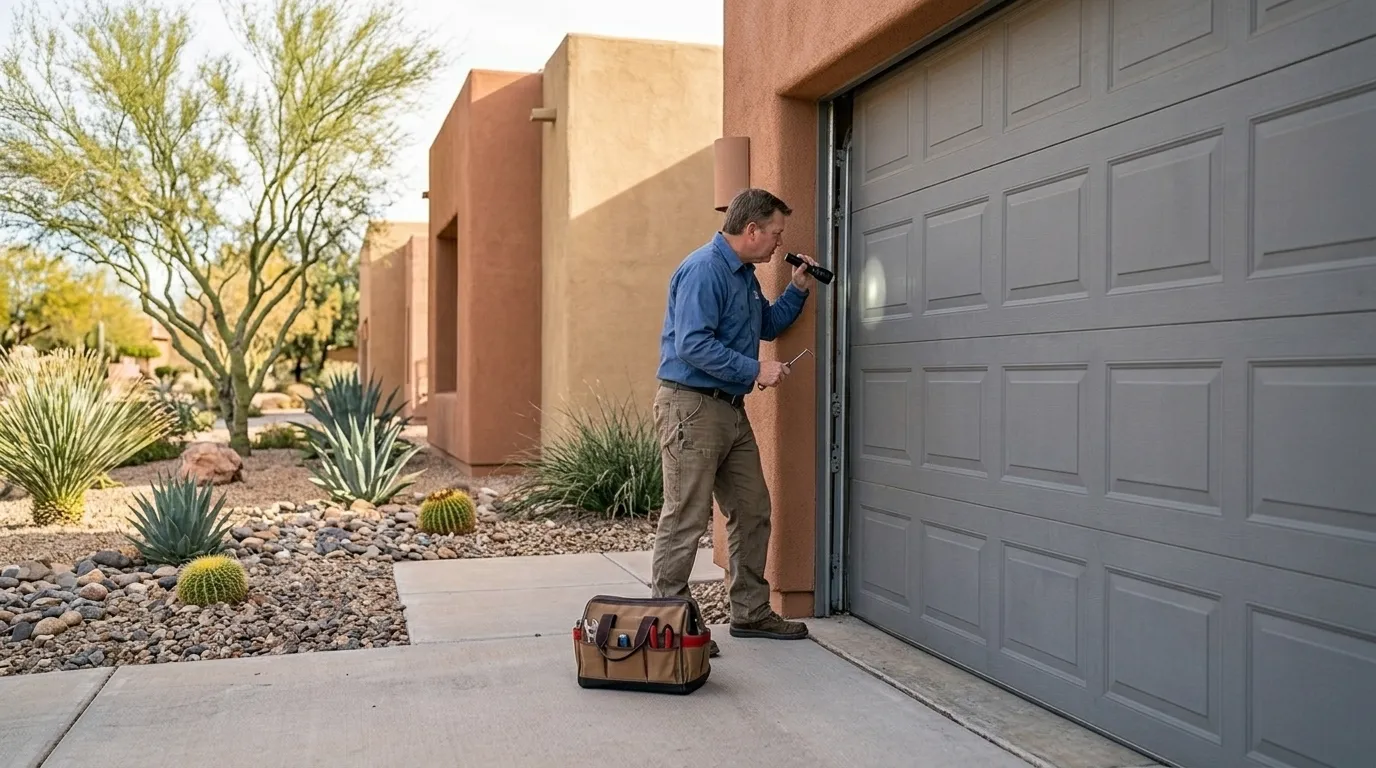
The climate here sits in the moderate-heat band, and that steady, repeated summer heat cycling is harder on an opener than people expect. It's not one dramatic heat event doing the damage, it's the daily swing baking the garage interior, drying out gear grease, and expanding and contracting the plastic housings around safety sensors until the eyes drift out of alignment. A sensor that was dead-on in April can be a quarter inch off by August, and that alone is enough to make a door reverse or refuse to close.
Put those two things together, an aging original opener and a climate that stresses it every summer, and you get the same handful of failures showing up on repeat across houses built in that same twenty-year window.
What You Are Seeing
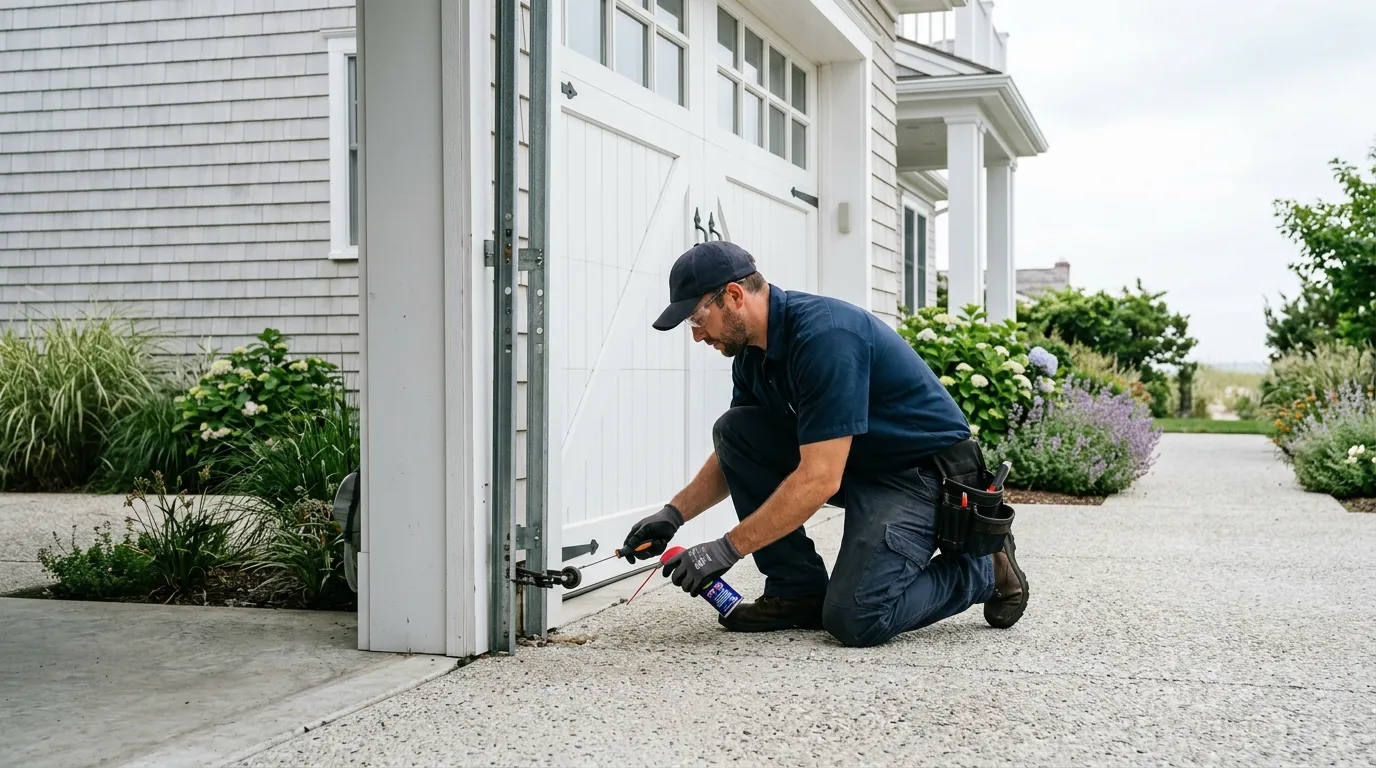
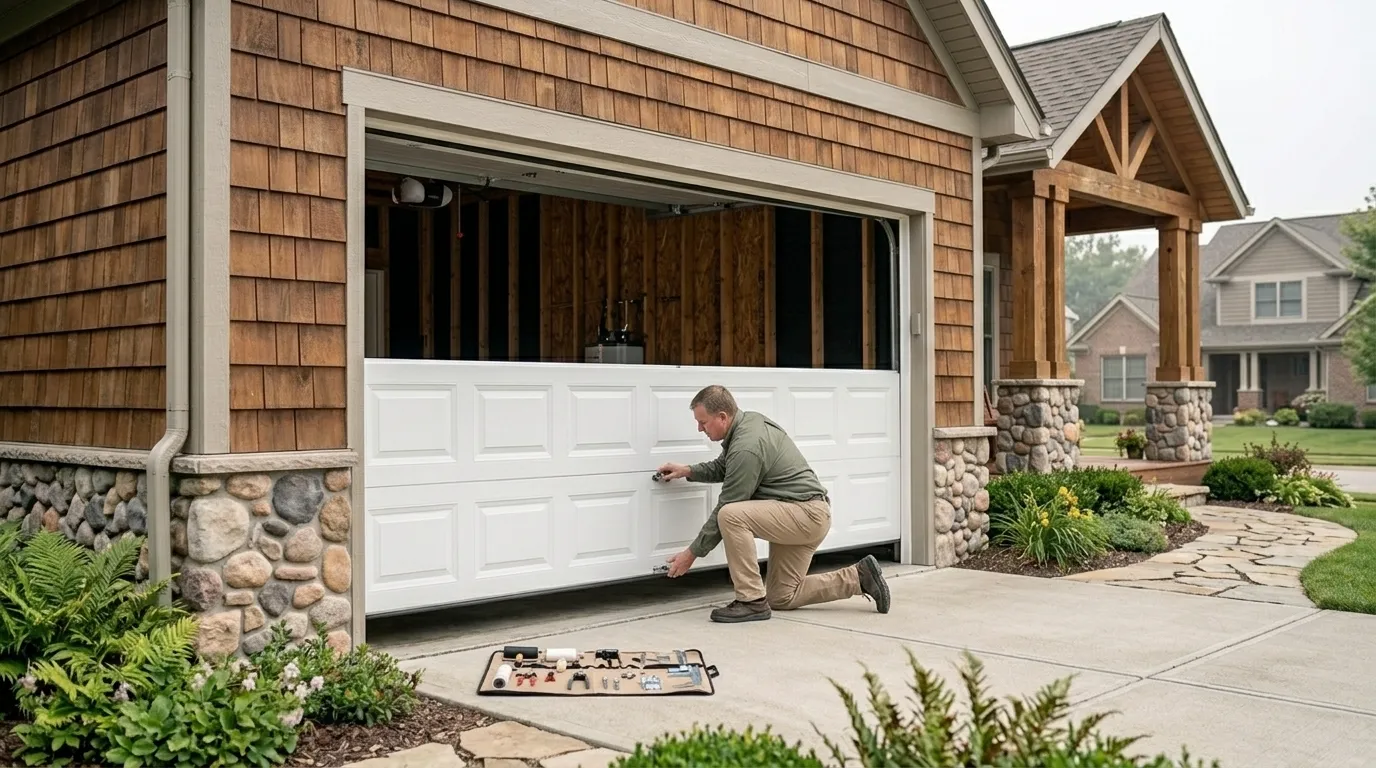
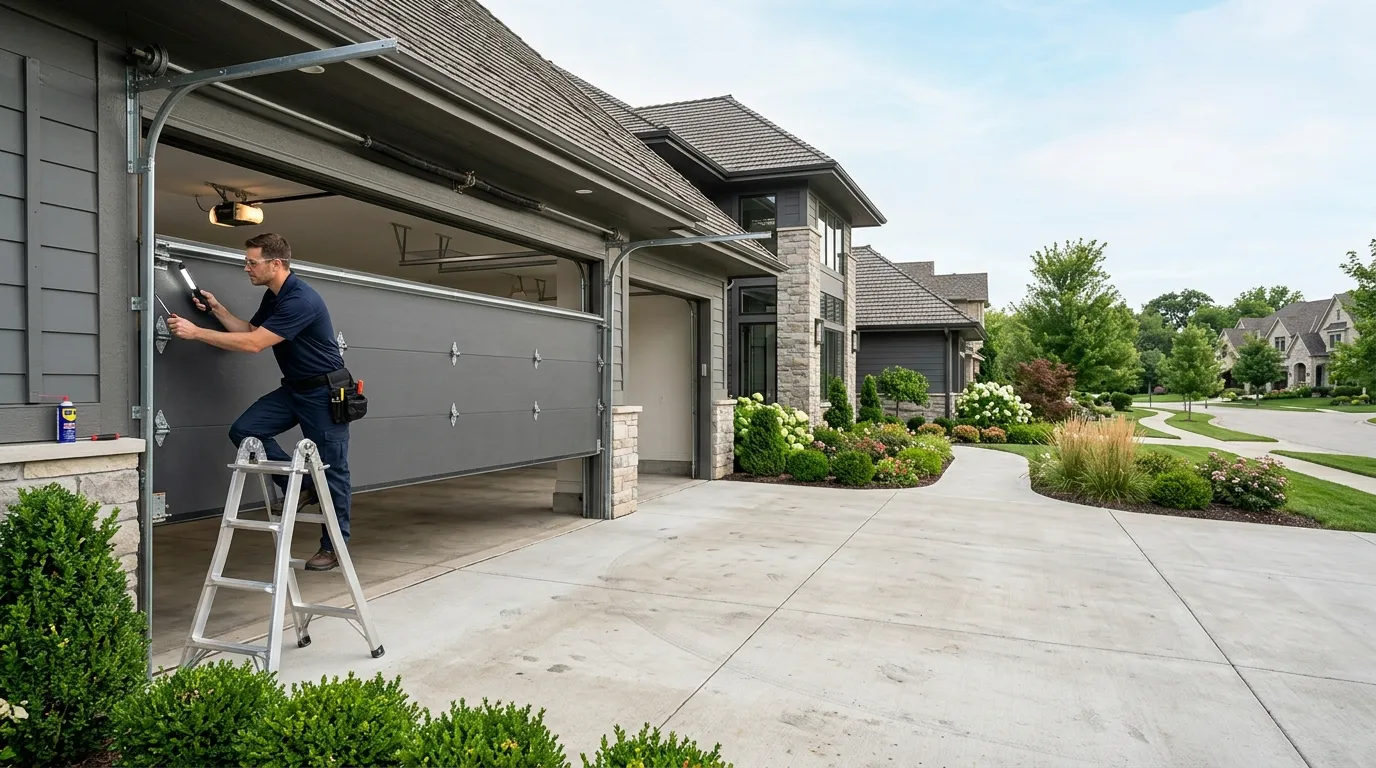
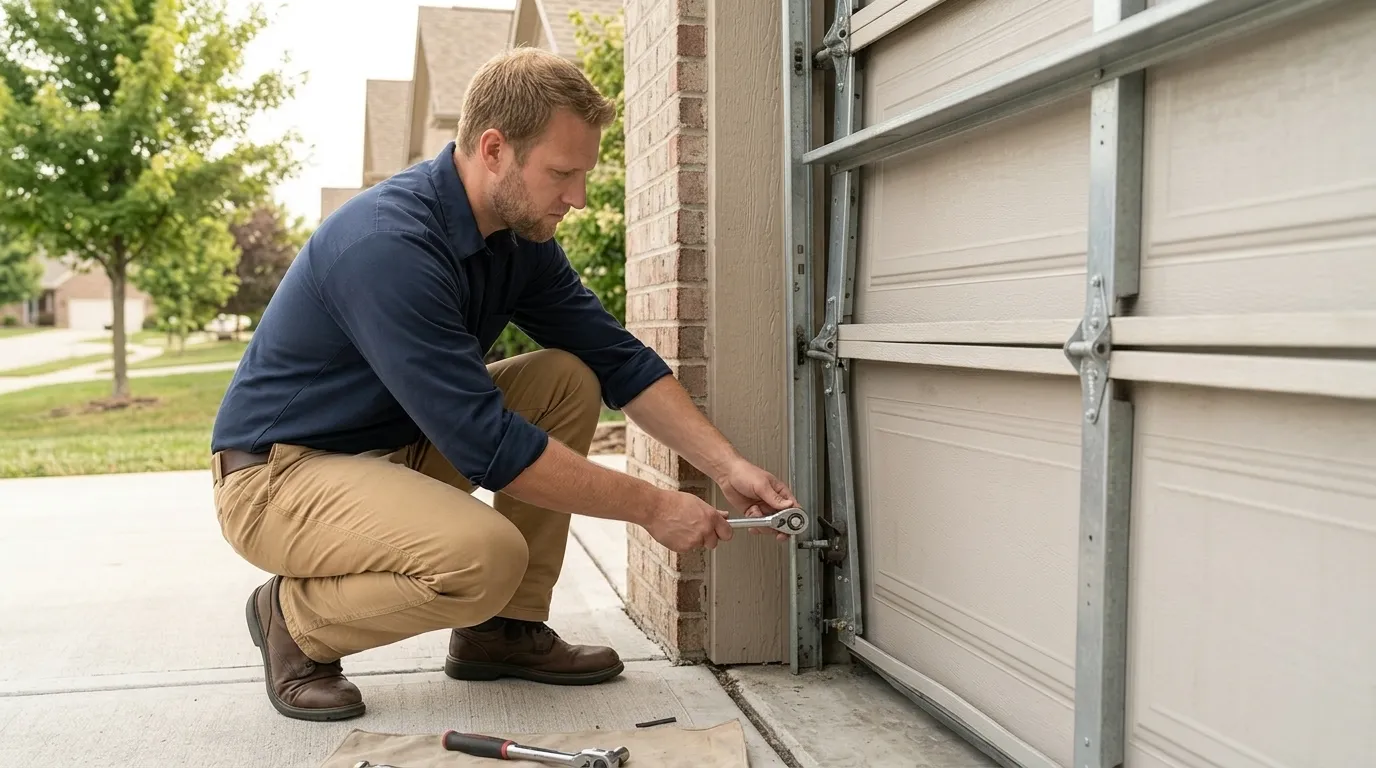
The most common call is a door that won't close all the way, or reverses partway down. Nine times out of ten that's the safety sensors, either knocked out of alignment or with a lens dirty enough that the opener reads it as blocked. Right behind that: the opener runs, you hear the motor, but the door doesn't move, which usually means a stripped drive gear or a broken belt/chain connection inside the housing rather than anything with the door itself.
A remote that works sometimes but not always, especially from inside a car in the driveway, often points to a weak antenna connection or a logic board starting to go. Flickering or dead opener light with everything else working normal is usually just the bulb or a loose fixture, the cheapest fix on this whole list. A grinding or straining sound on start-up, especially on an older chain-drive unit, is the gear housing wearing out, and once that starts it doesn't self-correct.
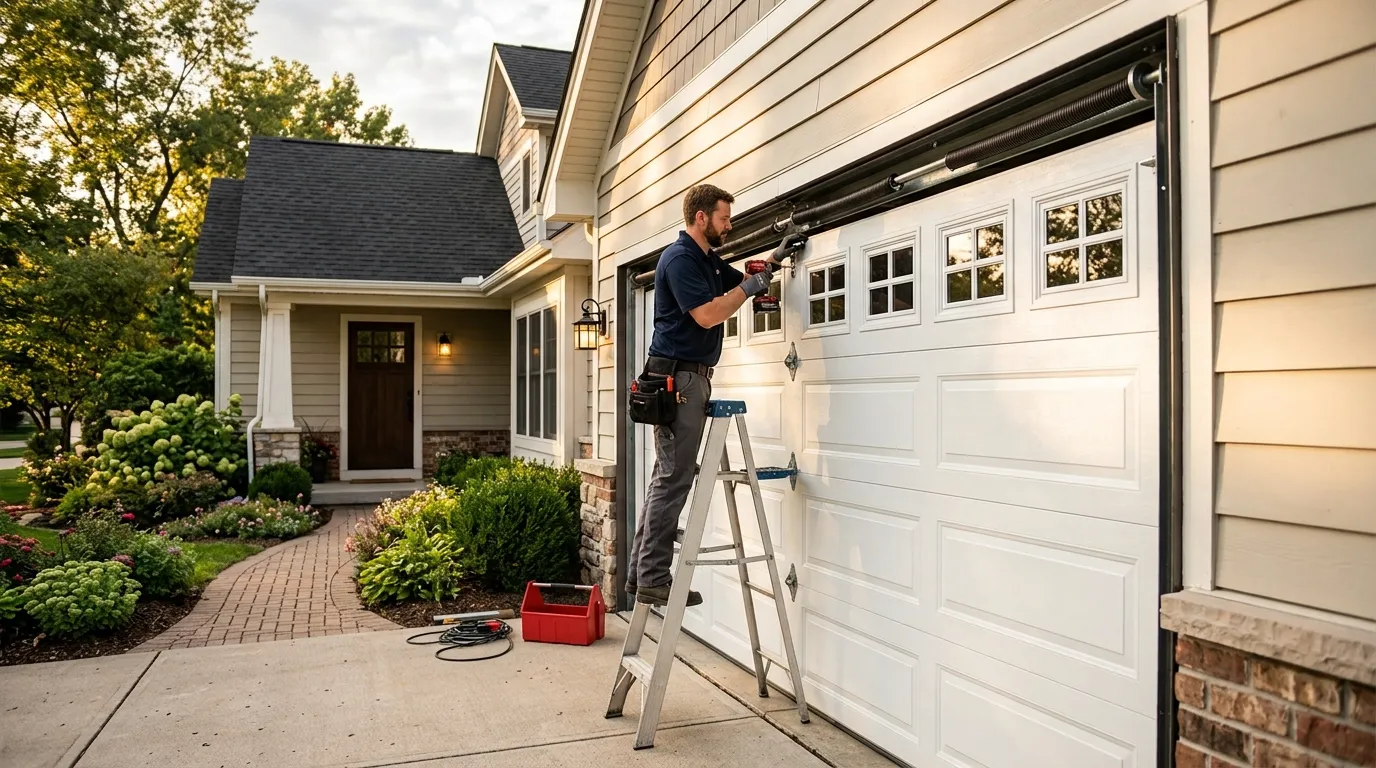
If your opener clicks but does nothing, that's almost always the capacitor or the motor itself, and on a unit old enough to be original to the house, that's usually the point where replacement makes more sense than a repair.