Can You Do This Yourself
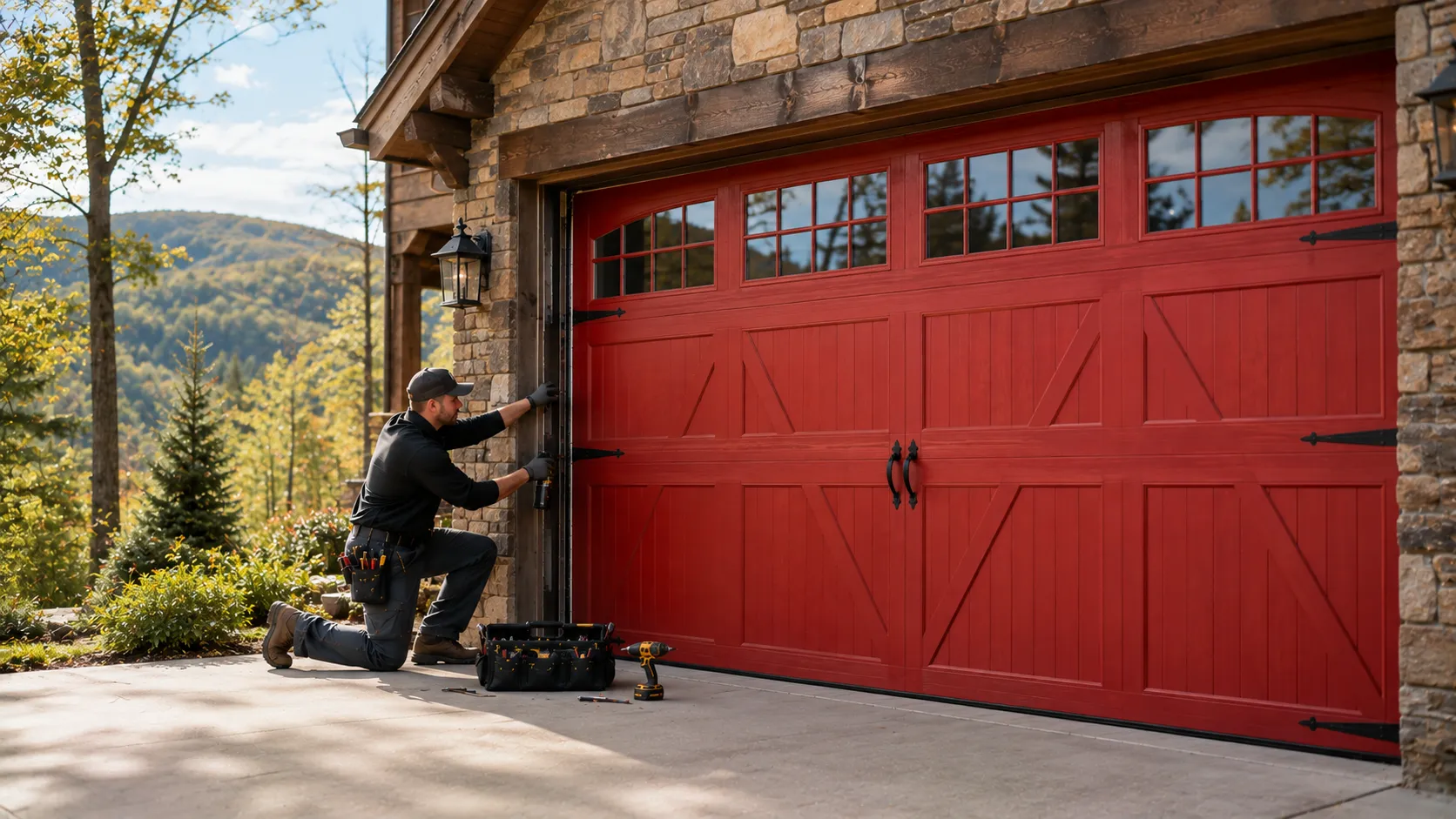
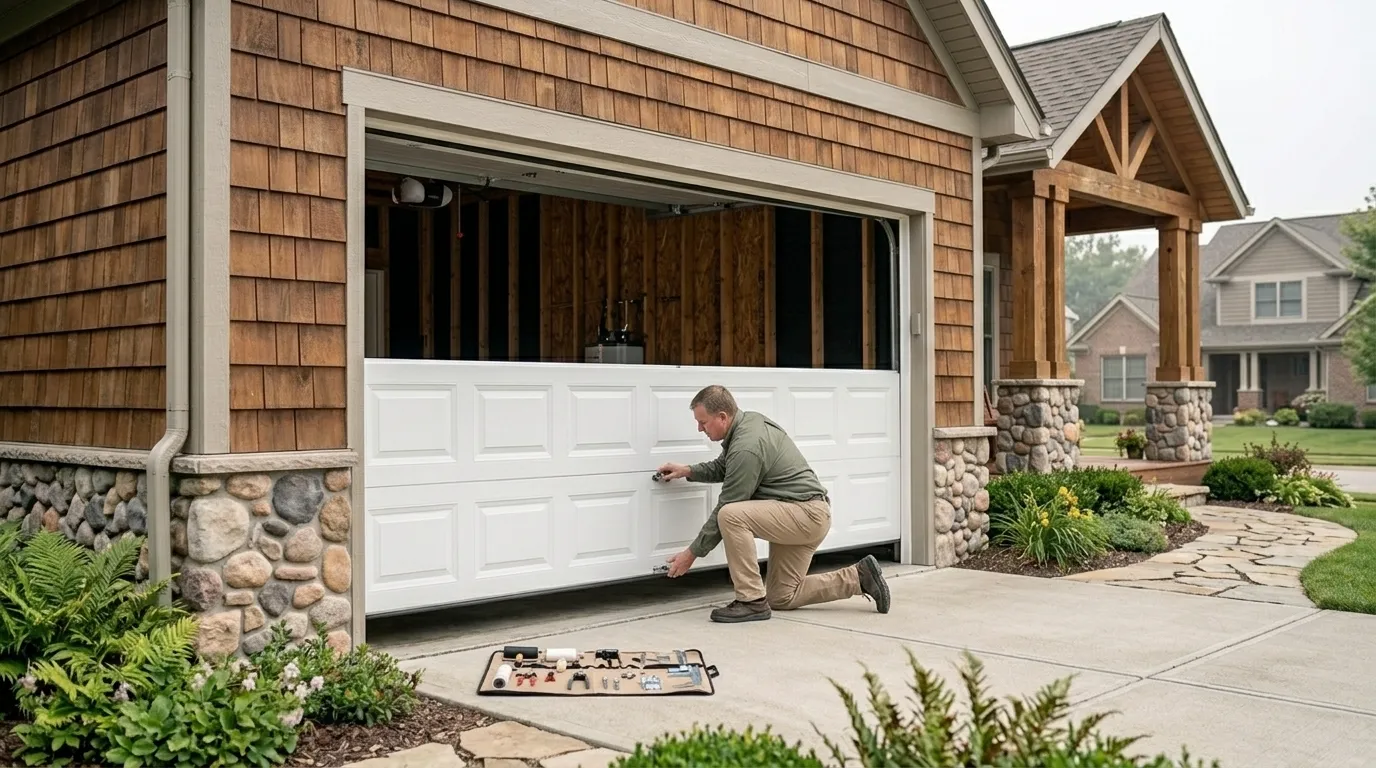
A torsion spring holds enough stored force to break fingers or worse, and that doesn't change because the house is newer. If the door won't open and you can see a gap in a coiled spring above the door, that's not a weekend project - call it in.
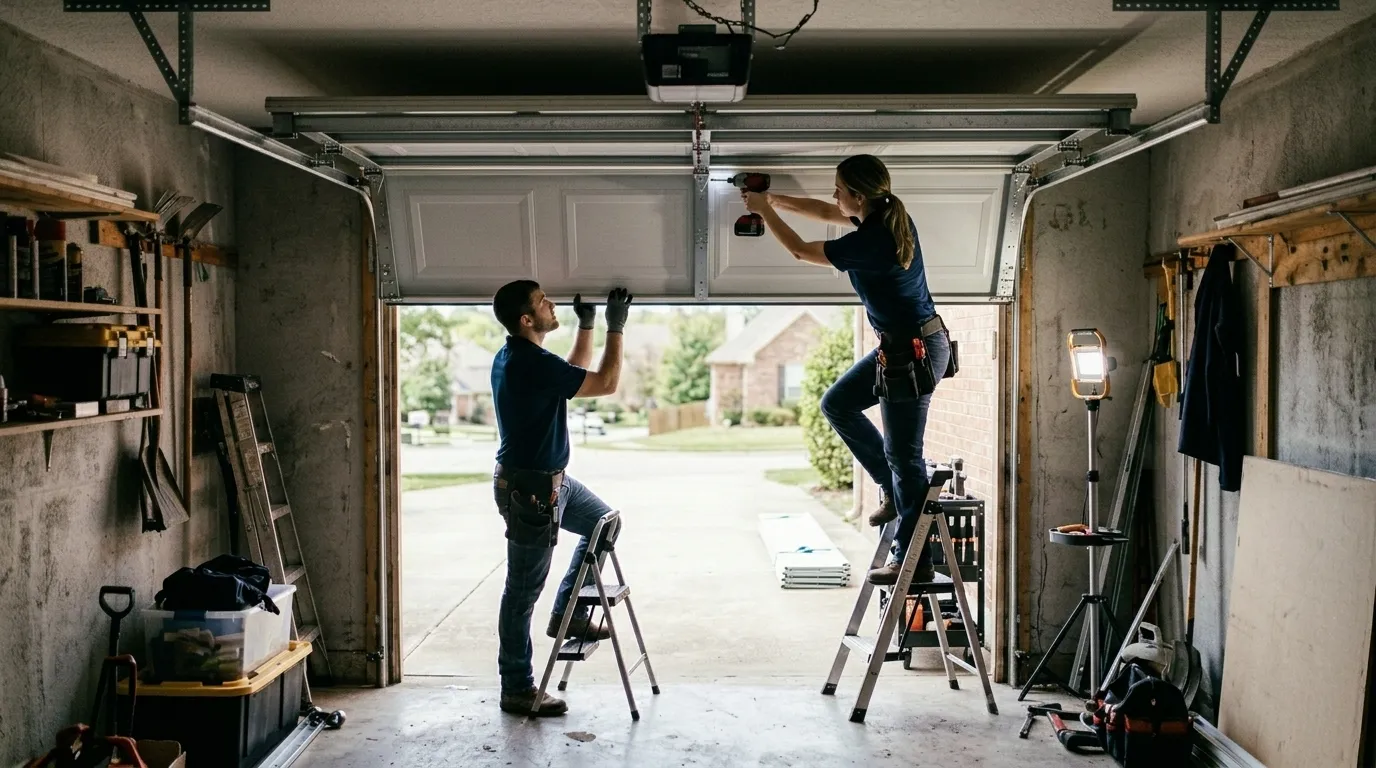
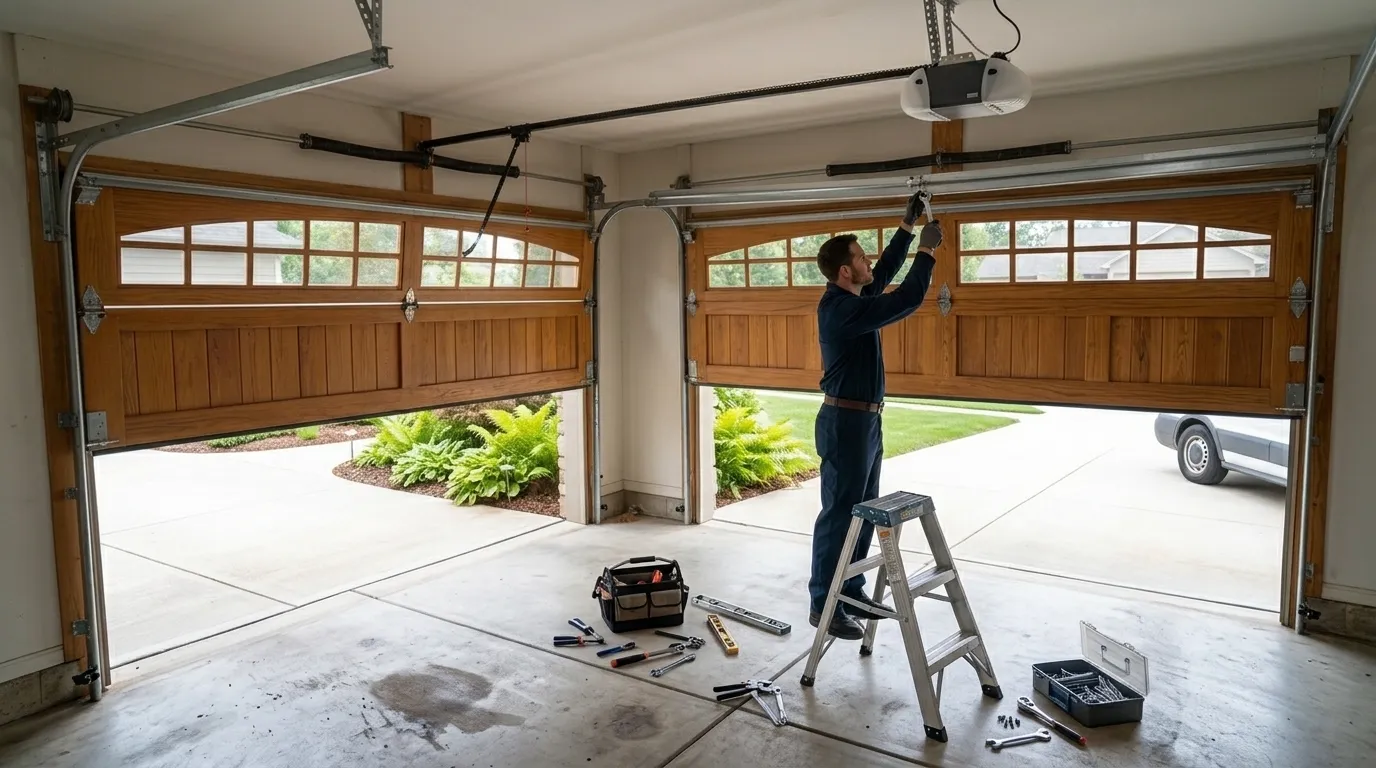
What you can safely check yourself: whether the opener has power, whether the wall button and remote both fail (points to the opener, not the door), and whether the tracks are visibly bent or the rollers are cracked. Tightening loose hinge bolts and clearing the photo-eye sensors of dust are fine DIY tasks. Replacing a spring, cable, or the opener's main gear is not - on a 2000s-era door, the spring tension is calibrated tighter for lighter panel weight, and getting it wrong strains the opener motor even after the spring is fixed.
What You Are Seeing
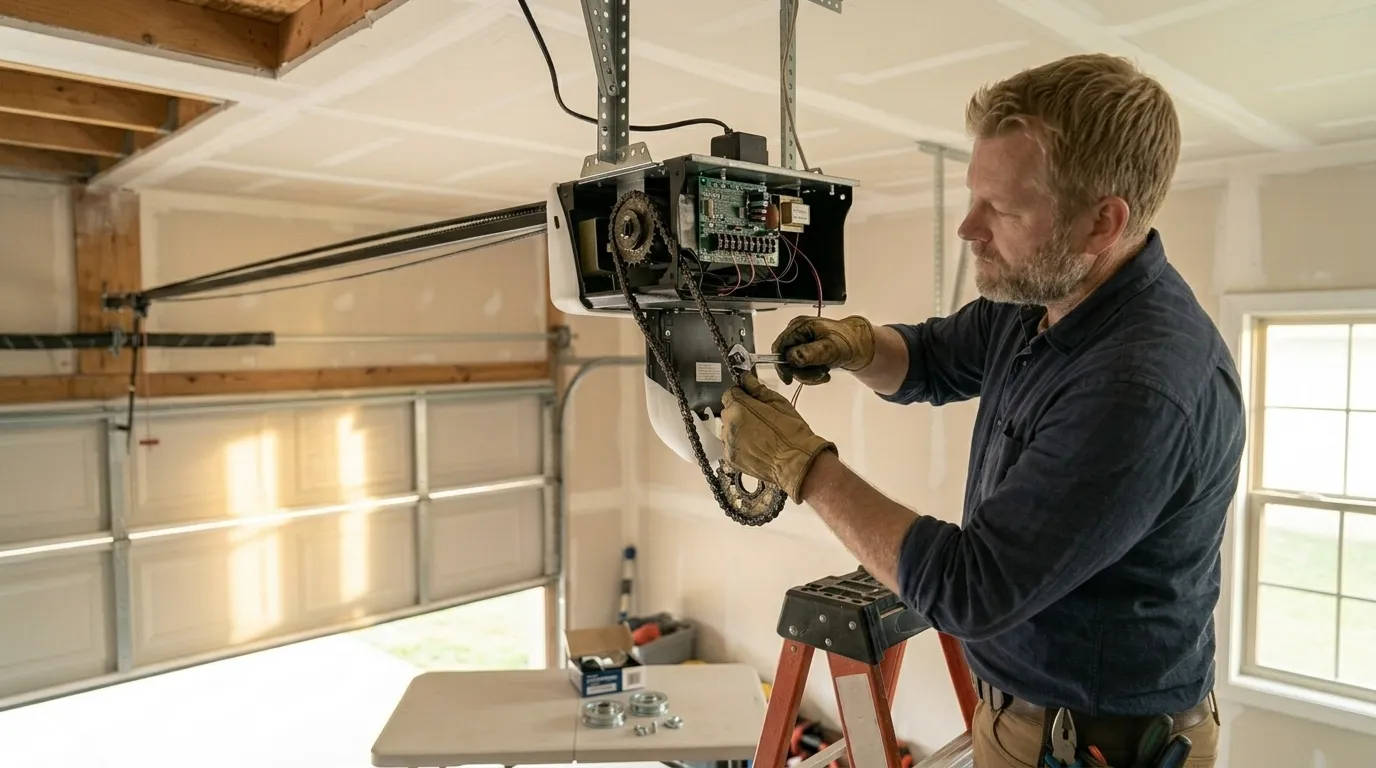
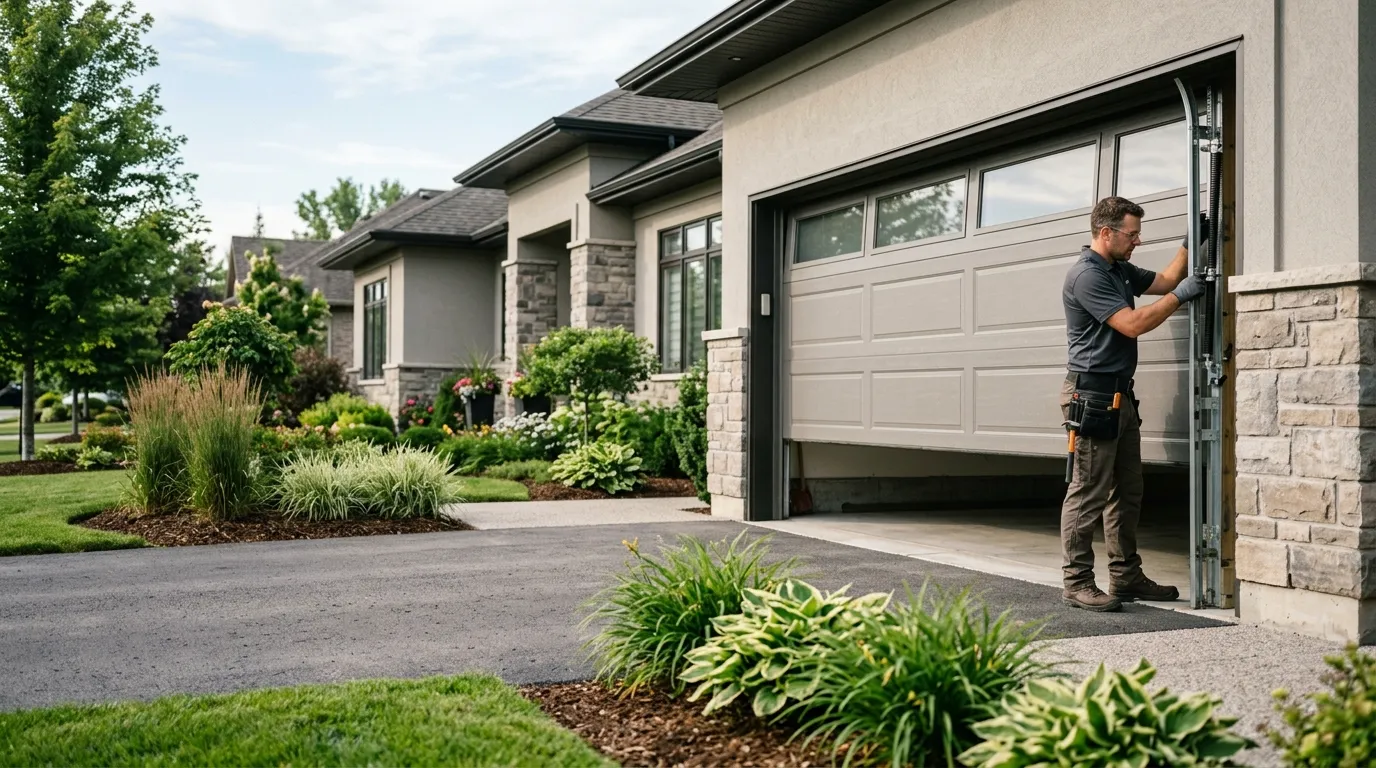
With median household income in the service area around $165,109 for Murphy specifically, a good number of these garages hold two vehicles and see daily use - which means openers here rack up cycles faster than in a house where the garage is a storage room. The most common call from this side of the area is an opener that runs but won't fully close, usually a misaligned photo-eye sensor or a worn limit switch on the circuit board, not the springs.
Because the housing stock here is newer than in a lot of the service area, the second most common call isn't spring failure at all - it's a broken cable or a roller that's worn through its bearing, both parts that fail from cycle count rather than age. Doors under 20 years old rarely need full torsion spring replacement; they need the smaller wear parts that took the daily use.
What Can Go Wrong
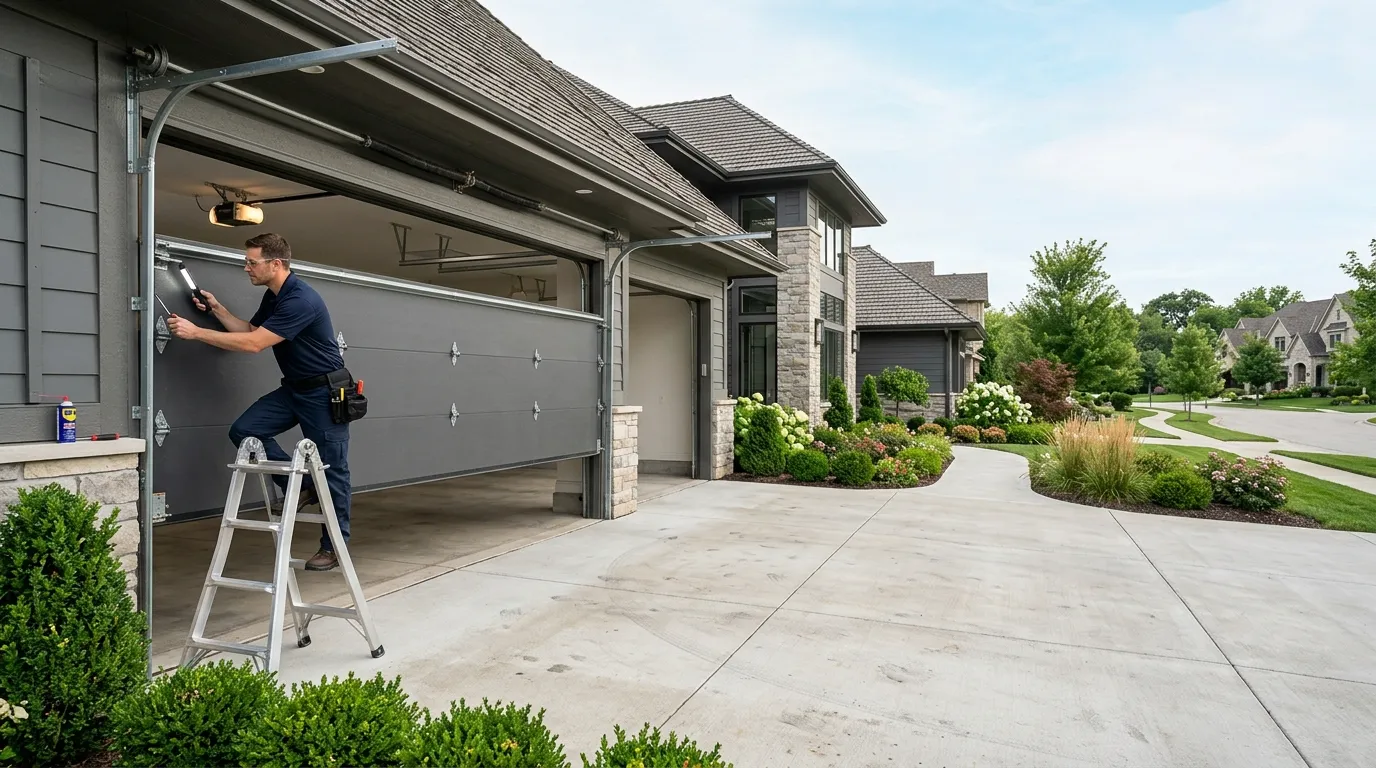
The failure that catches people off guard here isn't a snapped spring, it's a slow leak of function - a door that closes a little slower each week until one day it stops halfway and reverses. That's almost always a sensor going out of alignment or a limit switch drifting, not a structural problem with the door itself, and it's cheap to catch early.
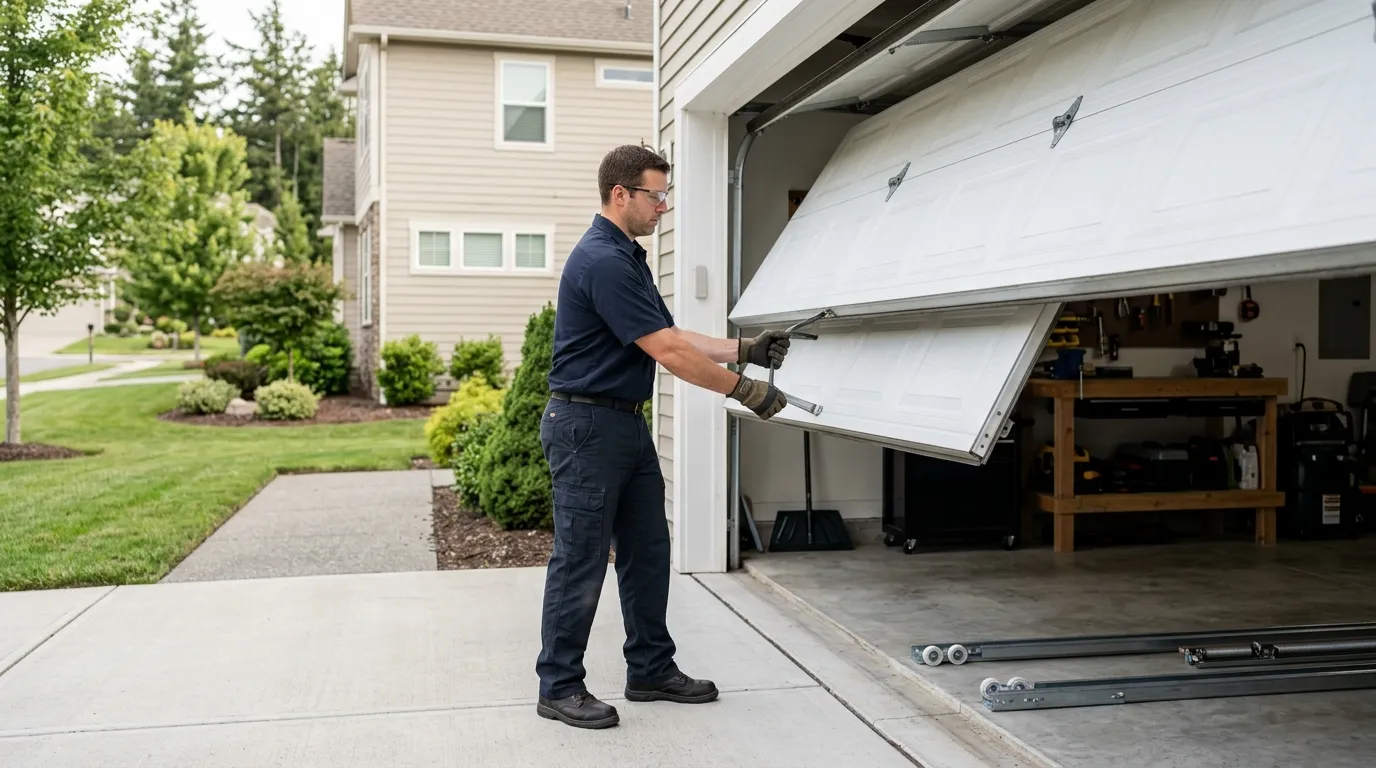
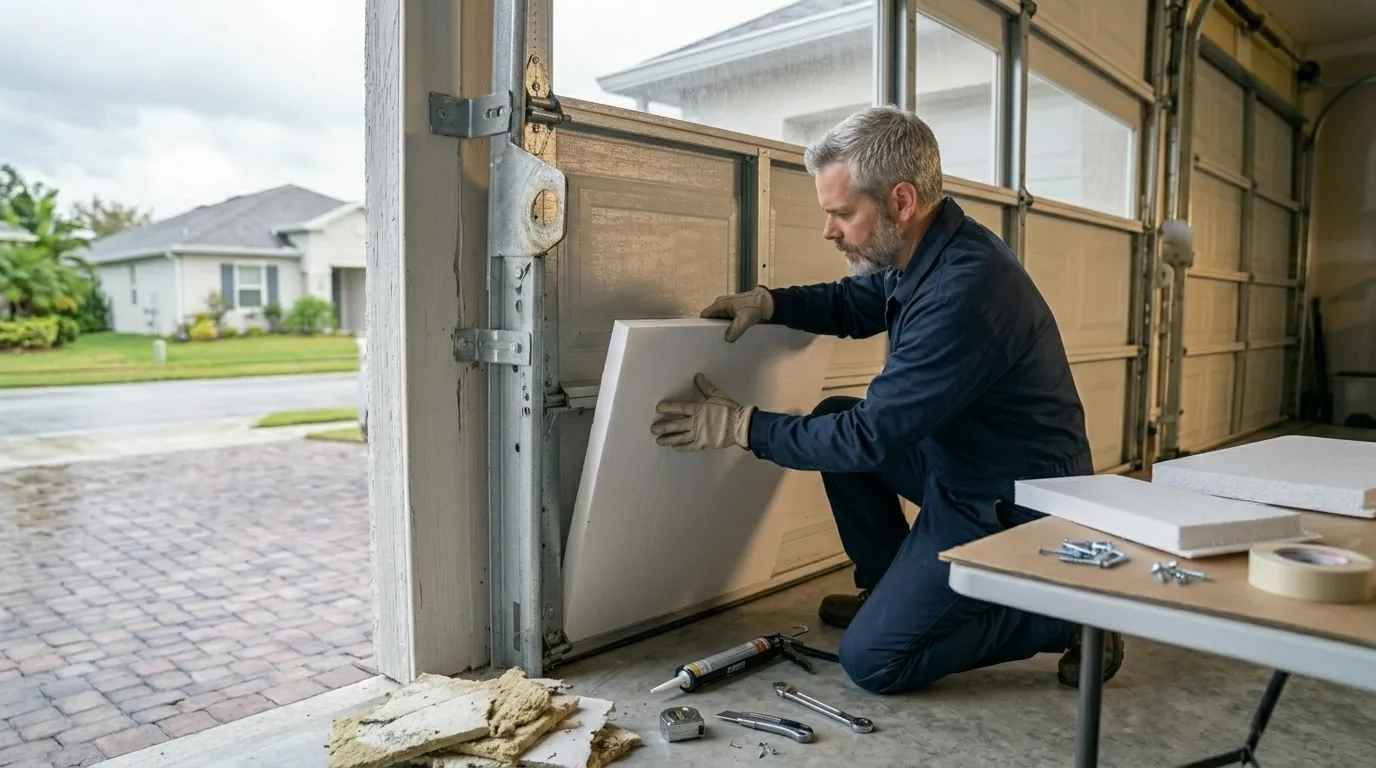
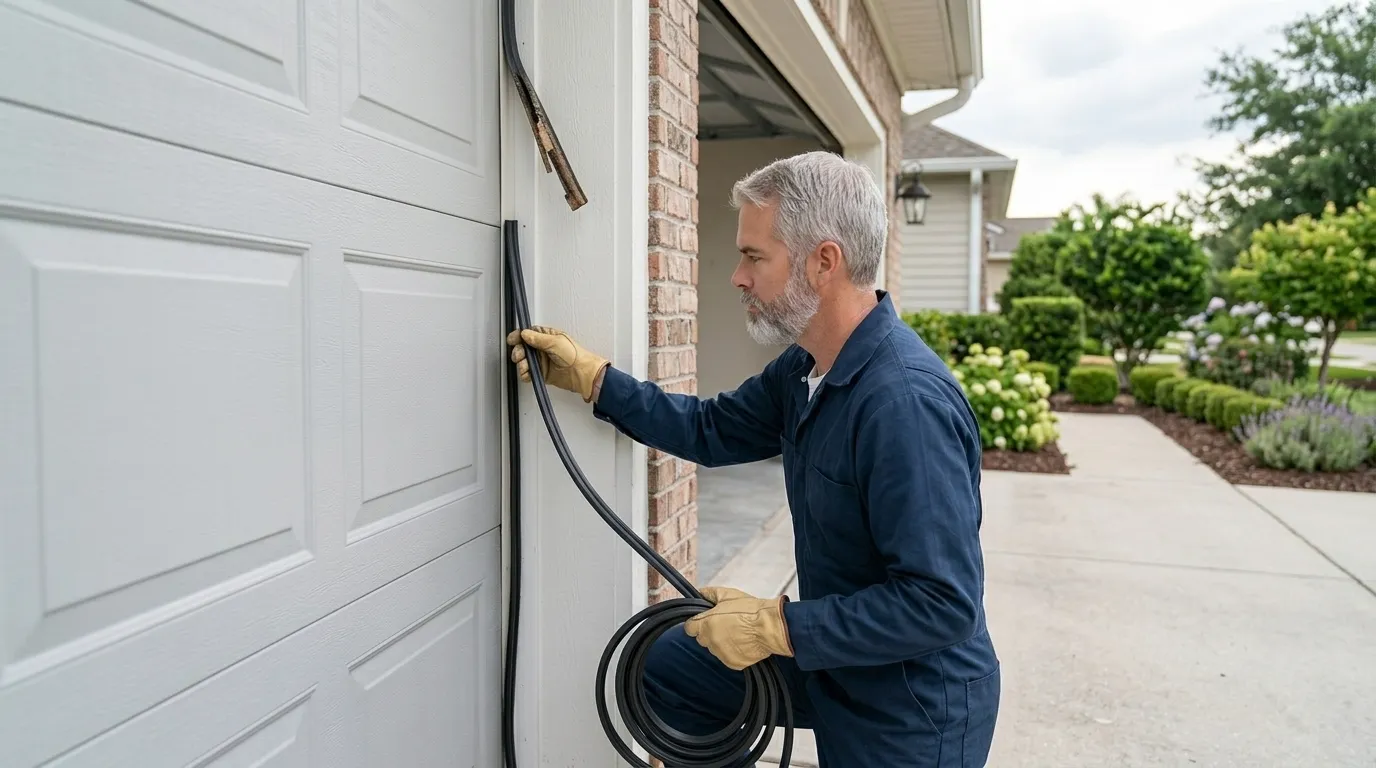
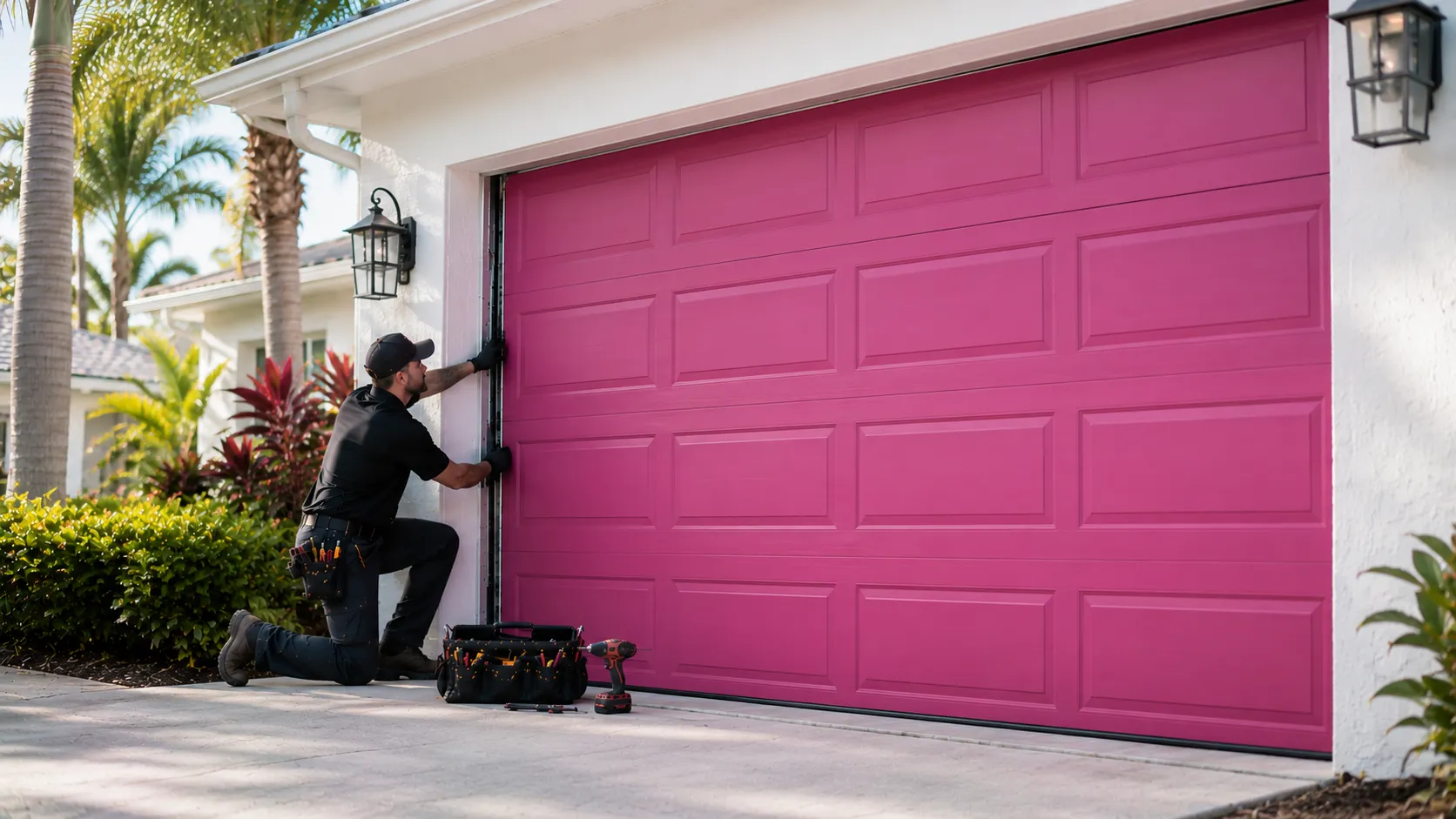
What does go wrong on the mechanical side: a cable frays on a roller that should've been swapped six months earlier, and it lets go while the door's mid-cycle, which can drop a panel unevenly and bend the track. On a newer door, replacing that track section is straightforward because the hardware is still standard for the era; it gets more complicated only if a previous owner already swapped in mismatched parts.