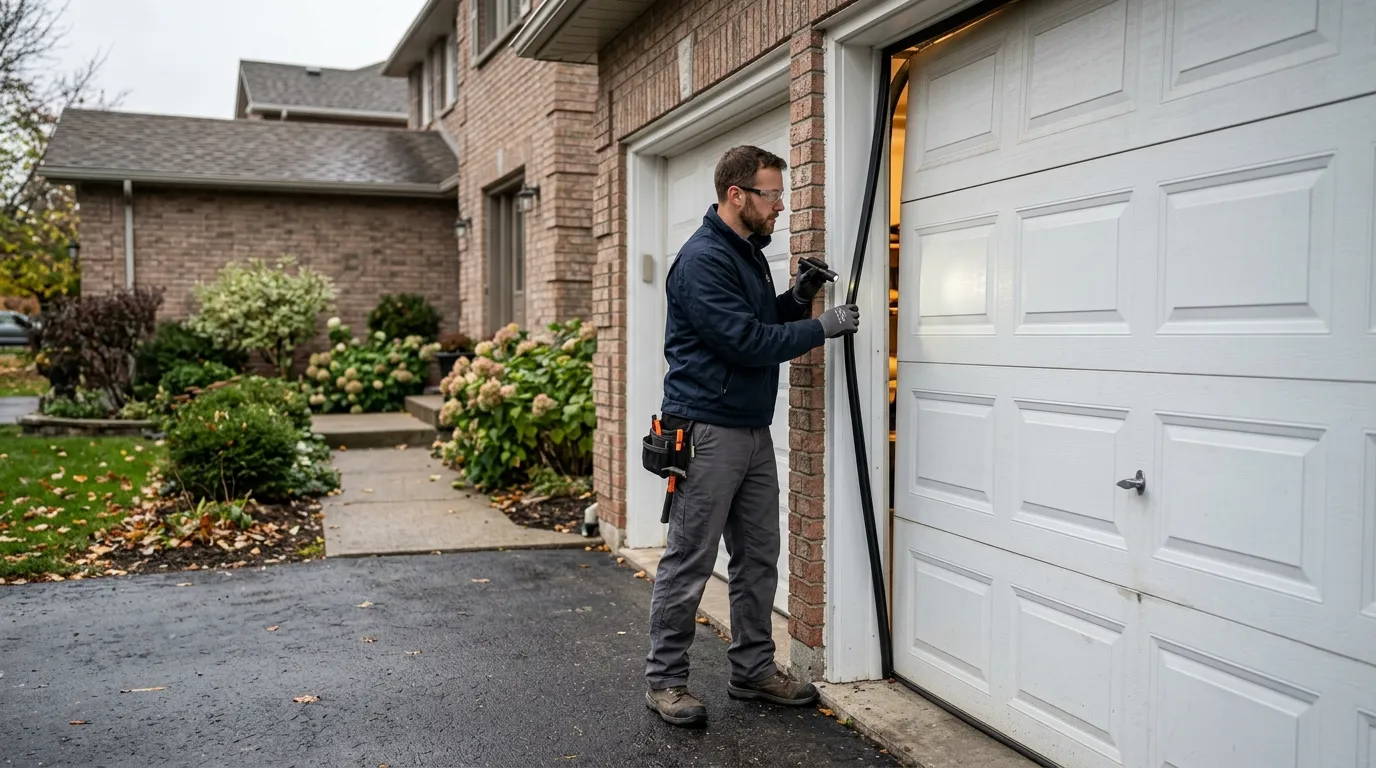
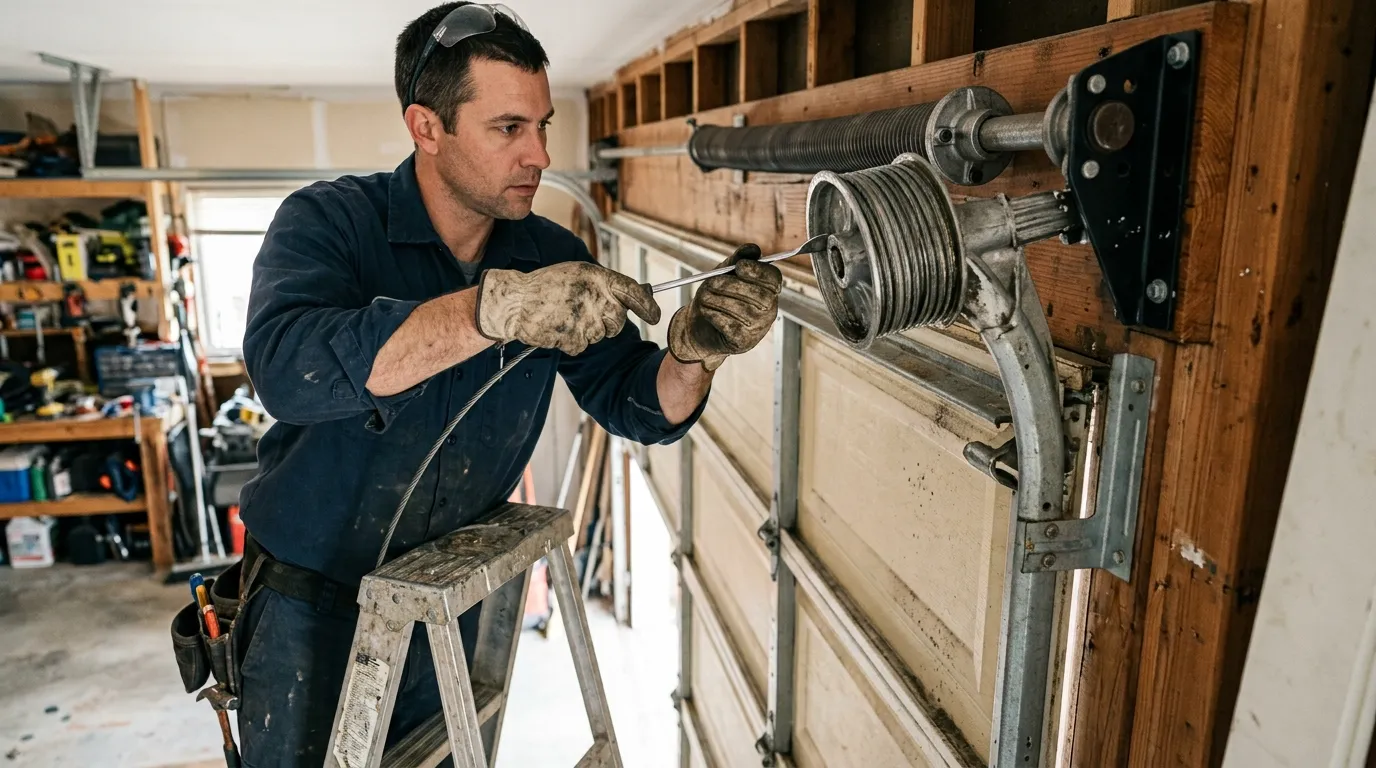
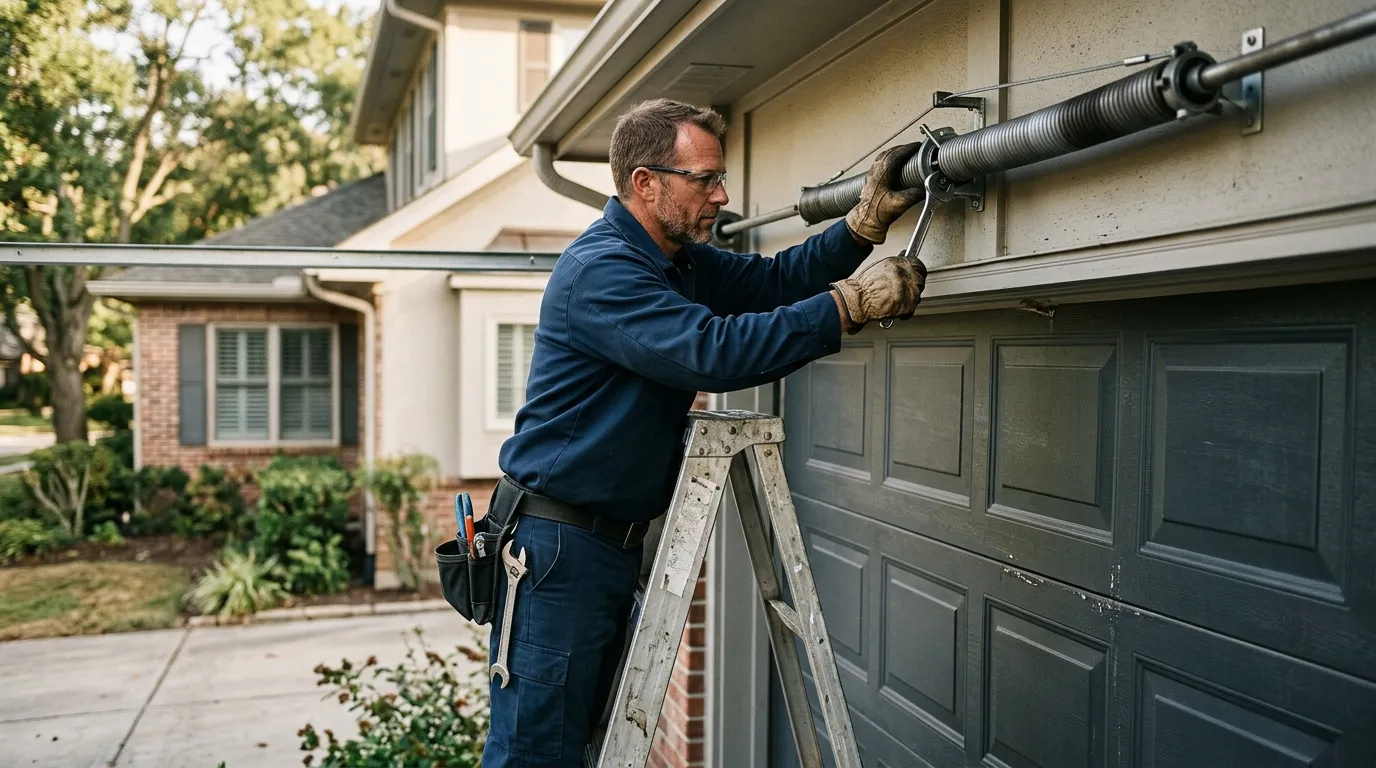
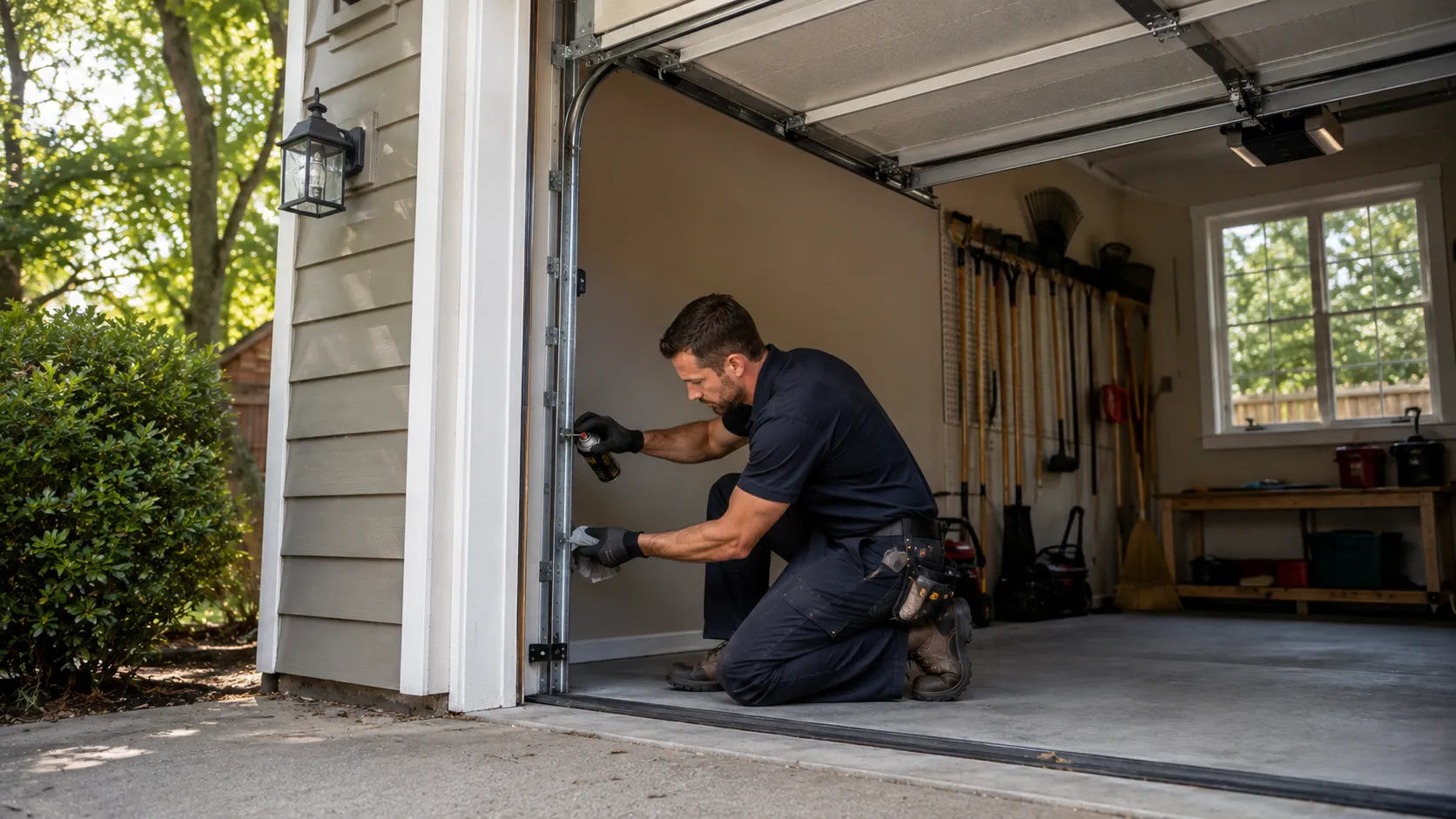
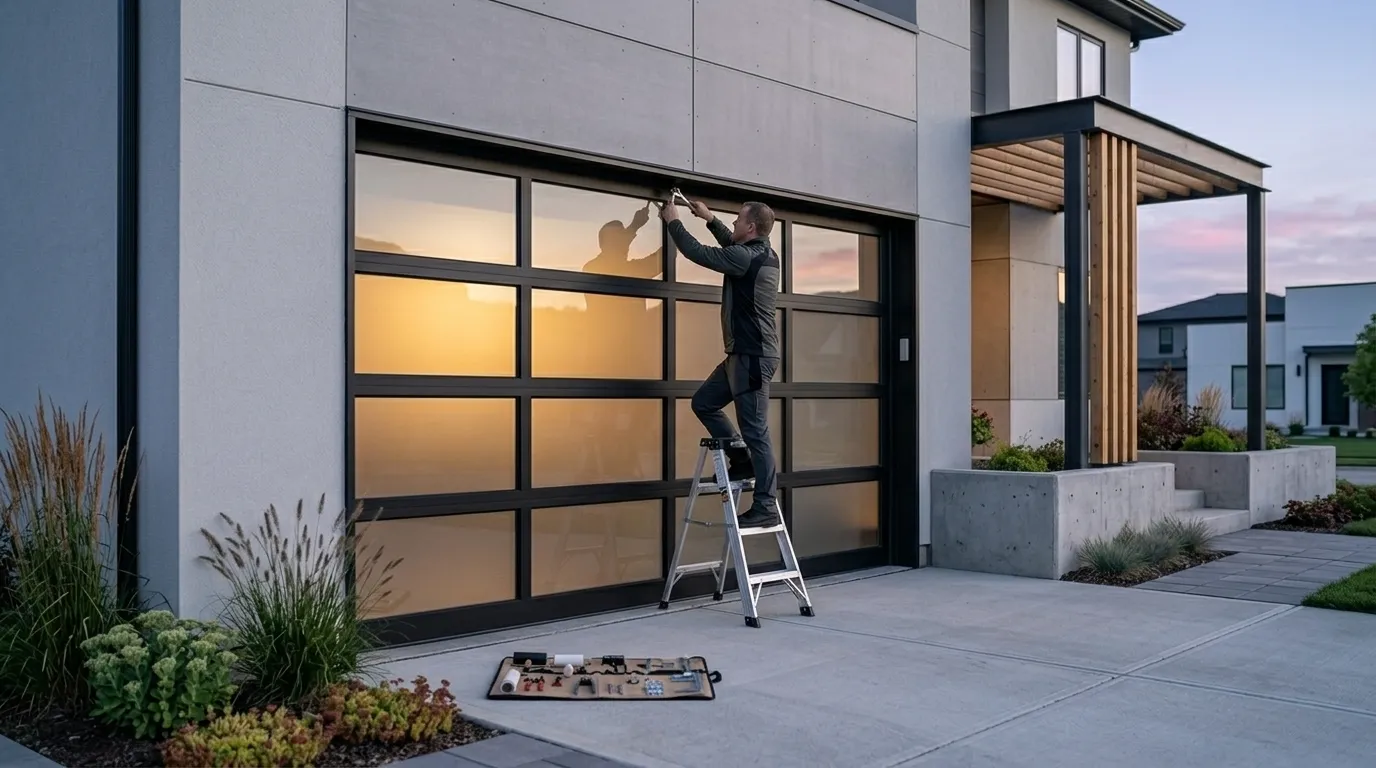
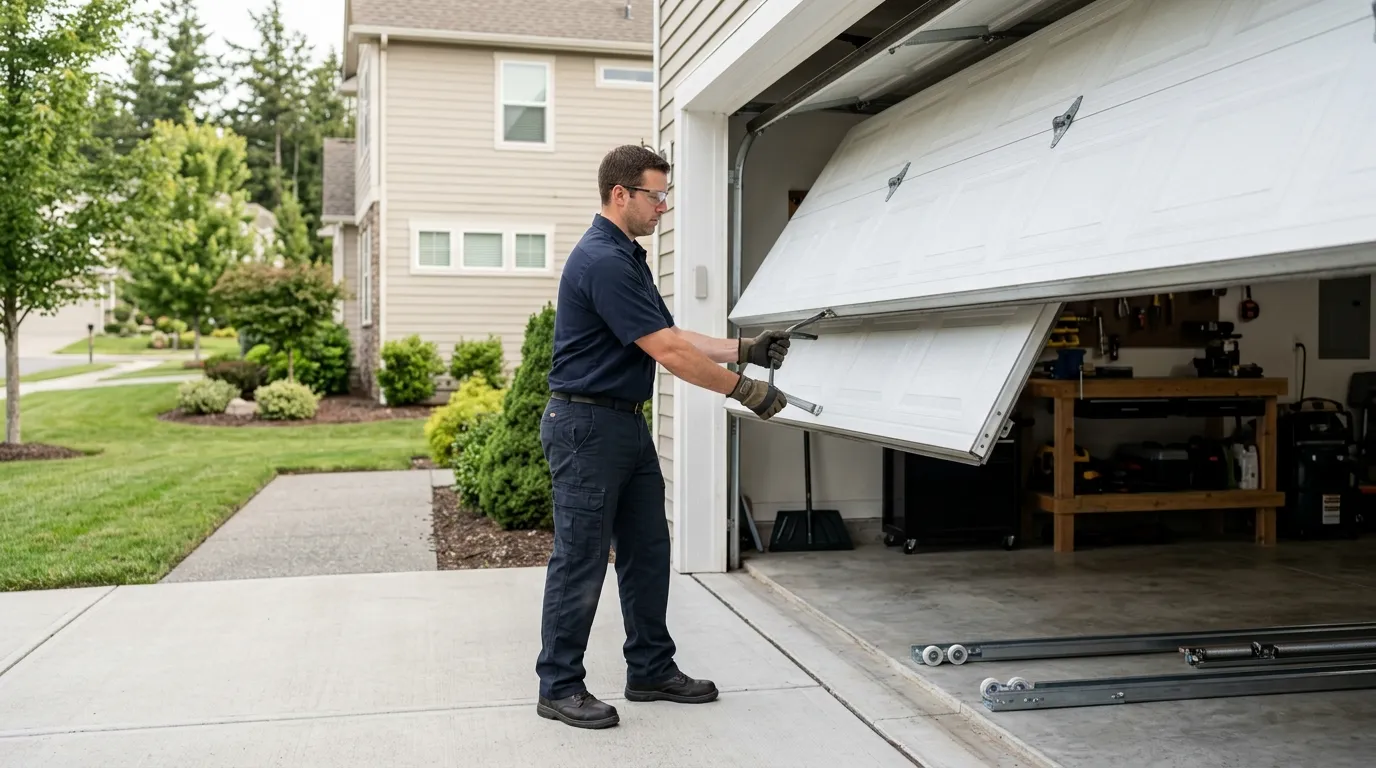
Fate homes are mostly newer builds with steel sectional doors and factory openers. We drive out from Garland to fix springs, tracks, and openers on that stock.
Most garages in Fate went up during a building boom that ran well past 2002 and, on this side of town, kept going until close to 2013. That means you're almost never looking at the old wood-panel doors with side-mounted torsion springs. You've got steel sectional doors, factory-installed, usually on a standard-lift torsion setup with a plastic-encased spring and a keypad-ready opener bolted to the ceiling. A loose hinge screw or a sensor knocked out of alignment by a bike or a trash can, you can handle with a screwdriver and five minutes. A broken spring, a snapped cable, or a bent track on a door this size is not a do-it-yourself job. The springs on these newer doors are wound tighter because the doors themselves are heavier - insulated steel panels instead of thin single-layer metal - and an amateur unwind can put you in the ER. If the opener just clicks and doesn't move the door, check the wall switch and the breaker first. If it moves partway and reverses, that's the safety sensors, and those you can usually clean or realign yourself before calling anyone.
How Long It Takes
We come out of Garland, about 14 miles away, so factor that into when you call versus when a truck is in your driveway. Once we're there, the job itself moves fast on newer stock like this - a spring replacement on a standard double door built in the last fifteen years usually runs under an hour because the hardware is consistent and the parts are common sizes. Openers from this era are mostly chain or belt drive with a logic board, and swapping one out takes about the same. What slows a job down isn't the door's age, it's whether the track got bent in a backing-into-the-garage incident, or whether a previous DIY fix left stripped bolts we have to drill out. We won't quote you a same-day window here since we're driving in from Garland, not sitting in Fate - if it's a true no-door-closes emergency, say so when you call and we'll tell you honestly where you fall in the day.
What Is on the Truck
For a service area built mostly in the 2000s, the truck carries what those doors actually use: torsion springs in the common wire sizes for 16-foot and 18-foot double doors, since that's the standard width on newer construction here, steel roller assemblies with sealed bearings instead of the older open bearings, and a stock of belt-drive opener logic boards since that's what got installed as builder-grade in homes finished closer to 2013. We carry both 1/2 horsepower and 3/4 horsepower motor units because garage size varies enough across newer Fate construction that one size doesn't cover it. What we don't carry, and won't fake a fit for, is hardware for the older wood or fiberglass panel doors you'd find in a much older neighborhood - if your house is one of the rare older builds out this way, we may need to order that panel rather than pull it off the truck same visit.
What You Are Seeing
With Texas heat running moderate here rather than extreme, the failures we see in Fate lean less toward sun-warped panels and more toward wear on moving parts - a spring that's cycled thousands of times finally giving out, a cable fraying at the drum, or an opener's gears wearing down after years of steady use. Because the housing stock here is younger, you're less likely to be fighting rust on decade-old track bolts, and more likely dealing with a factory-grade opener that's simply reached the end of its duty cycle. A door that reverses right before it touches the floor usually means the close-limit setting drifted, common on these newer opener models. A door that's suddenly heavy to lift by hand, with the opener straining or humming, points to a spring that's lost tension - on a door this size and this age, that's a same-visit fix, not a wait-and-see.
How it works
From “it’s stuck” to “it’s fixed”
A quick, honest process - no guesswork and no surprises.
1
Tell us what’s wrong
Describe the symptom - won’t open, loud bang, opener runs but the door won’t move.
2
On-site diagnosis
A technician tests the door under power and by hand and finds what actually failed.
3
Clear, up-front plan
You get the fix that’s needed and what drives the cost - before any work starts.
4
Repaired & tested
The repair is done, the door is set true and tested, and the work area left clean.
Serving Garland, TX - tell us what your door’s doing and we’ll take it from there.
Why does my Fate garage door feel so heavy to lift manually?
On a double garage door from this era, that almost always means a torsion spring has lost tension or broken. These doors are insulated steel and heavier than older single-layer panels, so the spring is doing more work - once it weakens, the door goes from a two-finger lift to something you can barely budge.
Do you have a branch or office in Fate?
No. We're based in Garland, about 14 miles out, and we drive to Fate for service calls. There's no local depot here, so response depends on truck routing that day rather than a fixed local response time.
My opener is newer but still failing - why?
Builder-grade openers installed in homes finished closer to 2013 are solid units but still mechanical - gears wear, logic boards age, and belt tension drifts over years of daily cycles. Newer doesn't mean maintenance-free, it just means the failure shows up later than it would on an older opener.
Is same-day service guaranteed?
We don't promise a fixed same-day window for Fate since we're traveling from Garland rather than working from a local base. Call and describe the problem - a door stuck open is triaged differently than a squeaky roller - and we'll give you an honest estimate of where you land that day.
Ready to get your garage door sorted?
Tell us what it’s doing and where you are in Garland - we’ll take it from there.